In this playbook, we explain in detail field service task bundling.
We'll give you an in-depth overview of why most operations fail in attempts to bundle jobs or why they can't sustain them over time. And what you actually need to do to fix the problem.
In the end, you'll walk away from this playbook with:
- A diagnostic framework for identifying why your bundling initiatives collapsed
- A clear model for the execution infrastructure that makes bundling stick
- The metrics that prove it's working
You'll also finally know why task bundling isn't a planning or scheduling problem. Or how you configure them.
But instead:
That It's an execution infrastructure problem.
So, if you're running 75 or more technicians across multiple trades, managing several field service jobs per technician per day, and watching your margins compress from visit fragmentation, this playbook was written for your operation.
Here's what else you can expect to find in this playbook:
Key Takeaways
- Task bundling optimizes visits, not jobs. Instead, jobs remain the unit of record, while visits are the unit of cost and execution. Every bundling decision should be evaluated at the visit level.
- Static bundling can't survive dynamic execution. Bundles designed at planning time fall apart when PPM collides with reactive work, SLAs override sequences, and same-day changes hit.
- Sequencing and bundling are two different problems. Job sequencing decides the order of already-assigned jobs. Bundling decides which jobs share a visit. So solving one doesn't solve the other.
- Field service management software is a system of record built around job-centric data models. Visit-level optimization requires a different layer.
- High-maturity teams treat jobs as flexible inputs and visits as the optimization unit. This allows them to continuously re-evaluate task bundling decisions as conditions change.
- Bundling only works when execution decisions are automated and continuous. This makes doing it manually or using static tools unsustainable under real conditions.
- Five metrics reveal whether you're bundling jobs effectively after you automate execution: Visit count trends, jobs per visit, cost-to-serve, planner load, and SLA stability. These are outputs that tell you whether it's actually working.

Why Task Bundling Fails in Most Field Service Operations
Task bundling fails in most field service operations because the conditions that made the bundle possible at planning time have already changed by execution time.
The failure is structural, and reflects a mismatch between:
- How bundling is designed (once, at the time of planning)
vs
- How field operations actually run (dynamically, with continuous change)
But before we go any further, we need to define what task bundling is in service operations.
So you can understand the structural reasons bundling initiatives quietly fail.
Not to mention the specific real-world conditions that cause planned bundles to collapse.
Let's take a look.
What Is Task Bundling in Field Operations? And What Does It Actually Mean at Scale?
Task bundling in field service operations is the process of collapsing multiple jobs, tasks, or work orders into a single site visit or optimized geographic sequence. In doing so, you reduce total visits without reducing work completion.
The critical distinction here that you need to make is:
Task bundling optimizes visits, NOT jobs.
Jobs remain the unit of record in your FSM or CAFM system. Visits are the unit of cost and execution.
When you bundle effectively, the same number of field service tasks get completed with fewer technician arrivals, less drive time, and lower cost-to-serve.
At scale, bundling takes four distinct forms, and high-maturity operations evaluate all four continuously and simultaneously.
This includes:
- Bundling by site collapses multiple jobs at the same physical location into one visit. If a technician is already at a building for a planned maintenance task, any other open jobs at that site should be candidates for the same visit.
- Bundling by geography groups jobs at nearby sites into a tight sequence, reducing drive time between stops. This is particularly valuable in dense urban operations or rural areas where distances between sites are significant.
- Bundling by trade consolidates jobs requiring the same skill or certification so a single qualified technician handles them in sequence. This prevents dispatching two electricians to the same area on the same day when one could cover both jobs.
- Bundling by time window aligns jobs that share SLA deadlines or customer access windows. When two jobs at different sites both require completion within the same four-hour window, bundling them into a single route segment protects compliance while reducing total field service visits.
| Type of Bundling |
What Is Grouped |
What Drives It |
What Triggers It |
Key Constraint |
| By Site |
Multiple jobs at same location |
Visit elimination |
New job appears at site with open visit |
Access windows, technician skills |
| By Geography |
Nearby sites within radius |
Drive-time reduction |
Cluster of jobs in same area |
SLA deadlines across sites |
| By Trade |
Same skill/certification jobs |
Technician utilization |
Multiple jobs needing same qualification |
Certification scope, job complexity |
| By Time Window |
Jobs sharing SLA or access window |
Compliance alignment |
Overlapping SLA deadlines |
Window duration, travel feasibility |
Organizations that treat these four types as discrete decisions made once at planning time are already operating with a structural disadvantage.
The operations that sustain bundling evaluate all four dimensions at the same time, all day long, as conditions change.
Why Is Field Service Task Bundling So Hard to Get Right?
Every field service team agrees that bundling matters, because the logic is straightforward:
Fewer visits = Lower cost-to-serve = Better technician utilization = Stronger SLA compliance.
When you can bundle service appointments effectively, the margin improvement flows directly to the bottom line.
So why do most bundling initiatives quietly fail within six to 12 months?
The pattern follows a familiar arc:
→ An operations leader identifies visit fragmentation as a margin problem.
→ The team launches a bundling initiative.
→ Planners start grouping field service jobs by site or geography.
→ Early results look promising.
Then conditions shift:
→ Reactive work arrives.
→ SLAs override planned sequences.
→ Access windows close.
→ Technicians call in sick.
The result:
Within weeks, planners are back to dispatching jobs individually because maintaining bundles under live conditions requires more cognitive overhead than building them in the first place.
So why does this happen?
This failure is structural.
Bundling is treated as a planning task, something you perform once at the start of a shift or week, and then expect to hold.
In reality:
Field operations don't hold still and work changes throughout the day, while the system or process that you used to create the bundle has no mechanism to maintain it.
And if your operation runs multiple jobs per technician per day, delivers across multiple trades or service types, faces SLA pressure, and you've seen evidence of duplicate visits or planner overload, this can be a serious issue.
So it's worth looking at how exactly planned bundles fall apart once they meet real-world conditions.
Why Task Bundling Attempts Collapse Under Real-World Conditions
Four specific mechanisms cause bundling work orders to collapse during execution:
- PPM + Reactive Work: Planned preventive maintenance is bundled at the start of the week. An emergency reactive job at the same site arrives Tuesday and gets dispatched separately because the bundle is already locked. Two technician visits to the same building in the same week. The bundling logic had no way to absorb the new job into the existing plan.
- SLA Overrides: An SLA deadline forces a technician to a site before a natural bundling window would allow consolidation. The planner knows two jobs at the same location could share a visit on Thursday, but one job's SLA expires Wednesday. Two visits happen where one was possible because the scheduling system can't dynamically evaluate the trade-off.
- Access and Site Constraints: Bundling logic assumes access. Real sites have access windows, contractor inductions, permit requirements, and resident schedules. A planner bundles three jobs at a commercial property for Monday morning. The site manager calls to say access is only available after 2 PM. The bundle breaks, and the planner manually reassigns work across the day.
- Same-Day Changes: Technician absence, traffic delays, job overrun, or parts unavailability unravels a planned bundle mid-shift. The system has no mechanism to re-bundle under the new conditions, so the remaining jobs get dispatched individually, and the efficiency gain disappears.
The conclusion is consistent across all four scenarios:
Static bundling can't survive dynamic execution.
And the majority of bundling tools and processes in field service operations today are designed for static conditions.
Execution Barriers to Task Bundling: What Prevents Your Operation from Bundling Jobs Efficiently
Two structural barriers prevent most operations from bundling field service tasks effectively, and they compound each other:
- Manual job sequencing misses bundling opportunities. Planners working linearly through technician schedules can't evaluate the full combinatorial space where bundles exist.
- Field service management software wasn't built for it. FSM tools are systems of record with job-centric data models. They assign work. They don't optimize execution outcomes at the visit level.
The result of these two barriers is a third problem that hits your P&L directly:
Task fragmentation.
Jobs that could share a visit are dispatched separately, producing more visits than necessary, higher drive time, more planner intervention, and lower margin per job.
Why Manual Task Sequencing Always Misses Bundling Opportunities
Sequencing and bundling are two different problems:
- Task sequencing decides the order in which a technician visits already-assigned jobs.
- Task bundling decides which jobs should share a visit in the first place.
Most planners spend their day sequencing because that's the problem their tools surface. The bundling problem sits underneath, invisible.
Consider a planner managing 30 technicians and 200 field service jobs on a given day. That planner works linearly:
- Check one technician's schedule → Assigns a job.
- Move to the next technician → Assign the next job.
Each individual decision is locally rational.
The job goes to an available technician with the right trade qualification who can reach the site within the SLA window.
The problem is that bundling opportunities exist in the combinatorial space across all technicians, all sites, and all time windows simultaneously.
For example:
A job assigned to Technician A at 10 AM might have been more efficiently bundled with two other jobs on Technician B's route at 11 AM, saving an entire visit.
The planner can't see that option because they're evaluating one assignment at a time.
The number of possible job-to-visit combinations grows exponentially with workforce size.
For an operation with 100 technicians and 400 daily jobs, the combinatorial space contains millions of possible bundle configurations.
No planner can evaluate that decision space manually, regardless of skill or experience.
This isn't a criticism of planners. They're operating rationally within the tools and processes available to them.
Manual sequencing produces locally optimal decisions that are globally suboptimal.
Planners aren't failing at bundling. They're solving a different problem entirely.
Why Field Service Management Software Isn't Built for Task Bundling
FSM and CAFM tools are systems of record. They store jobs, manage compliance documentation, track assets, and assign work. That's what they were built to do, and they do it well.
But expecting these tools to also solve a visit-level execution optimization problem is where most field service job bundling initiatives go wrong.
The structural mismatch comes down to three factors:
#1 Job-centric data
FSM architectures treat every job as a discrete record with its own status, SLA timer, assignment, and workflow.
The concept of a visit, a physical arrival at a site that serves multiple jobs, doesn't exist natively in most FSM data models. When the system can't represent a visit as a first-class object, it can't optimize around visits.
#2 Static optimization
Where FSM tools offer optimization, it typically runs at scheduling time and produces a static plan. The plan is set, and the system expects execution to follow.
When conditions change mid-shift (and they always change), the optimization doesn't re-run. The plan that was bundled at 6 AM is the plan that gets executed at 2 PM, even when three of its assumptions are already invalid.
#3 No visit-level logic
Without the ability to model visits, FSM tools can't evaluate whether consolidating two jobs into one visit improves or degrades SLA compliance, margin, or technician utilization.
The calculation isn't available because the data model doesn't support it. You can configure rules, you can set up scheduling templates, but you can't run dynamic bundling logic that evaluates trade-offs at the visit level in real time.
FSM tools assign work. They don't optimize execution outcomes. These are different functions, and the gap between them is exactly where bundling initiatives break down.
Hidden Costs of Splitting Up Tasks Into Multiple Visits
Task fragmentation is the operational state where jobs that could share a visit are dispatched separately.
It's the default output when bundling logic doesn't exist or can't survive execution conditions.
And the cost compounds across every dimension of your operation:
- Duplicate visits: Two technician arrivals at the same site within the same week, each carrying fixed costs: travel time, fuel, vehicle wear, site administration, customer or tenant contact. The work gets done, but the cost-to-serve doubles for those jobs.
- Drive-time inflation: Fragmented schedules fill gaps between jobs with travel that bundled schedules would eliminate. When a technician drives 25 minutes between two sites that each have a single job, and both jobs could have been bundled with other work closer to each technician's existing route, that drive time is pure waste.
- Idle gaps in the schedule. When a planned bundle collapses mid-day and no re-bundling logic exists to fill the void, technicians end up with scheduling gaps. They're on the clock but not productive. These idle windows accumulate across a fleet of 75 or more technicians into significant lost capacity every week.
- Technician idling between fragmented jobs. Related to idle gaps, technicians frequently find themselves waiting between dispatched jobs that are too close together in time to return to base but too far apart to fill with useful work. This pattern is invisible in most reporting because the technician appears "assigned" even while idle.
- Planners stuck in crisis management mode: Fragmentation creates exceptions. Exceptions consume planner capacity that should be directed at optimization. When every planner is spending their day reacting to broken schedules instead of improving execution outcomes, you've lost the operational leverage that experienced planners should provide.
- Margin erosion: When the cost-to-serve per visit is materially higher than the revenue per job, fragmentation directly compresses margin. The unit economics of many field service operations only work when multiple jobs share a visit. Every time a job that could have been bundled gets dispatched solo, the margin on that job shrinks or disappears entirely.
Fragmentation is the predictable output of execution systems that weren't designed to maintain bundles under dynamic conditions.
It's measurable, it's expensive, and it's fixable.
What High-Maturity Teams Do Differently When Bundling Tasks
Organizations that sustain dynamic task bundling at scale share specific operational behaviors that distinguish them from teams where bundling remains aspirational.
These behaviors aren't about effort or culture.
They reflect a different mental model for how field work gets organized and executed.
This section describes the mindset, the trade-off resolution approach, and the execution behaviors that make bundling stick.
How High-Performing Ops Teams Think About Field Work
High-performing operations teams think in visits, not jobs. This single shift in mental model changes everything downstream.
Jobs = Inputs.
A job is flexible, combinable, and sequenceable. Basically, it's a unit of work that needs to get done.
On the other hand:
A visit is a physical arrival at a site by a technician, and it carries real cost:
- Travel time
- Fuel consumption
- Site access overhead
- Customer disruption
Or simply put:
Visit = Unit of cost, SLA compliance, and operational performance.
When planning starts from jobs, the default question is:
Which technician is available for this job?
When planning starts from visits, the question becomes:
Which open visit can absorb this job, or do we need to open a new visit?
This is a fundamentally different optimization frame, and it produces fundamentally different outcomes.
This shift also changes how these teams think about schedule fidelity.
Field team planners optimize for execution outcomes.
A schedule that changes 10 times during the day but produces fewer visits, lower drive time, and stronger SLA compliance is a better schedule than one that was executed exactly as planned but fragmented across too many visits.
The cultural signature of these operations:
Field service planners supervise outcomes and manage exceptions.
Their expertise gets directed at the genuinely complex situations that require human judgment, while routine bundling and scheduling task bundles happen through automated execution logic.
Task Bundling by Site vs Geography: How the Best Teams Resolve This Trade-Off
Task bundling by site collapses multiple jobs at the same physical location into a single technician arrival, eliminating duplicate visits to the same address.
Task bundling by geography groups jobs at nearby sites into a tight travel sequence, reducing drive time across a cluster of locations within a defined radius.
These two approaches can conflict.
Prioritizing site bundling might mean holding a job until other work at the same location becomes available, even though a nearby-site route would keep the technician productive now.
On the other hand:
Prioritizing geographic bundling might mean a technician visits a building once for one job today and returns tomorrow for another, because today's route was optimized for geographic proximity across multiple sites.
The best teams treat this as a continuous evaluation.
High-performing field operations weigh SLA urgency, technician proximity, access constraints, and job type. They maintain visibility into both dimensions simultaneously.
In doing so, SLA compliance becomes one of the main constraints that determines which bundling type takes priority at any given moment.
| Situation |
Bundling Priority |
Main Constraint |
Typical Outcome |
| Multiple jobs at same site, same SLA window |
Site bundling |
SLA window alignment |
One visit covers all jobs |
| Multiple jobs at nearby sites, different SLA windows |
Geographic bundling |
Tightest SLA governs sequence |
Drive time reduced, SLAs met |
| PPM job meets reactive job at same site mid-day |
Site bundling re-evaluated dynamically |
Reactive SLA urgency |
Bundle updated or new visit opened |
| Access window closes before second job can be added |
Site bundle abandoned |
Access constraint overrides |
Separate visit scheduled |
The choice between site and geographic bundling isn't made once. It's made continuously, and the answer changes as conditions change throughout the day.
How Can You Actually Collapse Field Service Work into Fewer Visits?
You collapse field service work into fewer visits by making bundling decisions continuously rather than once at the start of the day. Three specific behaviors define how this works in practice.
#1 Dynamic Scope Aggregation
As new jobs arrive throughout the day (reactive calls, follow-ups, escalations), each one is evaluated against open visits before a new visit is created.
The default question is always:
Can this job join an existing visit?
If a technician is already scheduled at a site at 2 PM for a planned maintenance task, and a reactive job arrives at 11 AM for the same site with a 4 PM SLA deadline, that reactive job joins the existing visit.
No new visit is created. No additional travel occurs.
#2 Continuous Re-Optimization
When any visit is modified (a job is added, a job is moved, an SLA constraint tightens, a technician becomes unavailable), the downstream sequence recalculates automatically.
Planners don't rebuild the day manually.
The execution logic re-evaluates all open visits and adjusts bundling decisions based on the new reality.
This is what separates organizations that sustain bundling from those where bundles collapse by midday.
#3 Field Planners Supervising Outcomes
The human role shifts from building bundles to setting the parameters under which the execution system builds them.
Planners define the constraints:
- SLA priorities
- Trade qualifications
- Access windows
- Customer preferences
They intervene when the system surfaces a genuine exception that requires judgment.
They're freed from the routine cognitive load of managing job bundles manually across dozens of technicians.
These behaviors describe what needs to happen operationally. Enabling them at scale requires something most operations don't have:
An execution layer designed for visit-level, dynamic, continuous optimization.
(The next section defines what that requires.)
How to Make Task Bundling Stick in Your Operation
Making field service task bundling stick requires moving from periodic planning attempts to continuous, automated execution.
Bundling only works when execution decisions are automated and continuous. Manual processes and static-plan tools can approximate bundling under ideal conditions.
You can't sustain manual task bundling under real operational conditions.
This section defines the infrastructure capabilities your operation needs and the metrics that tell you whether bundling is actually producing results.
What Does Task Bundling at Scale Actually Require?
The right question isn't "what software do we need to buy?"
The right question is:
What must our execution infrastructure be capable of doing for bundling to work continuously?
Four capabilities are required.
- Visit-level optimization: The system must evaluate and optimize at the visit level. Jobs are inputs, while visits become the unit of cost and execution. If your optimization model operates on jobs as discrete, independent records, it can't identify or preserve bundles. The optimization frame must start with visits and treat jobs as flexible components that flow into them.
- Dynamic bundling: Bundling decisions must happen continuously as new work arrives throughout the day. A system that bundles at the start of a shift and then holds the plan static can't maintain bundles under real conditions. Every new job, every cancellation, and every schedule change is a bundling decision point. Dynamic job bundling means the system evaluates whether incoming work can join an existing visit before creating a new one, every time, automatically.
- Continuous re-optimization: When any variable changes (new job, cancellation, technician absence, SLA urgency shift, access constraint), the execution system must re-evaluate all open visits and re-bundle automatically without planner intervention. This isn't a re-run the optimizer button that a planner clicks. It's a continuous process that runs throughout the shift, adjusting bundles as reality diverges from the plan.
- SLA-aware execution decisions: Every bundling decision must be weighted by SLA compliance impact. A bundle that saves one visit but causes an SLA breach is a bad bundle. The execution system must evaluate consolidation and compliance simultaneously, in real time. This capability is what prevents dynamic bundling from becoming reckless bundling.
These four capabilities form a system, and they depend on each other:
- Visit-level optimization without continuous re-optimization produces a good plan that decays.
- Dynamic bundling without SLA awareness produces efficient routes that breach contracts.
All four must operate together, continuously.
How to Measure Whether Your Task Bundling Efforts Really Work
Most teams measure the wrong things when evaluating bundling. Tracking dispatcher activity, plan adherence, or even technician utilization tells you about inputs to bundling. You need to measure outputs.
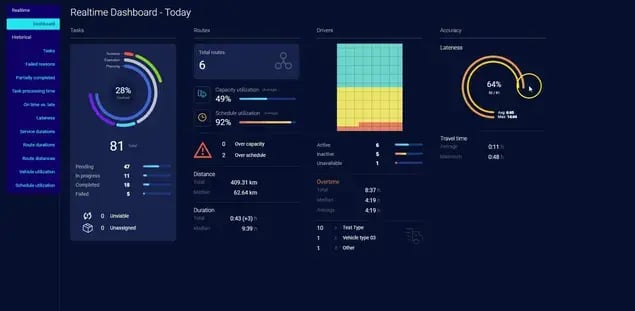
Five metrics indicate bundling health.
- Visit count per period: This measures total visits dispatched relative to jobs completed. When bundling is working, you'll see a declining visit count alongside a stable or rising job count. If visit count tracks proportionally with job volume, bundling isn't producing results. This is the single most important indicator.
- Jobs per visit: The average number of jobs completed per technician arrival at a site. In complex, multi-job operations, a healthy trend moves above 1.5 jobs per visit. If this metric stays near 1.0, you're running one job per visit and bundling exists on paper only.
- Cost-to-serve per job: Total operational cost (labor, fuel, vehicle, overhead) divided by jobs completed. As bundling improves and visits decline, fixed costs per visit get distributed across more jobs, and cost-to-serve drops. This is the metric your CFO cares about most.
- Planner load: Reactive interventions per day per planner. When execution automation absorbs routine scheduling task bundles and re-optimization, planners handle fewer manual overrides. Declining planner load means the system is handling bundling decisions, and planners are focused on genuine exceptions.
- SLA stability: The percentage of SLAs met during periods of high change volume. This is the guard rail. If SLA performance degrades as bundling increases, the bundling logic is too aggressive. Healthy bundling produces stable or improving SLA performance even as it consolidates visits.
Here's how that looks at a glance:
| Metric |
What It Measures |
What Improvement Looks Like |
Warning Signal |
| Visit count per period |
Total visits vs. jobs completed |
Declining visits, stable/rising jobs |
Visit count tracks proportionally with job volume |
| Jobs per visit |
Average jobs per technician arrival |
Trend above 1.5 in complex operations |
Consistently near 1.0 |
| Cost-to-serve per job |
Total ops cost / jobs completed |
Declining as bundling improves |
Rising or flat despite bundling efforts |
| Planner load |
Reactive interventions per planner/day |
Declining manual overrides |
Planner interventions rising with volume |
| SLA stability |
SLAs met during high-change periods |
Stable or improving under disruption |
SLA breaches increase as bundling increases |
One note on baseline:
Organizations that have never measured visit count versus job count will almost always discover a fragmentation ratio higher than expected.
This baseline measurement alone is often commercially significant for justifying execution investment.
eLogii Helps Field Service Operations Bundle Tasks Efficiently
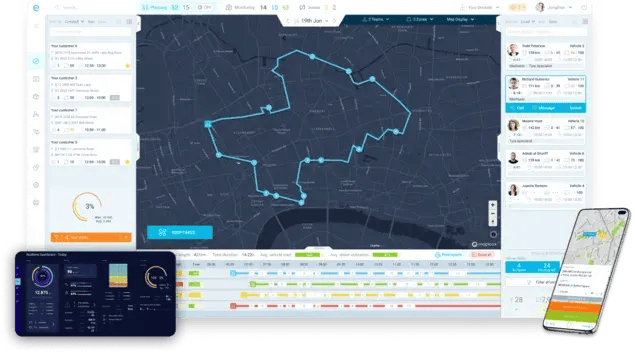
Everything described in this playbook, the visit-level optimization, the dynamic bundling, the continuous re-optimization, the SLA-aware execution decisions, these are capabilities that require a purpose-built execution layer. eLogii is that layer.
eLogii sits between your system of record (FSM or CAFM) and your field workforce, translating job data into optimized, dynamic, visit-level execution plans.
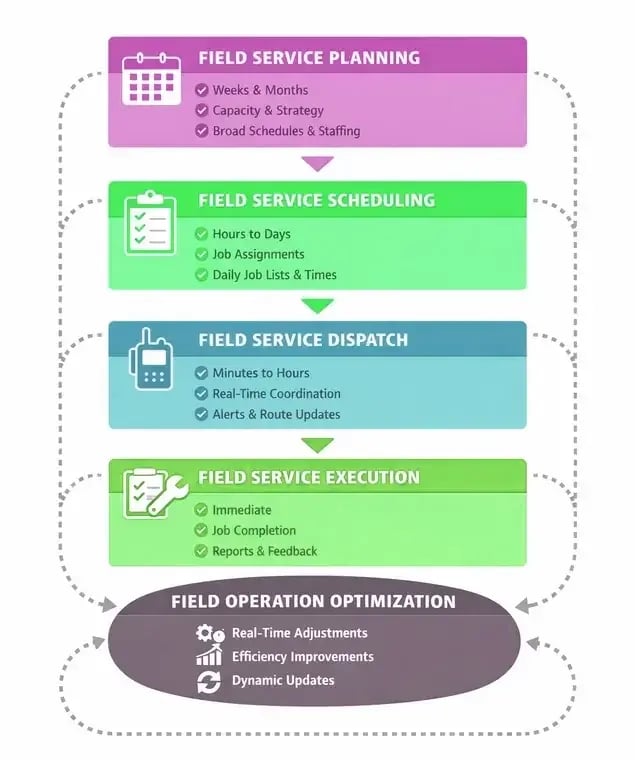
It doesn't replace your FSM tools. This key to take note of.
It simply makes them more effective by handling the execution problem they weren't built to solve.
Here's how it does this:
Execution Layer: Software That Enables Task Bundling and Actually Optimizes Field Operations
The execution layer is the software layer that sits above the FSM (system of record) and below the ERP (system of finance).
Its role:
Translate job data into optimized, dynamic, visit-level execution plans that adapt continuously to changing conditions.
This layer exists as a category because FSM tools were designed to manage job records, not to optimize visits dynamically. The gap between work is assigned and work is executed efficiently is the execution layer's entire purpose.
The integration model is straightforward:
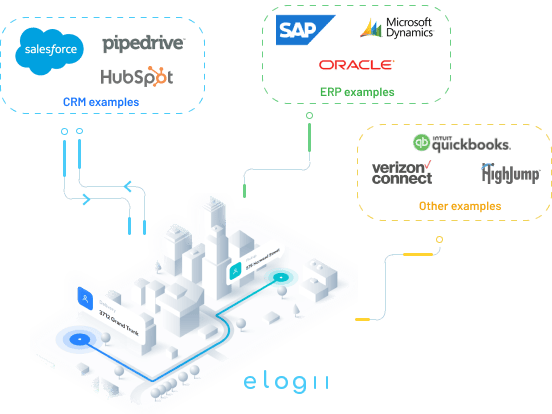
eLogii handles visit-level optimization, manages dynamic bundling and re-optimization mid-shift, and then sends execution data (actual visit times, job sequences, SLA status) back to the FSM for record-keeping.
No system gets replaced. Each tool does what it was built to do.
And because eLogii is API-first with thorough documentation, connecting it to your existing FSM or CAFM tools is a clean integration.
Here's how eLogii handles each of the execution behaviors described earlier in this playbook:
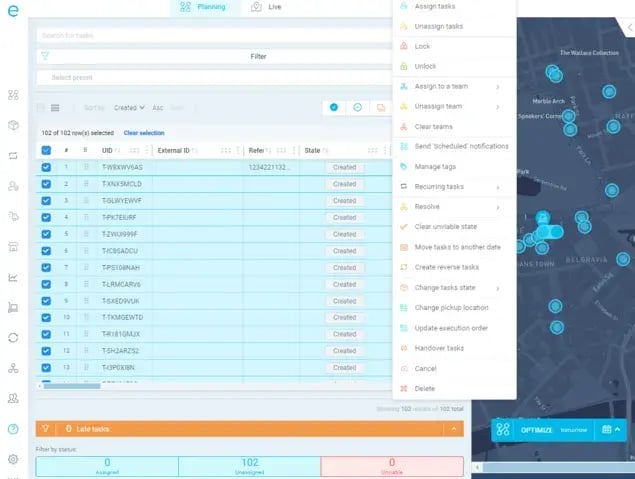
- Dynamic scope aggregation: When new jobs arrive from the FSM (reactive calls, follow-ups, escalations), eLogii automatically evaluates them against all open visits before creating new ones. The FSM pushes the job; eLogii determines which visit absorbs it or whether a new visit is required. The FSM retains the job record; eLogii manages the execution assignment.
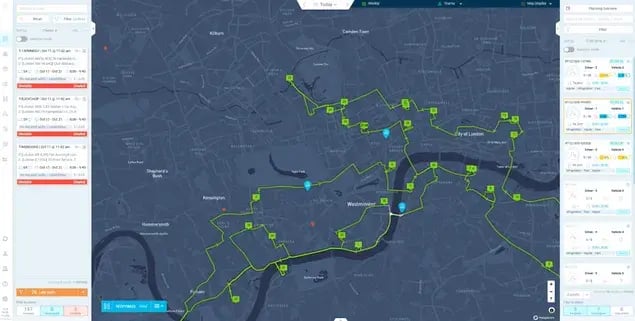
- Continuous re-optimization: When any variable changes mid-shift, eLogii recalculates the entire downstream visit sequence automatically. Planners don't need to replan in the FSM. eLogii handles the re-bundling and pushes updated schedules to technicians in the field while syncing status changes back to the FSM.
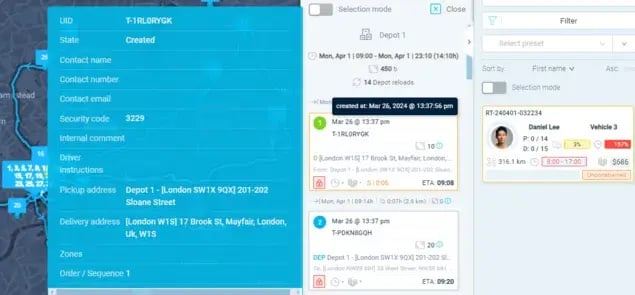
- Planners supervising outcomes: Planners set constraints and parameters in eLogii (SLA priorities, trade rules, access windows, capacity limits). The system handles routine bundling decisions. Planners see a live dashboard of execution outcomes and intervene only when eLogii surfaces genuine exceptions. The FSM remains the source of truth for job records and compliance documentation.
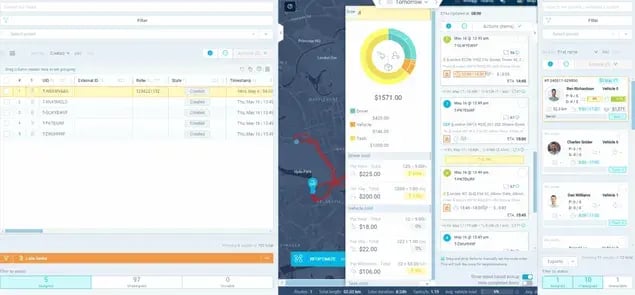
- SLA-aware trade-offs: Every bundle eLogii creates is weighted by compliance impact. If consolidating two jobs into one visit would cause an SLA breach on either job, the bundle isn't created. eLogii evaluates both the efficiency gain and the compliance risk simultaneously, pulling SLA data from the FSM to ensure no consolidation overrides contract obligations.
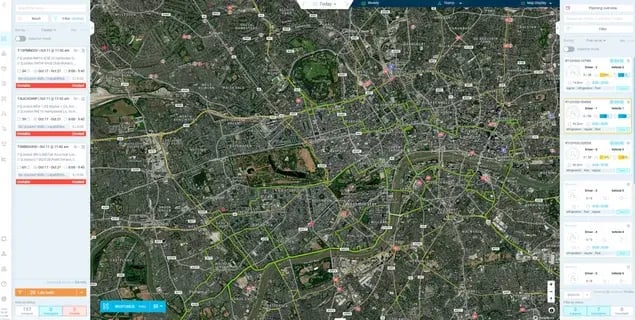
- Site vs. geographic bundling: eLogii evaluates both dimensions at the same time across the full workforce, with SLA compliance as a main constraint. The system determines whether site bundling or geographic bundling produces better execution outcomes for each visit, and shifts between the two dynamically as conditions change throughout the day.
Who This Playbook Is (and Isn't) For
This playbook, and the execution layer it describes, is designed for a specific operational profile. This includes most field service operations:
- Pest control services
- Facility maintenance and management
- Systems safety and compliance
- Testing and inspection
(Sites, systems, equipment)
- Environmental and waste collection
- Debt collection and enforcement
Being clear about fit matters because the execution layer is a complexity multiplier: it produces the most value for operations where the combinatorial problem of matching jobs, visits, sites, technicians, and SLAs is genuinely difficult.
| Criteria |
Right Fit for Execution Layer |
Continue with FSM / Manual Bundling |
| Workforce size |
75 to 1,000+ technicians |
Fewer than 20 technicians |
| Jobs per technician per day |
Multiple jobs across same or nearby sites |
One job per technician per day |
| Service model |
Multi-trade or multi-service delivery |
Single-trade, single-service |
| SLA environment |
Active SLA, compliance, or regulatory obligations |
Minimal SLA pressure |
| Operational evidence |
Duplicate visits, fragmented scheduling, planner overload |
Stable conditions, low day-to-day variance |
| Schedule dynamics |
High daily variability, reactive work volume |
Static routes, infrequent schedule changes |
If your operation falls in the right-fit column, the execution layer addresses a problem that's costing you margin every day. If your operation falls in the second column, simpler tools solve your problem well, and there's no reason to add infrastructure complexity you don't need.
The execution layer produces the most value where the problem is hardest. If the problem is simple, simpler tools solve it.
Bottom Line: Efficient Task Bundling Is Planned Around Visits
Bundling fails when it's designed as a planning task and executed in a world that doesn't hold still. The structural reasons are clear:
- Static bundling can't survive dynamic execution
- FSM tools weren't built to optimize visits
- Manual sequencing can't evaluate the full combinatorial space
What actually enables bundling at scale:
- Visit-level optimization
- Dynamic bundling decisions
- Continuous re-optimization
- SLA-aware execution logic operating as an automated, continuous execution layer
For organizations running complex, multi-trade, SLA-driven field operations, moving from fragmented execution to dynamic task bundling is an infrastructure decision. The margin is there. The SLA improvements are there. The planner capacity is there. The capability to unlock it lives in the execution layer.
If you're ready to see what dynamic bundling looks like for your operation, click the banner below to book a custom demo with our team.
FAQ About Task Bundling
What is field service task bundling and how is it different from route optimization?
Task bundling is visit-level job consolidation: collapsing multiple jobs into fewer site visits. Route optimization sequences already-assigned jobs for travel efficiency. Bundling determines which jobs share a visit; routing determines the order.
Why does bundling work in theory but fail in practice for most operations?
Bundling designed at planning time can't survive PPM-reactive collision, SLA overrides, access constraints, and same-day change. The gap between static planning and dynamic execution is where bundles break.
What is the difference between bundling by site and by geography in field service?
Site bundling combines multiple jobs at one location into a single visit. Geographic bundling groups nearby sites into efficient sequences. SLA urgency and access constraints determine which takes priority at any moment.
How do you measure if job bundling is actually improving operational performance?
Track five metrics: visit count trends, jobs per visit, cost-to-serve per job, planner load (reactive interventions per day), and SLA stability under disruption. These measure bundling outputs, not inputs.
What capabilities do you need before dynamic task bundling becomes viable?
Four execution-layer capabilities: visit-level optimization, dynamic bundling as work arrives, continuous re-optimization when conditions change, and SLA-aware decision logic that weighs compliance impact on every bundle.