Field service planners who manage multi-site contracts know the frustration of task bundling:
Consolidate work by site and watch drive time climb.
Or:
Cluster by geography and find scope fragmented across visits that should have happened together.
The teams having this argument are usually experienced. The debate is a symptom of constraint.
Operations running 50+ technicians across multiple jobs per day, multi-site or multi-trade environments, with SLA obligations and reactive work hitting live schedules, face a problem that neither site-based nor geographic bundling fully resolves.
For everyone managing the gap between planned work and delivered margin, the core insight is this:
Field service task bundling fails because you treat what is fundamentally a dynamic execution problem as a static planning decision.
Site-based bundling optimizes what gets done together.
Geographic bundling optimizes where work happens.
And high-performing operations need both evaluated simultaneously, continuously, against the live state of the day.
In this guide, we explain the value of both, and how to do it.
Plus:
Key Takeaways
- Site bundling and geographic bundling solve different problems. Site-based task bundling eliminates repeat access overhead and consolidates trades across a single visit. Geographic bundling reduces drive time and increases stop density. Each ignores what the other addresses.
- Both approaches collapse under live conditions. SLA overrides and reactive work arrive in real time. A static bundle built the night before has no mechanism to absorb them without breaking the plan.
- The site vs geography debate is a false binary. High-performing operations stop pre-selecting a bundling model and instead evaluate every visit simultaneously against all constraints, continuously throughout the day.
- Manual planning cannot resolve this at scale. At 50+ technicians with multi-job days, multi-site scope, and live SLA pressure, the combinatorial complexity of visit-level trade-offs exceeds what any planner can evaluate within a dispatch window.
- Dynamic, visit-level optimization is what actually works. When the execution layer evaluates site proximity, geographic density, SLA urgency, skills, and access constraints together, bundling decisions emerge from the constraint set rather than being pre-assigned to a category.

What Is Task Bundling by Site? And What Does It Actually Optimize?
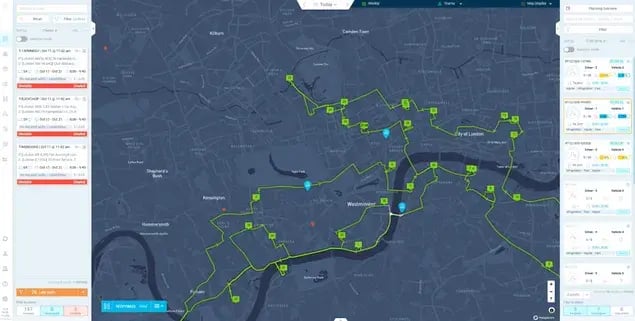
Site-based bundling means consolidating multiple work orders at the same physical location into a single technician visit or coordinated visit window.
The result:
Fewer separate visits to the same site means less access coordination, less building disruption, and lower overhead absorbed per job.
The problems it solves are significant for multi-trade, compliance-driven operations.
Every return visit to a managed site carries coordination cost, including security clearances, escorted entry, equipment lockout procedures, building notification requirements. Bundling work orders by site removes those costs from each individual visit and absorbs them once across the full scope.
Compliance documentation stays cleaner with audit trails aligned to a single visit record rather than scattered across several partial ones.
Trade consolidation becomes possible in the same window: electrical, mechanical, and fabric maintenance can share one site mobilization instead of three.
What site-based bundling doesn't address is the sequence between sites.
Once work is consolidated at each location, the order in which technicians travel those locations is entirely unresolved. A well-constructed site bundle can still produce a technician covering significant distance between non-adjacent locations with no geographic logic applied.
The gain on access overhead is real. But the cost in drive time remains invisible to the model.
| |
Site-Based Bundling |
Geographic Bundling |
| Primary Optimization Target |
Work scope at a single location |
Drive time between locations |
| Key Operational Benefit |
Eliminates repeat access overhead, consolidates trades |
Reduces fuel cost, increases jobs-per-day capacity |
| What It Ignores |
Travel sequence between sites |
Scope fragmentation, access coordination, trade alignment |
| Typical Failure Mode |
Drive time rises as technicians travel between non-adjacent sites |
Partial completions create return visits that erase geographic savings |
| Applicable Operation Type |
Multi-trade, compliance-driven, access-intensive |
High-density territories, consistent scope, predictable job types |
What Is Geographic Task Bundling? And What It Actually Optimizes?
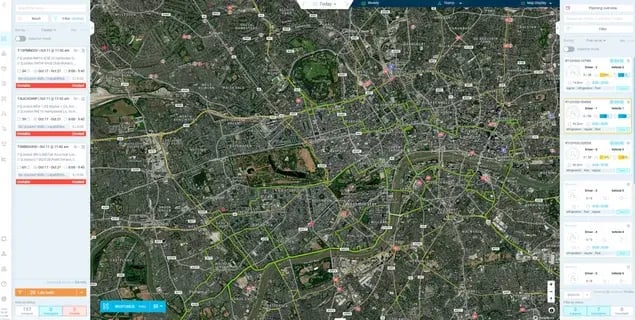
Geographic task bundling groups work orders by proximity to minimize windshield time, increase stop density within a service zone, and produce more predictable technician days.
When it works, it reduces fuel and vehicle costs, increases jobs-per-day capacity, and gives territory planners a consistent model to build against week over week.
For operations with predictable job scope, consistent trade types, and low access complexity, geographic clustering delivers real efficiency gains.
Stop sequencing becomes cleaner, drive-time-per-visit drops, and territory density planning becomes easier to model and defend commercially.
The blind spot is scope. Geographic bundling says nothing about whether the jobs at nearby locations should be grouped together.
For example:
Two sites 800 meters apart may require different trades, carry separate access windows, and sit at different SLA priority tiers.
A geography-first model clusters them by proximity and sends technicians into situations where the work cannot be completed in the assumed sequence. Partial completions, return visits and drive-time savings disappear under the access overhead that was never accounted for.
Geographic bundling optimizes where work happens.
But the question of what gets done together (and whether it should) remains open.
Why Each Approach to Task Bundling Fails When Used in Separately
The failure modes of site-only and geography-only bundling are mirror images of each other, and understanding them together reveals why choosing between them is always a losing trade-off.
When planners consolidate all work at each site before considering geography, technicians travel between those sites in sequences that bear no relationship to proximity.
Drive time rises even as site return frequency drops. The gain on one dimension creates a direct cost on the other, and the net margin effect is often neutral or negative.
Geography-only bundling produces the reverse. Nearby jobs get clustered efficiently on a map, but scope fragmentation means some sites receive partial trades.
A building that needs electrical and HVAC work gets one technician Monday and another Wednesday, with two full access coordination cycles for work that could have happened in a single visit.
The return visit cost erases the geographic efficiency gain.
Both failure modes are compounded by constraints that neither model accounts for.
SLA windows don't bend to accommodate bundling preferences. Contractual obligations force technicians out of both site clusters and geographic runs at unpredictable intervals.
Reactive work arrives throughout the day from locations that have no relationship to the existing bundle, requiring insertion into a live schedule built around different assumptions.
Static bundling strategies collapse under live conditions because neither model carries the full constraint set at execution time.
How SLAs and Reactive Work Distort Both Task Bundling Models
SLA escalation is the most reliable disruptor of any pre-built bundling plan:
- Response windows and task priority define which visits can be deferred and which must be dispatched immediately, regardless of where they fall in a current bundle. A P1 response obligation does not wait for a site cluster to complete or a geographic run to close.
- Compliance windows add a second layer. In facility management and multi-trade environments, audit-trail obligations tie specific visit windows to contractual commitments. Missing a compliance window is a contractual breach that carries financial consequence. Any bundling model that doesn't account for these windows will routinely break against them.
- Reactive work creates a structural disruption distinct from SLA pressure. Emergency callouts arrive from arbitrary locations at arbitrary times, carrying their own priority tier, access requirements, and technician skill demands. None of which align with the bundle built the previous evening.
SLAs turn bundling from a preference into a real-time trade-off, and the compound effect matters most:
When SLA overrides and reactive insertions occur simultaneously (which they do, daily), the live schedule no longer resembles the planned one.
A bundle that survived the morning briefing is often unrecognizable by mid-afternoon, and planners are left rebuilding by judgment rather than by logic.
Why Manual Planning Can't Balance Task Bundling by Site vs Geography
At 50+ technicians, multiple jobs per day, multi-site scope, and live SLA conditions, the number of possible visit sequences and bundling permutations exceeds what a planner can evaluate within a dispatch window.
Combinatorial complexity is the issue. And it scales faster than the number of planners.
A planner can optimize for one dimension at a time. They can assess the day's site clusters, or they can assess the geographic run.
But holding both simultaneously against a live constraint set that includes SLA windows, technician skills, access requirements, and an open queue of reactive jobs is beyond manual resolution.
The cognitive load required to evaluate all these dimensions in parallel within a dispatch window doesn't exist.
Time pressure makes it structurally worse. Decisions that an optimization engine resolves in seconds take minutes or hours manually. And the useful window for bundling decisions closes as the day progresses.
For example, a re-sequencing decision that would have protected margin at 8 AM is irrelevant by 11 AM when technicians are already committed to routes.
The consequence is predictable:
Planners default to patterns. Site clusters on certain days, geographic runs on others.
These patterns create consistent, measurable inefficiency. Not because planners lack skill, but because the problem is structurally beyond manual resolution at this scale.
Balancing site and geography is an optimization problem, not a planning judgment.
What High-Performing Teams Do Differently When Bundling Tasks
The operational shift that separates high-performing field service operations from the rest is a different relationship with task bundling itself.
These operations stop pre-choosing between site and geography.
Every visit becomes an optimization unit. Each service visit is something evaluated against the full constraint set rather than assigned to a pre-selected category.
So the bundle isn't a planning item locked-in the night before. The task bundle is an output of continuous evaluation throughout the day.
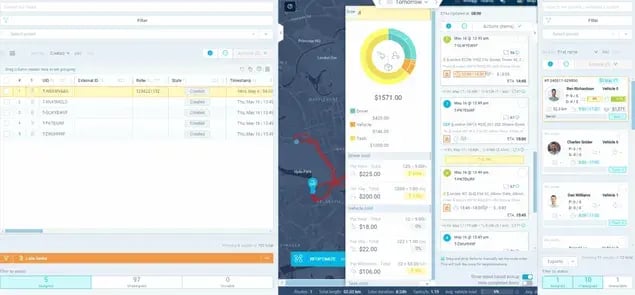
Planners in these operations also manage exceptions, including situations you're familiar with:
- When a client relationship requires a specific technician
- When local knowledge affects access timing
- When a site has constraints the system doesn't capture
These situations and others are the decisions that require human judgment. And the trade-off between site proximity and geographic efficiency isn't one of them.
This continuous evaluation matters most in the middle of the day.
Bundles formed at 7 AM against a clean schedule are reassessed as reactive jobs arrive, SLA clocks tick, and technicians move through their actual sequences. Visits that could be grouped at 9 AM may not be groupable at 2 PM.
The operations that build processes around this reality report lower drive time, fewer duplicate visits, and reduced SLA breach frequency, simply because the evaluation happens at a speed and frequency.
And that's something no planner can match manually.
What Actually Works for Field Service Operations: Dynamic, Visit-Level Optimization
The principle that resolves the debate between task bundling by site vs geography isn't a compromise between the two models.
Instead, it's dynamic, visit-level optimization that evaluates site proximity, geographic density, SLA urgency, technician skills, and access constraints simultaneously, continuously, against the live state of the schedule.
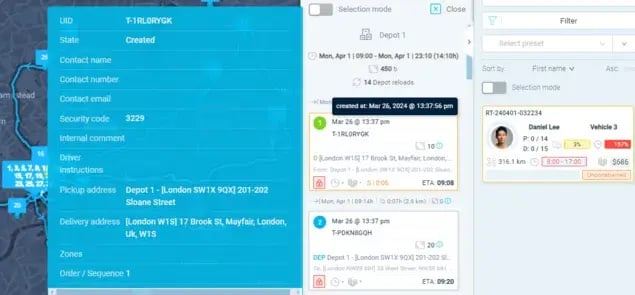
Four capabilities define this approach in practice:
- Continuous re-optimization: Bundles form and reform as conditions change throughout the day (not just at the start of the day). A reactive callout, an SLA escalation, or a completed visit earlier than expected all trigger re-evaluation of the remaining schedule.
- SLA-aware trade-offs: The system weights compliance windows against bundling opportunities and selects visit sequences that satisfy both where possible. Where satisfying both is genuinely impossible, the system surfaces the conflict rather than silently breaking the bundle.
- Simultaneous site and geography evaluation: Neither dimension carries default priority. Both are inputs to the same optimization function, weighted by the live constraint set. Which means the balance shifts naturally as conditions change during the day.
- Real-time execution decisions: Insertions, re-sequences, and exception handling happen at execution time, not the night before. The optimization reflects what is actually true about the day, not what was planned to be true.
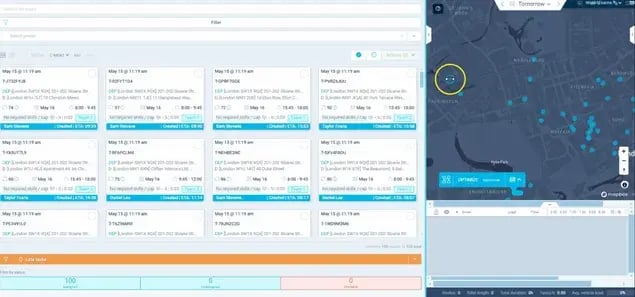
The structural difference between this and better scheduling is worth stating directly.
Scheduling → Decides what should happen tomorrow.
Execution-layer optimization → Decides what should happen now (based on what has changed since the plan was made).
| |
Static (Site or Geography) |
Dynamic Visit-Level |
| Decision timing |
Fixed at planning time |
Continuous throughout the day |
| Bundling logic |
Pre-selected model applied uniformly |
Emerges from live constraint evaluation |
| SLA handling |
Overrides break the bundle manually |
Weighted into optimization function in real time |
| Reactive work absorption |
Requires manual re-planning |
Absorbed and re-optimized automatically |
| Planner role |
Manages bundling trade-offs |
Manages exceptions and client context |
| Scale ceiling |
Degrades above ~20-30 technicians |
Designed for 50-500+ technician operations |
| Margin protection |
Inconsistent - dependent on planner capacity |
Structural - built into evaluation frequency |
Bundling works when the system decides. Not when humans choose one model over the other.
How eLogii Provides Continuous Task Bundling for Field Service Operations
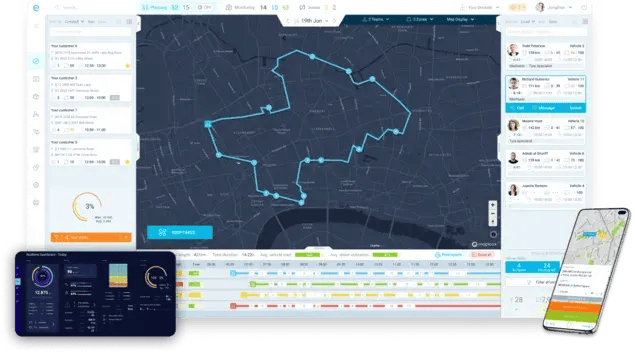
eLogii operates as the execution layer that sits alongside FSM and CAFM systems:
- Your FSM and CAFM platforms remain systems of record that manage contracts, work orders, compliance documentation, and asset history.
- eLogii takes over optimization in real time, against the live state of the schedule.
Here's what that looks like in practice:
→ eLogii evaluates visits continuously against site, geography, SLA, and technician constraints simultaneously.
→ The bundling logic isn't pre-configured, so it emerges from the optimization engine at execution time, shaped by the actual constraint set for that day.
→ The system evaluates site or geography as inputs and produces visit sequences that reflect the live trade-offs.
The integration posture matters for operations with established technology stacks.
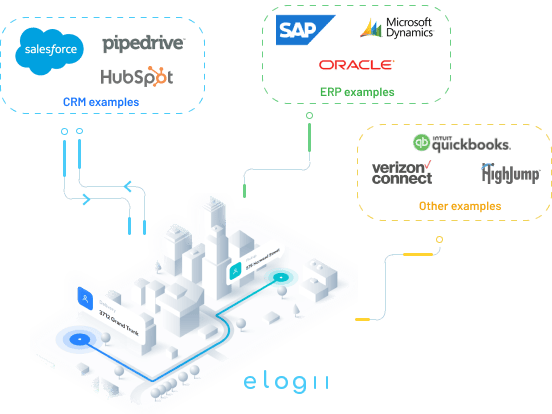
eLogii connects to FSM, CAFM, ERP, and telematics platforms via API, so optimization decisions draw on live operational data rather than a planning snapshot from the previous evening. The schedule being optimized reflects:
- Current technician locations
- Completed visits
- Open reactive jobs
- Active SLA clocks
- And more
At scale, eLogii handles operations managing 40,000+ visit planning workloads, with multiple jobs per technician per day across multi-site and multi-trade environments. The commercial logic for operations at this complexity is direct:
Moving bundling decisions from planners to the execution layer reduces drive time, duplicate visits, SLA breach frequency, and planner overhead, protecting margins without adding headcount.
Who Execution-Based Task Bundling Is (and Isn't) For
The reframe in this article applies to a specific operational profile. So it's worth being explicit about both:
For operations running 50 or more technicians with multiple jobs per day, multi-trade or multi-site scope, SLA compliance obligations, and a live mix of planned and reactive work, the static bundling model breaks down structurally.
For you, the problem is that the decision complexity exceeds what manual planning can resolve at execution speed. If you recognize this, and move bundling decisions to the execution layer, you stop arguing about models and start protecting margins.
The insight doesn't apply equally to every field service context:
Static single-job routes, low-variance scheduling environments, and operations without meaningful SLA or reactive work pressure face a different problem set.
For you, a well-structured site-based or geographic bundling approach may be entirely adequate, and the additional complexity of visit-level optimization isn't warranted.
If your operation combines planned and reactive work, carries compliance obligations with financial consequence, and runs multiple jobs per technician per day across multiple locations, the reframe applies.
If it doesn't, a simpler model will serve you well, and this article will self-exclude you accordingly.
Bottom Line
The site vs geography debate stays unresolved in most organizations because both sides are partially right.
But partial correctness makes the argument feel substantive when the real problem is elsewhere.
Three structural findings close the loop:
- Site-based task bundling and geographic task bundling each optimize one dimension well.
- Both collapse under the combined pressure of SLA windows and reactive work.
- The approach that holds at scale is continuous, visit-level optimization. Here neither model is pre-selected, and both dimensions are evaluated simultaneously against the live constraint set.
For operations carrying margin pressure, compliance obligations, and multi-site complexity, the shift from planning-led job bundling to execution-layer optimization protects margin structurally:
- Duplicate visits drop.
- Drive time falls.
- SLA breach frequency reduces.
- Planners spend their time on exceptions (not on trade-offs that reduce their capacity).
The debate about which bundling model is the wrong conversation. The right one is whether your execution layer can evaluate both simultaneously, continuously, in real time.
And if you're looking to make the first step in this direction, here's what you need to do:
FAQ about Task Bundling in Field Service Operations
What is task bundling in field service, and why does it matter?
Task bundling means grouping multiple work orders into a single technician visit instead of dispatching separate trips for each job. It cuts drive time, reduces access coordination, and keeps compliance records cleaner. The cost case is simple: duplicate visits waste money, and avoidable SLA breaches carry contractual penalties.
What is the difference between bundling by site and bundling by geography?
Site-based bundling controls what gets done together, including consolidating trades and work orders at one location to cut repeat access. Geographic bundling controls where work happens, including grouping nearby jobs to reduce drive time. Both matter: without site bundling you fragment scope, and without geographic bundling you waste time routing between visits.
Why does geographic bundling sometimes increase costs instead of reducing them?
Geographic bundling clusters jobs by proximity, but proximity has nothing to do with whether those jobs share the same scope. Nearby sites with mismatched work still generate partial completions, each one triggering a return visit that wipes out any drive-time savings. That's scope fragmentation, and a geography-only model won't catch it.
How do SLAs affect a field service bundling strategy?
SLAs turn bundling from a scheduling preference into a real-time constraint. When a high-priority window opens, technicians have to break from their current run to meet the contractual deadline (regardless of how the bundle was built). A schedule with no SLA weighting doesn't bend gracefully under pressure. It breaks, and someone has to fix it manually.
When should you move from manual bundling to automated visit-level optimization?
The tipping point is scale. Once you're managing 50+ technicians across mixed trades, live SLAs, and reactive work, no dispatcher can evaluate site and geographic trade-offs fast enough. The combinations multiply too quickly, and errors add up fast enough to justify pushing optimization to the execution layer. This includes extra drive time, duplicate visits, missed SLAs.