Every FM operations leader managing PPM facilities management knows this pattern: you build next week's schedule on Friday, balancing statutory compliance windows across HVAC, electrical, fire, and plumbing trades. By Tuesday morning, half of it's already obsolete.
A boiler fails at a hospital site. Gas safety compliance escalates to P1. An emergency callout diverts your most experienced engineer mid-route. Your planners spend the rest of the week rebuilding schedules that will break again within 48 hours.
This isn't poor planning. It's not insufficient headcount or inadequate CAFM systems. It's the structural reality of combining fixed PPM cadences with unpredictable reactive demand across multi-site, multi-trade estates.
In facilities management, reactive work doesn't disrupt PPM schedules-it competes with them for the same constrained resources, under the same statutory deadlines, across the same access windows. At scale, this competition creates unavoidable execution failure, no matter how sophisticated your planning process.
This article explains why that conflict is mechanical, how it plays out in real FM operations, and what high-maturity organizations do differently to stabilize service delivery without adding planner headcount.
Key Takeaways
- Reactive maintenance and PPM aren't just competing priorities - they're fundamentally incompatible demand patterns sharing the same constrained resource pool of engineers, site access windows, and trade qualifications, creating unavoidable execution conflicts at scale.
- The weekly cycle is predictable: Friday's optimized PPM schedule becomes obsolete by Tuesday as emergency callouts, statutory compliance escalations, and P1 reactive jobs systematically displace planned work, forcing planners into continuous schedule rebuilding that breaks again within 48 hours.
- High-maturity FM operations resolve this structural conflict through dynamic resource allocation capabilities that adjust PPM schedules in real-time as reactive demand arrives, rather than treating planning as a weekly batch process that assumes stable conditions.
- The solution isn't more planners or better CAFM systems - it's operational infrastructure that acknowledges reactive work as a continuous variable and builds scheduling logic that maintains statutory compliance windows while absorbing unpredictable demand without cascading failures.

Why PPM and Reactive Work Are Structurally in Conflict
Here's the reality that most FM content dances around: planned and reactive maintenance aren't just different work types competing for calendar space. They're fundamentally incompatible demand patterns forced to share the same constrained resource pool.
Fixed Cadence vs. Unpredictable Demand
PPM operates on fixed cadences. Your fire alarm inspections run every six months because statute says so. Gas safety checks hit annual windows. Air conditioning maintenance follows manufacturer intervals that protect warranties. Electrical testing cycles run on 1-5 year schedules depending on environment risk.
These aren't arbitrary preferences. They're compliance obligations, legal requirements, and risk management protocols. Once set, they create non-negotiable windows. Miss a statutory gas safety check, and you're carrying liability. Skip electrical testing, and insurance coverage becomes questionable.
Reactive work guarantees the opposite. Emergency callouts arrive with zero notice. A fire alarm failure triggers immediate statutory obligation to restore protection. An HVAC breakdown in a hospital demands 2-4 hour response. A legionella risk in water systems requires urgent remedial action. None of these can wait for a convenient scheduling gap.
Compliance Priority Overrides
When reactive jobs involve statutory compliance or safety risk, they immediately supersede planned work. A fire system failure creating legal liability overrides routine HVAC servicing. Emergency site access cannot wait for scheduled fabric inspections to complete.
This priority hierarchy is operationally correct - compliance and safety must take precedence. But it systematically destabilizes PPM schedules.
Resource Constraint Reality
Both demand types require identical finite resources: qualified engineers with specific trade certifications (Gas Safe, electrical qualifications, F-Gas certification), access windows to controlled sites, and available hours in an 8-10 hour operational day.
When a reactive job claims an engineer and a site access window, that capacity vanishes from PPM availability. The resource pool cannot expand instantly to accommodate both.
PPM assumes predictability. Reactive work guarantees the opposite. When both compete for constrained resources, execution conflict is inevitable.
How This Conflict Plays Out in Real FM Operations
Let's walk through a typical week at a regional FM provider managing healthcare estates across 50 engineers. This isn't hypothetical - this is how the mechanical breakdown happens.
Monday Morning: The Perfect Plan
The PPM calendar shows 120 planned visits for the week. Monday's schedule alone includes 15 statutory inspections (fire alarms, emergency lighting, gas safety checks), 10 HVAC servicing visits, 8 electrical PPM tasks, and 5 plumbing inspections.
Everything's optimized. Engineers are trade-matched to their qualifications. Routes are geographically clustered to minimize drive time. Site access windows are confirmed. Compliance deadlines are tracked in the CAFM system, and nothing's approaching risk territory yet.
Tuesday Afternoon: Reality Intrudes
Within 90 minutes on Tuesday morning, three reactive demands arrive.
First: a fire alarm control panel has failed at a 200-bed hospital. This is Category 1 statutory work - no building can legally operate without fire protection. An engineer must be dispatched immediately.
Second: an HVAC breakdown in a surgical suite creates an infection control risk. The SLA requires a 4-hour response.
Third: a legionella risk assessment has identified urgent remedial work in a care home water system. Statutory compliance demands immediate action.
All three jobs require specialist-qualified engineers: Fire & Security certification, HVAC qualification with healthcare experience, Water Hygiene specialist credentials.
The planner starts reshuffling. Two Monday PPM visits are postponed. Three Tuesday visits get pushed to Wednesday. One engineer's entire day is replanned to accommodate the fire alarm emergency.
Wednesday Through Friday: Cascading Replanning
By Wednesday, the original schedule is unrecognizable. Postponed Monday and Tuesday PPM visits now compete for Wednesday's capacity alongside Wednesday's original plan. Two more reactive callouts arrive - an electrical fault and a plumbing emergency.
Engineers are working 10-hour days trying to catch up. Site access windows are being negotiated and re-negotiated. Planners spend 6+ hours daily firefighting: manually reassigning jobs, calling sites to reschedule access, coordinating engineer movements across regions.
By Friday, 18% of the week's planned PPM visits have been rescheduled into next week. Three compliance windows are now within two weeks of deadline, entering risk territory. The planner is already dreading Monday, when this week's deferred work will collide with next week's fresh PPM schedule.
This pattern repeats every single week because the conflict is structural, not operational. Better planning can't prevent reactive work from arriving unpredictably.
Why CAFM and FSM Scheduling Cannot Resolve This at Scale
Let's be clear upfront: CAFM and FSM systems are excellent tools that do exactly what they were designed to do.
They track assets, maintain work order history, manage compliance documentation, schedule PPM calendars, and provide visibility into planned obligations. They are systems of record and planning infrastructure.
This isn't a criticism of these tools - it's a recognition of their architectural design.
What CAFM Systems Do Extremely Well
CAFM platforms maintain comprehensive asset registers with maintenance history, warranty information, and compliance requirements.
They automate PPM schedule generation based on manufacturer intervals, statutory requirements, and usage thresholds. They track compliance windows and send alerts when deadlines approach.
They manage work orders from creation through completion, capturing labor hours, parts used, and task outcomes.
They provide reporting dashboards showing completed vs. planned maintenance, asset health scores, and budget tracking.
For planning and obligation management, they are indispensable.
Job-Centric Scheduling Logic
Here's where the architectural model becomes relevant. CAFM scheduling is job-centric - it organizes work around jobs (tasks), not around execution resources (engineers, time, routes).
When you create a PPM schedule, the system assigns each job to a date and often to an engineer. This works perfectly for planning because it answers "what work needs to happen when."
However, when reactive work arrives and resources must be reallocated, the system does not automatically rebalance the entire schedule. It requires manual intervention:
The planner must identify affected jobs, reassign them individually, check for knock-on effects (is the rescheduled job now conflicting with another job?), and update site access arrangements.
Batch Planning Assumptions
CAFM systems assume batch planning cycles - you plan the week or month in advance, then execute the plan. This matches how planning works but mismatches how execution works at scale.
Reactive work doesn't arrive in batches at the start of the planning cycle. It arrives continuously throughout execution.
By the time a reactive job is logged, the CAFM-generated schedule is already live - engineers are en route to planned visits.
Rebalancing now requires interrupting live execution and manually rebuilding parts of the schedule.
Lack of Continuous Rebalance
CAFM systems do not continuously reoptimize schedules based on real-time events:
New reactive jobs arriving, engineers running late due to traffic, jobs taking longer than estimated, site access windows shifting.
They show you the plan and let you track deviations, but they do not dynamically recalculate optimal resource allocation across all active and pending work.
CAFM systems manage obligations. They do not dynamically reoptimize execution. That is not a deficiency - it is a different layer of the operational stack.
The Cascading Effects of Poor PPM and Reactive Handling
When reactive work consistently displaces planned preventative maintenance, the damage extends far beyond a messy schedule.
These operational failures compound into financial, compliance, and human costs that show up directly in executive KPIs.
Missed Compliance Windows
The risk trajectory is predictable. A fire alarm inspection scheduled four weeks before its statutory deadline gets pushed once to accommodate an emergency callout. Then it's pushed again.
By the third postponement, it's due in five days and must be escalated to emergency status - ironically adding to the reactive workload it was deferred for.
Missed compliance windows create regulatory penalty exposure, invalidate insurance coverage, and generate audit findings. In worst cases, facilities face enforcement notices or operational restrictions.
What started as reasonable prioritization becomes a compliance crisis.
Duplicate Visits and Excessive Drive Time
When an engineer is dispatched to a site for a reactive callout, the PPM visit originally scheduled for that location next week still needs to happen - but now it's a separate trip.
Across an estate spanning 200+ miles and managed by 50 engineers, poor coordination between reactive response and PPM scheduling creates duplicate travel.
Engineers visit the same site multiple times in a week when combined planning would have consolidated visits into one.
Excessive drive time reduces billable engineer hours and increases fuel costs.
Overtime and Cost Overruns
Constant replanning leads to schedule overload. Work deferred from Monday through Wednesday gets crammed into Thursday and Friday, requiring overtime shifts.
Engineers work 50-60 hour weeks instead of 40. Overtime rates compound labor costs at 1.5x to 2x standard. Work that should cost £40 per hour becomes £60-80 per hour, simply because scheduling chaos forced evening and weekend shifts.
Planner Firefighting and Burnout
Planners spend 60-80% of their day firefighting instead of strategic capacity planning. They're manually rescheduling disrupted PPM visits, negotiating site access changes, and coordinating engineer reassignments.
High planner turnover follows, destabilizing operations as institutional knowledge walks out the door.
These effects compound weekly into operational instability: rising cost per visit, declining compliance hit rates, increasing overtime expense, and deteriorating service delivery metrics.
Why Better Planning and More Planners Do Not Fix the Problem
When PPM schedules collapse week after week, the executive instinct is understandable:
Invest in better planning infrastructure.
Hire more experienced planners, implement more sophisticated processes, add buffer time into schedules, or upgrade to a more advanced CAFM system with better scheduling features.
These interventions make intuitive sense because planning is visible, measurable, and feels like taking control.
The Planning Instinct
The logic seems sound. If one planner can't keep up with the complexity of managing PPM facilities management alongside reactive work, surely two planners can handle it better. If schedules keep breaking, surely more detailed planning will make them more resilient.
But this is where the math stops working.
Why Planners Work Harder, Not Smarter
Adding a second planner does not halve the workload - it creates coordination overhead. Now two planners must synchronize their decisions, communicate about resource allocation conflicts, and avoid double-booking engineers or sites. Adding a third planner compounds the coordination burden.
At 50-500+ engineer scale across multiple trades and regions, planning is not a one-person job, but it does not scale linearly with headcount either. More planners means more meetings, more handoffs, and more time spent coordinating rather than planning.
Why Schedules Get More Brittle
Here's the paradox: more detailed planning creates more brittle schedules. A meticulously optimized weekly schedule that perfectly load-balances engineers, minimizes travel time, and sequences jobs for maximum efficiency is also a schedule with zero slack.
When reactive work arrives and one job must be moved, the tightly coupled schedule creates cascading conflicts. Moving Job A impacts Job B which impacts Job C. The more optimized the plan, the harder it is to adapt when reality diverges.
Structural Limits of Planning
You cannot plan away uncertainty that is structurally guaranteed to arrive. Reactive work is not a planning failure - it is a characteristic of the demand environment. No amount of planning eliminates unpredictable emergency callouts, statutory compliance failures, or equipment breakdowns.
At scale, planning complexity grows exponentially while planner capacity scales linearly. The math does not work.
Planning addresses predictable work. Execution infrastructure addresses the moment when predictability ends.
What Managing PPM and Reactive Work Actually Requires
Balancing planned and reactive maintenance in facilities management at scale isn't a planning challenge - it's an execution infrastructure problem.
When you're managing 50+ engineers across multiple trades and sites, the gap between what was planned Monday morning and what's actually happening by Tuesday afternoon demands different capabilities entirely.
Continuous Reoptimization
Instead of planning once and executing the plan, operations need systems that continuously reoptimize resource allocation as new information arrives. When a reactive HVAC job is logged at 10:15 AM, the system should immediately recalculate:
-
Which engineer is closest with the right trade qualification?
-
Which planned PPM visits can be rescheduled with minimal compliance impact?
-
Which jobs can be bundled to reduce duplicate travel?
This happens in real-time, not during tonight's replanning session.
SLA-Aware Reprioritization
Not all reactive jobs carry equal urgency. An emergency fire system failure has a 2-hour SLA; a non-critical plumbing repair has 24 hours.
Similarly, not all PPM is equal. Some tasks are approaching compliance deadlines with 7 days remaining, others have months of buffer.
Execution systems need to prioritize dynamically based on SLA urgency, compliance windows, site access constraints, and resource availability, not based on who called loudest.
Trade-Aware Routing
Assigning a reactive HVAC job to the nearest engineer is wrong if that engineer is Gas Safe certified but not HVAC-qualified. Trade certifications (Gas Safe, electrical Part P, F-Gas, Water Hygiene, Fire & Security) are hard constraints.
You cannot substitute an electrician for a gas engineer. At 50+ engineer scale, this is not mentally calculable in real-time.
Real-Time Trade-Offs
Execution systems should present planners with options:
"Dispatch Engineer 12 (15 minutes away, will delay his 2 PM PPM by 1 hour but compliance window has 3 weeks buffer)."
Or:
"Dispatch Engineer 22 (35 minutes away, currently between jobs, no schedule impact)."
Planners approve recommendations instead of manually calculating every permutation.
This is an execution problem ≠ a planning exercise.
Planning creates the schedule. Execution infrastructure keeps it viable when reality diverges.
What High-Maturity FM Operations Do Differently
High-maturity facilities management teams have fundamentally rethought how they balance ppm facilities management obligations with reactive demand.
The difference is how they've separated strategic compliance management from tactical execution.
PPM Treated as Flexible Execution Targets
The mindset shift starts here: PPM calendars are compliance targets, not rigid schedules. A quarterly HVAC inspection doesn't need to happen on Week 12, Day 3 at 10:00 AM - it needs to happen within the compliance window (Weeks 11-13).
This flexibility changes everything. Execution systems can bundle work efficiently, absorb reactive demand without emergency replanning, and optimize engineer routes dynamically. The compliance obligation stays non-negotiable. The specific execution timing becomes negotiable within bounds.
Reactive Work Absorbed Dynamically
When a reactive callout arrives, it's not treated as a schedule-breaking crisis. Instead, it feeds into an execution system that automatically identifies the optimal engineer - trade-qualified, geographically close, schedule-available. The system recalculates affected PPM visits and proposes adjustments.
The planner reviews and approves the recommendation in 2-3 minutes rather than spending 30-45 minutes manually rebuilding schedules. Reactive work becomes part of continuous execution flow, not an exception requiring heroic firefighting.
Planners Supervising Outcomes, Not Rebuilding Schedules
Planners in these operations don't spend 60-80% of their day manually rescheduling jobs or calling engineers to reassign work. Execution systems handle tactical rebalancing automatically.
Instead, planners monitor compliance window trajectories, review cost-per-visit trends, identify recurring reactive patterns that suggest underlying asset issues, and refine resource allocation strategies. Their role becomes strategic oversight rather than tactical firefighting.
Data-Driven Capacity Planning
Execution systems generate precise data on how reactive demand actually behaves - which sites generate the most callouts, which asset types fail most frequently, which times see demand spikes. Planners use this data to adjust PPM schedules proactively and make better capacity decisions.
These operations have separated planning (strategic resource allocation and compliance management) from execution (tactical job assignment and dynamic rebalancing). Both layers are essential; neither replaces the other.
How eLogii Handles Reactive Jobs and PPM for Facilities Management
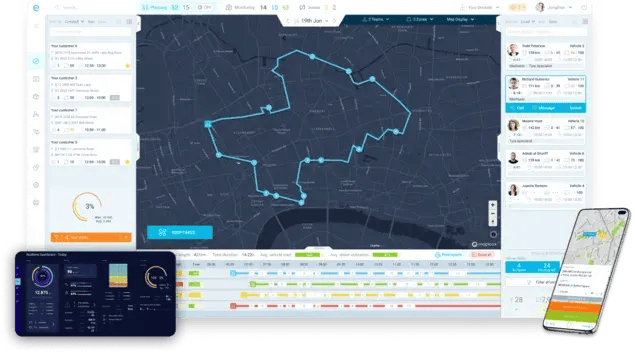
eLogii is the execution layer that sits between your CAFM system and daily reality. It's not replacing anything. Your CAFM remains the system of record for assets, work orders, and compliance documentation.
eLogii handles what happens when the plan meets reality: continuous dynamic rebalancing of engineer assignments, routes, and schedules as reactive work arrives and circumstances change.
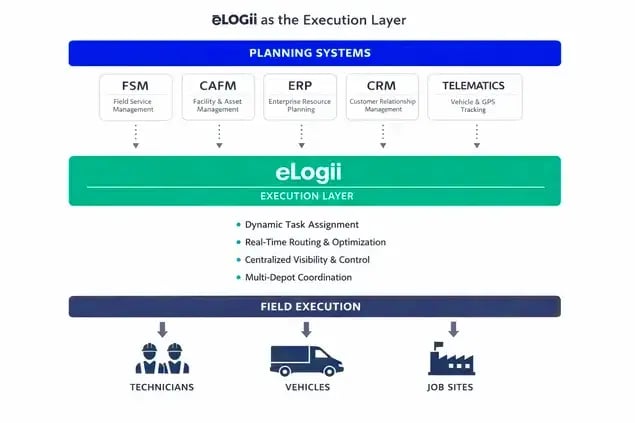
Here's how it works at the system level:
When a reactive callout gets logged in your CAFM system, eLogii receives it via API integration and immediately calculates optimal engineer assignment based on trade qualifications, real-time location, current schedule, and upcoming commitments.
Then, it recalculates affected PPM visits, proposes rescheduling options that respect compliance windows and site access constraints, and updates routes automatically.
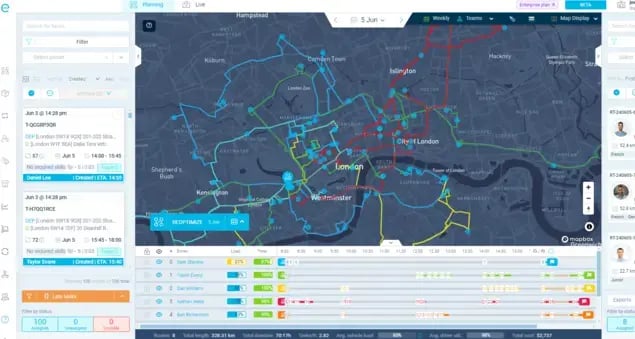
Planners supervise and approve recommendations rather than manually rebuilding schedules from scratch.
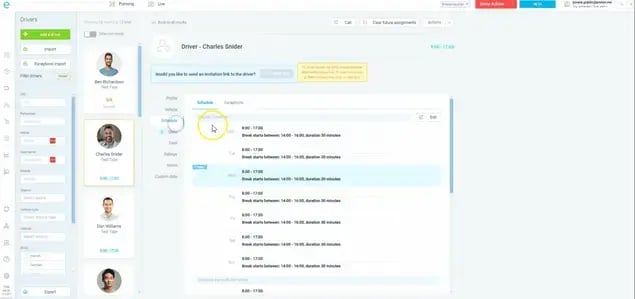
The CAFM system still owns the work order lifecycle, compliance tracking, and asset records. eLogii owns the moment-to-moment choreography of who does what, when, and in what order.
We built eLogii specifically for complex, multi-trade, multi-site operations where PPM and reactive work compete continuously.
It understands FM-specific constraints that generic field service routing ignores - statutory compliance windows, trade certification requirements, multi-site access coordination, and SLA hierarchies.
This isn't generic technician routing. It's execution infrastructure designed for the structural conflict FM operations face daily.
Think of it this way:
eLogii is additive infrastructure, not a replacement.
It makes existing CAFM investments work harder by bridging the execution gap - the space between what you planned Monday morning and what's actually happening Tuesday afternoon when three emergency callouts just arrived and your fire safety PPM schedule is now at risk.
Who This Approach Is (and Isn't) For
This execution-layer infrastructure is built for high-complexity facilities management operations. Let's be explicit about fit.
This Is Right For You
-
Multi-trade FM providers managing 50-500+ engineers across HVAC, electrical, fire safety, plumbing, gas, fabric maintenance, and other trades.
-
Multi-site, multi-region estates - hospital trusts, corporate campuses, retail portfolios, education estates, government facilities - with complex site access coordination.
-
Compliance-driven operations with statutory obligations and penalty exposure for missed fire safety, gas safety, electrical, water systems, or air conditioning inspections.
-
High-volume reactive demand where 20-40% of weekly workload is unplanned emergency or breakdown work.
This Isn't Right For You
-
Single-trade contractors without multi-trade coordination complexity.
-
Static PPM-only estates where reactive work represents under 10% of workload.
-
Small operations under 30 engineers where manual coordination remains viable.
-
Low-compliance environments without statutory penalty risk.
-
Organizations where the scheduling problem is actually poor planning or inadequate CAFM adoption. (You need to fix those first.)
Here's the filter:
If your planners spend less than 40% of their time firefighting reactive disruptions, you may not need this yet. If they spend 60-80% firefighting, this is built for you.
Bottom Line: Reactive Jobs and PPM Are the Reality of Modern Facilities Management
PPM facilities management and reactive work create unavoidable execution conflicts - not from poor planning, but incompatible scheduling logic. Fixed statutory cadence meets guaranteed unpredictability.
At 50-500+ engineers across multiple trades, more planners won't fix this. The problem lives in execution, not planning.
CAFM systems excel as obligation trackers, but they're job-centric and batch-oriented. They don't continuously rebalance execution as reactive demand arrives - that's architectural reality, not deficiency.
What stabilizes operations: continuous reoptimization, SLA-aware reprioritization, trade-aware routing, and real-time decision support. High-maturity FM operations treat these as distinct infrastructure layers.
See how enterprise FM teams manage PPM and reactive work together - explore execution-first operations that keep schedules viable when reality diverges from plan.
FAQ about Reactive Jobs and PPM in Facilities Management
What does PPM mean in facilities management?
PPM stands for Planned Preventive Maintenance - scheduled upkeep that prevents breakdowns before they happen. This includes statutory inspections (fire alarms, gas safety, electrical testing), manufacturer-recommended servicing (HVAC, lifts, boilers), and compliance tasks with fixed legal deadlines.
Why do PPM schedules keep failing when reactive work arrives?
Both types compete for the same resources - qualified engineers, site access windows, and available time - but follow different scheduling logic. PPM runs on fixed intervals, while reactive work arrives unpredictably with urgent SLAs. When a fire alarm fails, it overrides routine PPM, which destabilizes the schedule. At scale, these conflicts create constant friction.
Can CAFM systems solve the PPM and reactive scheduling problem?
CAFM systems track assets, generate PPM schedules, and maintain compliance records, but they don't rebalance schedules automatically when reactive work arrives. That requires manual planner intervention to reassign jobs, resolve conflicts, and update routes. CAFM handles planning; execution infrastructure handles the dynamic rebalancing that happens in the field.
What is the difference between planning and execution infrastructure?
Planning infrastructure (CAFM/FSM) defines what work happens when and tracks compliance. Execution infrastructure handles reality - dynamic reassignment, real-time routing, SLA prioritization, and continuous rebalancing. You need both. High-maturity FM operations invest in both layers.
Is this problem specific to large FM operations?
The problem scales with complexity. Manual coordination works for 10-30 engineers in one region with low reactive volume. Beyond 50 engineers across multiple trades, sites, and regions with 20-40% reactive workload, it breaks down. Planning complexity grows exponentially while planner capacity scales linearly.