
Learn how to reattempt management for failed deliveries works. See how to optimize redelivery scheduling, driver utilization, and customer Communication.
ON THIS PAGE
Reattempt management decides how a failed delivery actually gets recovered.
Getting this right matters more than most operations admit.
That's because a failed stop is never just a missed drop off.
It can quickly turn into a delay that becomes a new scheduling and capacity problem for the rest of the route.
And how you solve it can shape your cost-to-serve for the entire day.
However:
Failed first attempts are one of the most recognized avoidable costs in last-mile operations.
Still, many teams still treat them as isolated exceptions handled by the first dispatcher or planner that's free.
But recovering them well actually means judging each failed stop against current, live conditions.
This is where dynamic scheduling for reattempts earns its place.
In this guide, we'll cover why deliveries fail, their true cost, practical reattempt strategies, and how to manage reattempts at scale.
Key Takeaways
- A failed stop is a systems problem. It usually comes from overlapping constraints like access rules, time windows, and missing information. Treat each miss as a planning issue so you can stop the same failure from repeating.
- A failed stop wastes the time and miles you already spent getting there. The recovery trip then uses route capacity you can't get back that day.
- There's no single best strategy. Same-day reattempts, scheduled redelivery, and consolidated reattempt routes each fit different situations. Choose based on the cause, the SLA, and the capacity you still have.
- You prevent a second wasted trip when you fix why the first visit failed. Communication is operational, so you need to tell the customer what you need and confirm they can take the next attempt.
- Dynamic scheduling protects the whole route. Aim for a recovery that protects remaining stops, time windows, and leftover route capacity. Live scheduling lets you respond without rebuilding the rest of the plan by hand.

Why Deliveries Fail
Deliveries fail when planned routes and schedules don't account for real-world constraints that decide whether a driver can reach the right location, at the right time, with the right products, supplies, and information.
That gap between plan and reality is where most deliveries fail.
And a failed delivery is rarely one thing going wrong.
Usually, it's a chain of operational problems that lands on the driver at the doorstep.
But blaming the person holding the parcel misses where the failure actually started.
Common causes for failed deliveries each break it in their own way:
- Unavailable customers: No one is present to accept or sign, so the driver can't complete the drop off.
- Incorrect or incomplete address: Drivers reach the wrong place or can't find the entrance, gate code, or unit number.
- Traffic and travel delays: Lost time pushes the driver past a promised window.
- Unrealistic time windows: The schedule promised something the route was never able to deliver.
- Poor route sequencing: Stops ordered inefficiently create backtracking and blown windows.
- Driver or vehicle changes: A sick driver or swapped vehicle disrupts the assumptions the plan relied on.
- Last-minute requests or changed instructions: New information arrives after the route is built.
- Failed handoffs: The right item isn't on the van, or key details about the drop off never reach the driver.
Address quality alone is a heavy contributor to failed deliveries. In fact, a 2026 analysis reports that address errors are a primary contributor, accounting for 45% of failed deliveries.
The worst part about this is that one failure rarely stays contained.
A driver delayed at stop three arrives late at stop four, misses that window, and now two customers need contacting, a dispatcher intervenes, and a fresh appointment gets booked.
The real cost sits in that downstream disruption and the cascading delays that happen.
This is why solid planning isn't enough on its own.
A route can be perfectly optimized before departure using tools built for delivery route optimization and still fall apart once live conditions change.
Simply put:
Planning builds an efficient route from known information. Execution is what happens when those assumptions break.
Recurring failures ripple across your success rate, driver productivity, vehicle utilization, route efficiency, daily capacity, operating cost, and customer experience.
These aren't separate problems.

True Cost of Failed Delivery
A failed delivery costs more than the value of the undelivered order because it triggers additional driving, labor, lost capacity, repeat attempts, and customer dissatisfaction. In fact, the failed stop itself is the cheapest part.
The real issue with failed deliveries is that costs multiply.
A failed delivery consumes the resources you already spent on the first attempt, then demands you spend new resources to resolve it.
Even though not every failure will produce every cost, each one adds something on top of work that's already done.
Here's what a failed delivery actually costs:
| What's included | Why it compounds | |
|---|---|---|
| Additional travel | Second attempts, return trips, detours, travel between rescheduled stops | Burns mileage and driver capacity you could have used elsewhere |
| Labor costs | Driver time, dispatcher coordination, customer contact, replanning, overtime | Spreads across several roles, not just minutes at the door |
| Customer dissatisfaction | Missed expectations, rescheduling, waiting, uncertainty | Erodes trust in the reliability of the whole operation |
| Lost capacity | Productive hours consumed by recovery work | Can't be recovered; it's opportunity cost, not just expense |
Additional Travel
Failed deliveries add new distance and create extra mileage to stops that produced nothing. This includes a second attempt, a return trip later in the day, a detour forced by a route change, or extra travel between rescheduled stops.
When a driver arrives, can't complete the drop, and has to come back, that return journey uses capacity that could have served another scheduled stop. Failed delivery leads to an additional trip, which adds travel time, which reduces route capacity.
Labor Costs
Labor cost include direct and indirect time spent on the stop. This includes the first attempt, the second attempt, dispatcher coordination, customer calls, route replanning, and overtime when disruptions pile up late in the day.
One customer who isn't home can generate work for the driver, a coordinator rebuilding the schedule, and someone contacting the customer. A single stop, several people's time.
Customer Dissatisfaction
The customer-facing cost is real even when you eventually deliver the order to them because you've already missed expectations, forced rescheduling, extra waiting, and uncertainty about when the item will arrive.
All of this places wear on the relationship, because customers judge the service on whether the delivery happened as promised. Repeated failures quietly undermine confidence in your service.
How much do failed deliveries cost your delivery operations?
These three costs aren't separate events. When a customer is unavailable, the same disruption forces another trip, consumes driver and dispatcher time, and leaves the customer waiting.
One root cause, three effects.
There's also a hidden capacity cost.
A driver has a fixed number of productive hours per day. Time lost to failed attempts, extra travel, and admin work is time that will never complete a successful delivery.
As one report notes:
"Every failed first attempt triggers a redelivery that compounds cost per delivery."
A second attempt squeezed into an already full schedule can undermine the rest of the route because it forces route changes, extra mileage, delayed stops, reassignments, and reduced capacity.
Managing that recovery well is part of good delivery operations management, and it's where the real cost of a failure spreads to other customers.
The cost of a failed delivery is the extra travel, labor, lost capacity, and customer disruption required to recover from it.

Reattempt Planning Strategies
Reattempt planning decides how and when a failed delivery is tried again, while balancing customer expectations, driver capacity, route efficiency, and the cost of another trip.
This makes reattempt management a routing and capacity decision.
Because of that, there is no single strategy that will fit every failed delivery.
The right choice depends on a number of factors:
- Reason for the failed delivery
- Customer availability
- Order priority
- Delivery urgency
- Drop off location
- Remaining capacity
- Route density
- Service commitments
- Cost of another trip
Still, there are strategies you can deploy depending on the situation and your distribution network.
Each strategy comes with its own benefits and disadvantages. But you can apply all three depending on the situation.
Here are three planning and managing strategies for reattempting failed deliveries:
1. Same-Day Reattempts
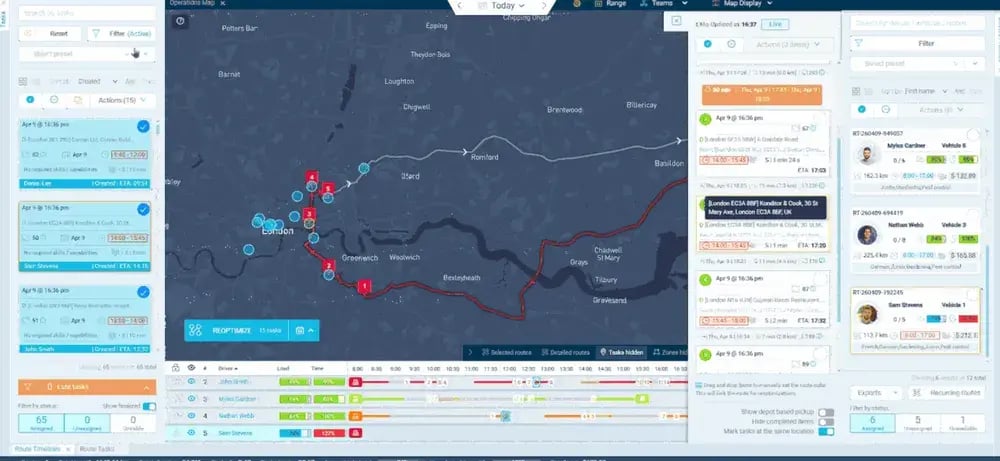
A same-day second attempt makes sense when the customer becomes available later, the delivery is time-sensitive, the location is still near the route, there's spare capacity, or a nearby stop creates a logical reason to return.
The upside is faster resolution, a better customer experience, and one less item on tomorrow's workload.
The tradeoff is disruption to your current routes and schedules.
If the reattempt forces a significant detour, it adds mileage and can push other stops late.
A driver two streets away with an hour of slack is an efficient same-day recovery. A driver 40 minutes across town with a full afternoon isn't.
Same-day reattempts also doesn't mean immediate action. Instead, you should plan them in real time with reattempt route optimization.
2. Scheduled Redelivery
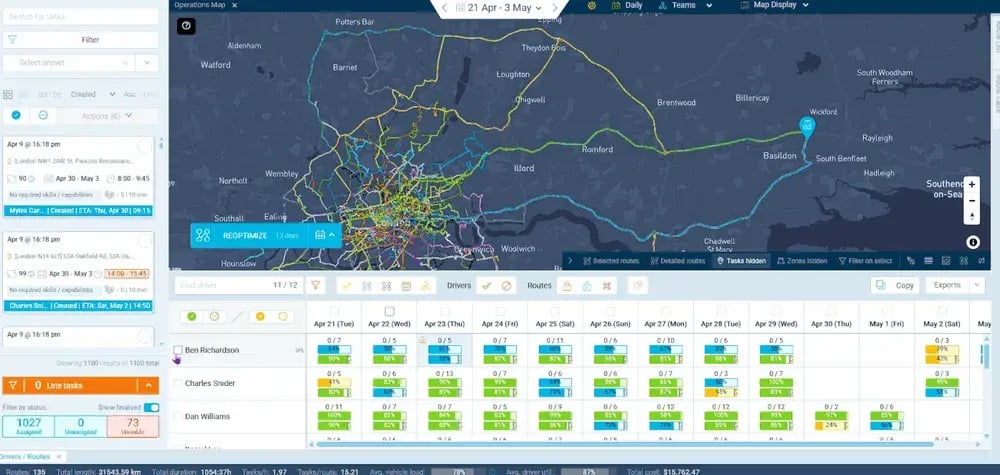
Scheduled redelivery moves the failed delivery to a future date or agreed window rather than retrying it right away.
This fits when the customer is unavailable all day, the delivery needs coordination, the current route has no practical capacity, the item isn't urgent, or a future window is simply more reliable.
The benefits are planning certainty, less disruption to today's route, better geographic grouping, and clearer expectations.
The downside is that the delivery becomes an outstanding obligation.
That's why scheduling a redelivery is both an admin task, and it creates new route and capacity requirements on another day.
3. Consolidated Reattempt Routes
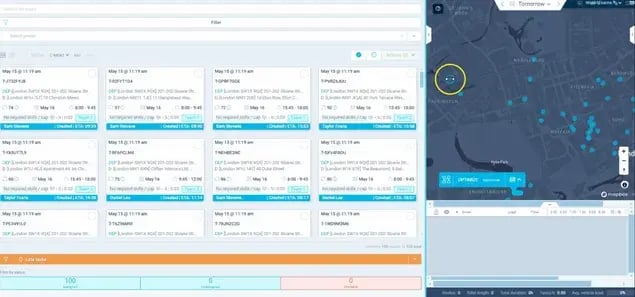
Consolidation groups multiple failed deliveries into one planned reattempt route instead of sending drivers back individually.
It works when several failures cluster in the same area, individual reattempts would create excessive travel, and customer availability is flexible.
Say five deliveries fail across one neighborhood over two days. Rather than five separate return trips, the operation schedules the eligible stops into a single concentrated reattempt route.
That geographic density cuts mileage and uses driver capacity far better.
However, consolidation only works when availability and commitments allow it.
That's why it's especially powerful across territories using multi-depot delivery planning.
Which reattempt strategy should you use?
Here's a breakdown of all three reattempt strategies:
| Strategy | Best Suited For | Main Advantage | Main Tradeoff |
|---|---|---|---|
| Same-day reattempt | Urgent or nearby deliveries | Faster resolution | Can disrupt active routes |
| Scheduled redelivery | Non-urgent or customer-dependent deliveries | Greater planning control | Requires future capacity |
| Consolidated reattempt route | Multiple nearby failed deliveries | Better route efficiency | May delay individual deliveries |
The decision comes down to customer priority plus urgency, geography, available capacity, route impact, and the cost of another trip.
- A high-priority delivery with the customer free later leans same-day.
- A customer unavailable until tomorrow leans scheduled redelivery.
- Several failures in one area lean consolidation.
These are examples, but delivery prioritization rules help apply them consistently.
Timing complicates reattempt planning because a delivery that fails at 10 AM offers different options than one that fails at 4 PM. By that time, the remaining route, driver location, and capacity have all changed.
The cheapest reattempt strategy isn't always the best one for the live operation. This is where dynamic scheduling helps you to weigh those shifting conditions.
Every failed delivery will create a new scheduling problem for you.
The right strategy will solve it without creating another one elsewhere on the route.

Improving Customer Communication During Reattempts
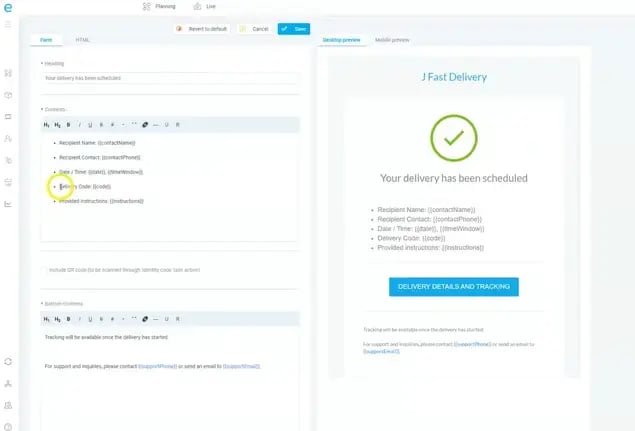
Clear, timely communication during reattempts confirms availability, sets realistic expectations, and prevents a second failed delivery. That's why good customer communication is an operational tool for reducing reattempt risk.
Once a delivery fails, you don't actually know the next attempt will succeed.
The customer may have been out, given unclear instructions, needed a different time, or had access requirements no one captured. Sending a driver straight back without resolving the original cause just books another wasted trip.
Effective reattempt communication should tell the customer:
- Why the first attempt failed
- What happens next
- When to expect the next attempt
- Whether they need to be present
- Whether instructions changed
- What they must do for it to succeed.
Vague reassurance that "we'll try again" doesn't change the odds.
Specific, actionable information does.
Timing matters more than volume.
Communicate after the failed attempt to confirm what happened, before the reattempt to lock down availability and access, when the schedule shifts, and after completion where it helps.
The aim is to remove uncertainty at the moments that prevent another failure, not to flood the customer with notifications. Our guide on solving failed delivery attempts digs deeper into building these workflows.
Communication should also feed scheduling activities.
When a customer confirms they're available between 3 and 5 PM, that window becomes a scheduling constraint.
This will help you to determine which driver handles the reattempt, when it's slotted, which route it joins, and whether it can be consolidated with nearby stops.
Customer contact produces operational data that improves the next decision you make.
The real test is whether communication targets the root cause of the failed delivery:
- An unavailable customer needs a confirmed window.
- A wrong address needs verification.
- An access problem needs instructions.
- A timing clash needs an agreed slot.
- Missing information needs gathering before dispatch.
Communication won't prevent every failure, but resolving the actual cause prevents the repeatable ones.
Automation makes this consistent at scale:
Systems can notify customers of changes, confirm availability, share arrival updates, record responses, and feed that information back into scheduling, reducing manual coordination while getting the right message out at the right time.
One caution sits above all of this:
Communication can't rescue an unrealistic schedule.
If you promise a reattempt time the route can't hit, better messaging just announces the next failure earlier. Communication has to connect to realistic scheduling.
The best reattempt communication makes sure the operation knows what must change for the next attempt to succeed.
How Dynamic Scheduling Optimizes Reattempt Management
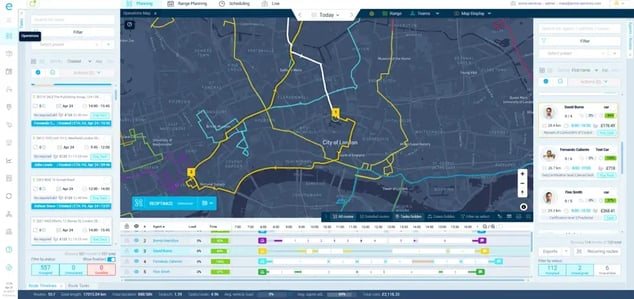
Dynamic scheduling optimizes reattempts by continuously evaluating failed deliveries against current driver locations, route capacity, customer availability, and other constraints to decide when and where to try again. It turns a scattered exception into a managed decision.
Manual reattempt management gets hard fast because a failure creates a new scheduling problem after the route is already built.
In this scenario, a dispatcher or route planner has to collect live operational data and make several key decisions at once:
- Work out whether to retry today or later
- Which driver takes the reattempt
- Where that driver currently is
- Whether there's available capacity (drivers, vehicles)
- Whether the customer is free
- How the reattempt affects other stops on the route
- Whether nearby failures can be grouped
If you multiply that across a full day schedule and rising volume, the math outpaces any planning board.
On the other hand, automated dynamic scheduling has a straightforward workflow:
A delivery fails → Information updates → Routes get reassessed → Reattempt options are evaluated → Best one is added to the schedule.
The system weighs driver location, remaining route, customer availability, priority, time windows, travel time, vehicle and driver constraints, remaining capacity, and other scheduled deliveries.
The point is finding the best option for the operation.
An immediate retry might be technically possible but require a long detour that puts several other deliveries at risk. A later reattempt, or one bundled with nearby stops, might serve the whole route better.
Dynamic route optimization weighs the entire route, including every failed stop.

In addition:
Automation changes what dispatchers spend time on.
Instead of manually checking routes, drivers, and constraints, they review feasible alternatives the system surfaces.
But it doesn't remove human judgment. Your dispatchers still have to approve exceptions, adjust priorities, talk to customers, and handle the odd situations software can't read.
The benefit is less manual calculation and route rebuilding.
Protecting the rest of the route is the real discipline here.
Inserting a reattempt isn't automatically good if it makes other deliveries late. The system should model downstream impact and balance recovering the failed stop against existing commitments, added travel, available capacity, and route efficiency.
Weighing those tradeoffs is exactly what cost-efficient redelivery routing is designed to do.
Real-time information is what makes this work. Current driver location, live traffic, updated availability, route progress, new requests, and driver changes all shift the answer.
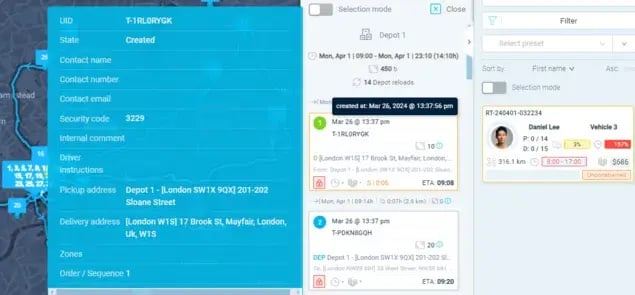
The best decision at 10 AM may not be the best at 2 PM, which is why dynamic scheduling beats bolting failures onto a static next-day route.
Handling undeliverable stops cleanly, including automatic return-to-depot workflows, keeps the rest of the day intact.
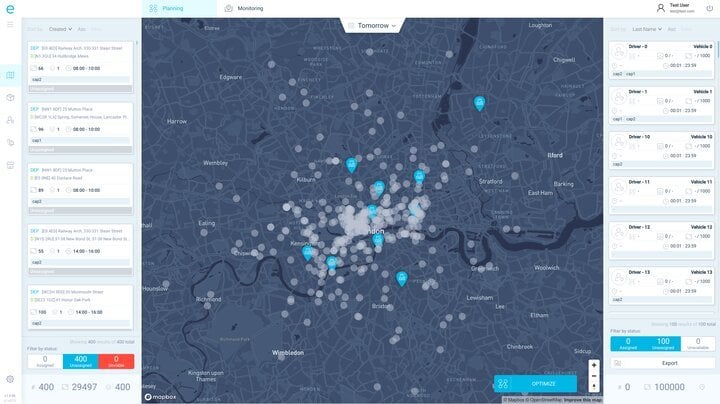
The gains show up in reattempt success rates, driver utilization, route efficiency, capacity, mileage, dispatcher workload, and service reliability.
Still, the actual impact depends on delivery density, complexity, data quality, availability, and configuration.
eLogii Enables Reattempt Management for Distribution Operations
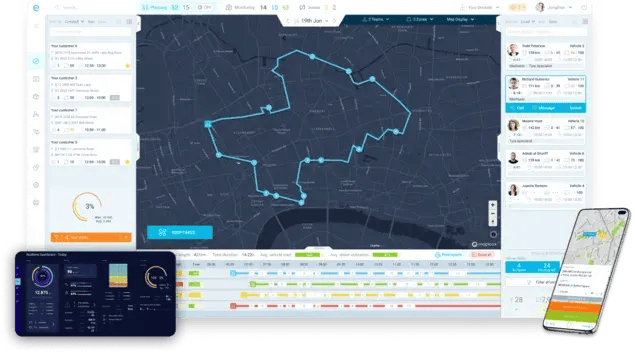
eLogii helps distribution operations manage failed-delivery reattempts by combining route planning, dynamic scheduling, and execution management. This allows you to make reattempt decisions using current operational conditions instead of being handled as manual exceptions.
Our starting point to the problem is a simple one:
A failed delivery creates a new scheduling requirement, and resolving it well needs visibility into the rest of the live operation.
Once a delivery fails, the operation has to decide what happens next without wrecking the route. That decision depends on why it failed, customer availability, current driver location, remaining capacity, priority, time windows, other scheduled stops, and vehicle and driver constraints.
As volume, coverage, and complexity grow, weighing all of that by hand stops being realistic.
eLogii approaches this as a workflow:
A delivery fails, its status changes, updated information becomes available, the remaining schedule is reassessed, reattempt options are evaluated, and the delivery is incorporated into the most appropriate route or a future schedule.
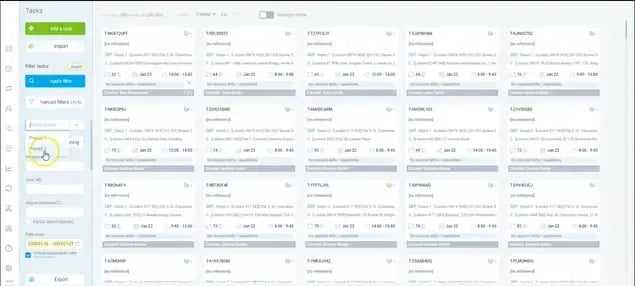
The objective is the best feasible recovery within your operational context.
Dynamic scheduling helps evaluate whether a failed delivery should be reattempted later the same day, assigned to a nearby driver, added to an existing route, combined with other reattempts, or scheduled for a future date.
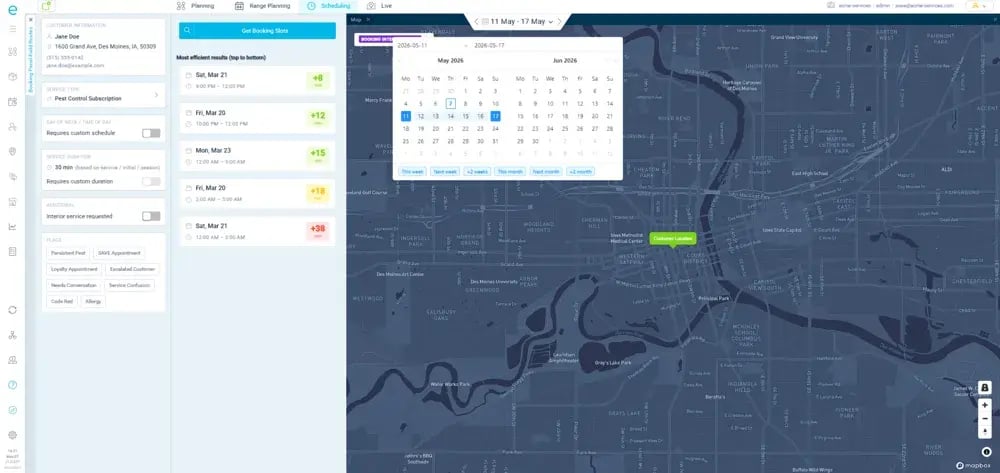
This sits inside distribution execution management, and the distinction matters:
- Planning builds efficient routes before the day starts.
- Execution manages what happens during it.
- Dynamic execution adjusts the plan when real events change the conditions it was built on.
A failed delivery isn't just a closed work order under that model. It's a live operational event that may need a fresh scheduling decision.
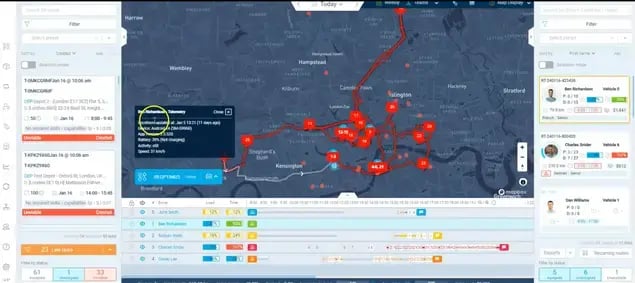
eLogii can help the operation weigh whether reattempts stays with the original driver, moves to another, groups with the nearby failure, or shifts to a future route, evaluated against the current routes rather than dumped onto a manual list.
No single outcome is guaranteed. The value is in assessing the alternatives.
The guardrail is protecting the rest of the operation.
Reattempt management shouldn't optimize one failed stop at the expense of several successful ones. The system balances recovery against existing commitments, mileage, driver capacity, route efficiency, and customer expectations.
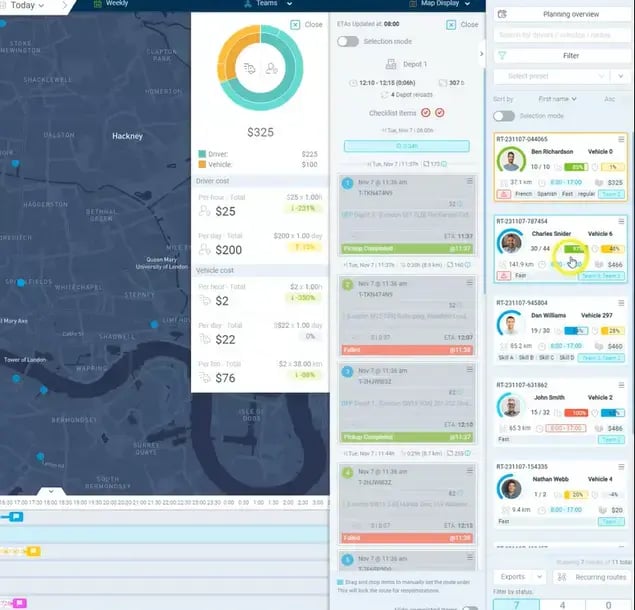
The best reattempt improves overall delivery performance rather than simply happening fastest.
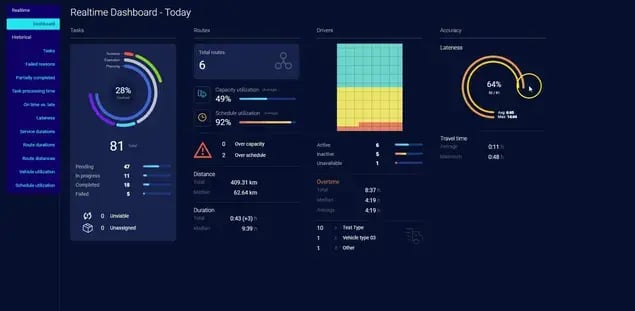
eLogii fits as an optimization and execution layer:
- Distribution operations often run a TMS, ERP, WMS, order management, or delivery management system already. Those hold and generate operational information.
- eLogii uses the relevant data to plan routes and schedules and to respond when execution deviates from the plan as a layer in the stack that fits together.
The practical payoff is:
✓ Less manual route rebuilding
✓ Better use of driver capacity
✓ Reduced unnecessary travel
✓ More efficient handling of failures
✓ Clearer execution visibility
✓ Better same-day exception handling
✓ More consistent reattempt planning
This matters most for high-volume networks, multi-driver operations, large territories, businesses with customer delivery windows, operations with frequent same-day changes, and anyone where failures create meaningful extra travel or labor.
Not every distribution company needs it.
The key takeaway here is:
Technology doesn't eliminate failed deliveries because your customers will still be out, addresses will still be wrong, and traffic will still delay drivers.
The advantage is a structured way to respond without rebuilding the whole plan, and that depends on reliable data, accurate customer information, realistic constraints, and clear business rules.
A failed delivery should become an operational event you can evaluate, optimize, and manage inside the delivery plan.
The Bottom Line
Treat every failed delivery as a recovery decision, and you'll protect capacity most operations quietly bleed.
The stop itself is cheap.
The extra travel, labor, lost hours, and customer disruption you spend recovering it are where your money goes.
That's why a rushed second attempt often costs more than a smart delayed one.
Your next step is practical:
Start capturing structured failure reasons, resolve the original cause before you dispatch again, and judge each reattempt against urgency, geography, availability, and route impact rather than habit.
Same-day, scheduled, and consolidated recovery all have their place.
Dynamic scheduling and platforms like eLogii help you weigh those options live without rebuilding the day by hand.
A failed delivery shouldn't force you to start over.
It should trigger a smarter recovery decision.
And if you want to see how this works in action, book a demo with us.
FAQ about Reattempt Management
What is a good first-attempt success or failed-delivery rate?
There's no universal benchmark. Around 90% is a reasonable starting target; mature operations clear 95%. Reported failure rates still vary widely by geography and delivery type, so set your target against your own model, density, and product rather than a borrowed number.
How many delivery attempts should we make before returning to depot or sender?
It depends on product type, the cost of another attempt, and your service commitments. As a reference point, most major carriers make 2-3 delivery attempts before holding the package or returning it.
How should we measure reattempt performance?
Don't rely on a single number. Track reattempt success rate, cost per reattempt, extra mileage per recovery, and time-to-resolution together. Divide them by area, driver, and failure reason so you can see where recovery is efficient.
What information should we capture when a delivery fails?
Capture a structured failure-reason code, timestamp, location and access notes, proof of attempt, and updated customer contact and availability. That last detail matters most: without a confirmed reason and a workable window, the next attempt is a guess, and you risk repeating the same failure.
How do we tell preventable from unavoidable failures?
Preventable failures trace to things you control: wrong addresses, missing instructions, unrealistic windows, or poor sequencing. Unavoidable ones include a genuinely absent customer or a locked site with no access.
How can we reduce failed deliveries before they happen?
Validate addresses at order entry, send accurate ETAs and proactive notifications, set realistic time windows, and make delivery and access instructions visible to drivers. Confirming availability and offering secure drop-off or rescheduling for high-risk stops as effective levers before dispatch.
Should customers be charged for repeat delivery attempts?
There's no single right answer. It depends on your delivery model, service commitments, and whether the customer caused the failure. Many operations prefer redirecting to a pickup point, locker, or agreed reschedule over charging, since fees can damage the relationship more than they recover the cost.
What operational data most improves reattempt decisions?
Real-time driver location, remaining route and capacity, confirmed customer availability windows, travel-time estimates, and historical failure patterns by area. Live location and capacity decide what's feasible right now. Historical patterns tell you which stops and zones are worth extra effort before the driver leaves.
How to identify root causes behind recurring failed deliveries?
Use consistent failure-reason coding, then analyze failures by area, driver, time window, and customer. Look for patterns rather than treating each failure in isolation. Recurring failures at one address, one window, or one estate usually point to a fixable systemic cause like bad data or an access issue.
When should a failed delivery be held for another attempt versus returned to depot?
Weigh remaining route capacity, proximity, customer availability, product urgency, and the cost of holding versus returning. A perishable or high-priority item near an available customer justifies holding for a same-day retry. A low-urgency stop with no availability and no capacity is often better returned and rescheduled cleanly.
