If you're looking at reducing planner workload in property maintenance operations, you've probably already tried the obvious solution: hiring more planners. And you've probably noticed it didn't work for long.
The daily reality looks familiar across housing providers and property maintenance operations: planners constantly firefighting reactive jobs, inboxes that never clear, daily replans becoming standard procedure, and overtime turning from exception to expectation. Your team works harder each quarter, but the pressure never eases.
Here's what most operators miss: planner overload isn't a resourcing problem. It's a coordination failure that emerges predictably once you're managing 50+ field engineers across multi-trade operations with mixed reactive and planned work.
This article explains why planners become execution bottlenecks at scale, what actually drives planner load beyond headcount growth, and why CAFM and FSM systems - despite organizing your work brilliantly - don't absorb the execution complexity that overwhelms planning teams.
Key Takeaways
- Planner overload isn't a staffing problem but a coordination failure that emerges predictably once you manage 50+ field engineers across multi-trade operations with mixed reactive and planned work.
- CAFM and FSM systems organize information exceptionally well but don't absorb execution complexity - they surface data, not decisions, leaving planners to make hundreds of daily micro-decisions when reality diverges from the plan.
- Coordination load grows exponentially, not linearly: each new variable multiplies decision points because every scheduling choice must satisfy more constraints simultaneously across trades, territories, access windows, and job dependencies.
- Autonomous scheduling infrastructure reduces planner workload by absorbing execution variability in real-time - continuously re-optimizing schedules as jobs overrun, engineers call in sick, or priorities shift without requiring manual intervention for every change.

When Do Your Property Managament Planners Become the Bottleneck for Your Operations
The problem isn't lazy planners, poor training, or even understaffing. Planner overload is the inevitable outcome of treating execution as a manual coordination problem.
When your CAFM or FSM system organizes information but doesn't absorb execution complexity, planners become the execution engine.
At scale - across 50+ engineers managing reactive repairs, planned maintenance, and multiple trades - the coordination mathematics guarantee overload.
This article explains why planner load grows exponentially, why traditional solutions fail, and what high-maturity property maintenance operations do differently to reduce planner workload without sacrificing service delivery.
What Planners Actually Do in Property Maintenance Operations
Despite the job title, planners in property maintenance aren't planning - they're executing. They've become the human execution engine that keeps operations moving when systems can't make decisions.
The daily reality looks nothing like strategic scheduling. Planners spend their time triaging incoming reactive jobs against SLA requirements, sequencing work across gas, electrical, repairs, voids, and compliance jobs, resolving access constraint conflicts, managing parts availability dependencies, and rerouting engineers when tenant appointments change. That's before lunch.
The afternoon brings the escalation burden: responding to engineer queries in real-time, rerouting based on job overruns, protecting compliance deadlines, and managing customer escalations when SLAs are threatened.
Here's the underlying problem: CAFM and FSM systems organize information brilliantly, but they don't absorb execution complexity. They surface data, not decisions. So planners fill the gap, making hundreds of micro-decisions daily to keep operations moving despite constant variability.
This creates a skill paradox. Experienced planners develop sophisticated mental models of engineer capabilities, geographic territories, trade requirements, and customer priorities. That institutional knowledge becomes invaluable - and a single-point-of-failure risk.
The coordination model works reasonably well with 10-20 engineers. Beyond 50, the decision volume overwhelms human capacity entirely.
Why Planner Workload Increases Faster Than Headcount
The coordination mathematics work against you. Each new variable doesn't add to planner decisions - it multiplies them, because every scheduling choice now has more constraints to satisfy simultaneously.
When you're coordinating five engineers handling two job types in one territory, the decision tree is manageable. But scale that to 50 engineers managing six trades across three regions with mixed reactive and planned work, and you're looking at thousands of daily decision points.
Here's what drives that exponential growth in property maintenance scheduling at scale.
The planned preventive maintenance schedule gets constantly disrupted by emergency reactive work, triggering endless reprioritization decisions. Access constraints cascade through everything - appointment windows, key collection, vulnerable residents, void property access all create dependencies that ripple across the schedule.
Multi-trade job dependencies compound the problem. Gas safety work requires electrical completion first. Void turnarounds need sequential trade visits. Compliance inspections gate other work from starting.
Then same-day operational changes hit: job overruns, parts shortages, engineer sickness, traffic delays, failed first-time fixes. Each one triggers real-time rescheduling across the entire day's plan.
Add geographic spread across multi-site portfolios, and planners need territory knowledge, travel time calculations, and clustering decisions just to maintain efficiency.
This is why adding planners rarely fixes the problem. You're not reducing complexity - you're just distributing the same impossible coordination problem across more people. The decision load per planner might drop temporarily, but coordination overhead between planners grows, and you're back where you started within months.
Why CAFM/FSM Tools Don't Reduce Planner Workload at Scale
CAFM and FSM platforms are essential systems of record that handle asset databases, work order management, compliance documentation, and audit trails exceptionally well. They're designed to organize information, track job histories, manage contractor records, generate reports, and maintain the compliance evidence your auditors need.
The execution gap appears when reality diverges from the plan.
These systems were built on static scheduling assumptions: jobs have predictable durations, engineers have fixed availability, priorities remain stable, and routes get planned once at the start of the day. That works fine when operations follow the plan.
But property maintenance scheduling at scale rarely follows the plan. A gas job overruns and pushes afternoon appointments at risk. An engineer calls in sick at 8 AM. An emergency reactive repair enters the queue mid-morning. An access window changes because the tenant's availability shifted.
CAFM tools create the daily schedule but don't continuously re-optimize as these changes cascade through your operation. They can't automatically reroute engineers, dynamically resequence work based on new priorities, or detect conflicts when access windows shift.
Instead, planners export data, manually analyze conflicts across spreadsheets or mental models, make coordination decisions, then update the system with those decisions. The CAFM organizes their decisions but doesn't make them.
This isn't a criticism of CAFM vendors. These platforms optimize for data integrity, audit compliance, and financial integration - not for absorbing continuous execution variability. Systems of record and execution infrastructure serve different purposes and need to work together.
As operational scale grows, the execution gap widens. Planner teams bear the full coordination burden.
The Hidden Cost of Planner Overload
The financial impact of planner overload compounds across your P&L in ways that don't show up on a single line item. We've found that organizations managing 100+ field engineers typically face six-figure annual costs before factoring in SLA penalties or lost contract renewals.
The direct costs hit first. Planner headcount grows as you add engineers, but overtime becomes a permanent budget line rather than an exception. High turnover in these high-stress roles means you're constantly recruiting and training, often covering absences with expensive agency temps when burnout hits.
Service delivery costs multiply from there. SLA penalties and contractual damages accumulate when planners can't keep pace with reactive demand. Customer complaint handling consumes more overhead. Contract renewals slip away quietly when service quality erodes. Your team spends so much time firefighting that proactive optimization never happens.
Engineer productivity takes the biggest hit. Technicians sit idle waiting for route changes that planners don't have time to process. Suboptimal job clustering burns fuel and travel time across your entire fleet. Engineers operate below capacity because daily workload balancing requires manual intervention nobody has time for. Profitable appointment slots vanish to coordination delays.
The investment math becomes straightforward: execution infrastructure that reduces planner load by 50 percent pays for itself through direct cost avoidance alone.
Why Hiring More Planners Rarely Fixes the Problem
Adding planner headcount usually delivers an initial productivity bump, then slows operations down. We've seen this pattern repeat across property maintenance organizations: the second planner provides less relief than the first, and the third often creates more problems than they solve.
The issue is coordination overhead. Once you have multiple planners, they must coordinate with each other - who owns which engineers, who handles which territories, who takes escalations. Shift handoffs introduce information loss.
Territory splits create boundary confusion. Exception handling requires escalation to senior planners who become bottlenecks themselves.
Engineers start waiting for "their" planner to respond. Different planners provide conflicting guidance. Work gets duplicated or missed entirely due to ownership ambiguity.
The structural principle: more planners slow the system once coordination overhead dominates productive work.
This happens specifically in property maintenance because unlike predictable delivery routes, reactive repairs and access constraints create constant cross-territory impacts.
A gas engineer running late in Territory A affects the electrical job scheduled in Territory B. Planners must continuously coordinate to manage these dependencies.
Hiring more people doesn't fix a coordination system problem. It just distributes the burden without reducing the underlying complexity.
What Reducing Planner Workload Actually Requires
Reducing planner workload in property maintenance requires moving execution complexity out of human cognitive load and into system logic.
Productivity training, better communication processes, hiring more planners, or upgrading to newer CAFM versions won't solve this - none address the core problem that humans can't process coordination complexity at scale.
What actually works is execution infrastructure: technology that makes continuous re-optimization decisions based on real-time operational context, rather than just organizing information for humans to decide.
This means:
-
Systems that handle continuous re-optimization second-by-second as operational conditions change encode SLA requirements and business logic into rules-based prioritization automatically
-
Understanding skill requirements and geographic constraints through trade-aware and location-aware routing, and handle routine coordination decisions without human intervention
The operational shift is significant. Planners transition from executing coordination themselves to supervising system behavior and handling genuine exceptions.
It's the difference between manually re-juggling 80 jobs when an engineer calls in sick versus reviewing the system's proposed reallocation and approving it.
This represents moving from manual coordination operations to execution-first operations - a fundamental maturity progression that changes what planners do all day.
What High-Maturity Property Maintenance Operations Do Differently
The behavioral shift is immediate and visible.
Planners start their day reviewing system-generated routes rather than building them from scratch. Their morning focus moves from sequencing individual jobs to scanning for exceptions the system flagged overnight - a contractor unavailable, specific customer access requirements, conflicts the automation couldn't resolve.
This is exception-based management. Planners intervene only when genuine human judgment adds value, not to handle routine coordination decisions.
The daily rhythm changes completely. No heroic overtime sessions to finish planning. No constant firefighting as the day unravels. Planners leave on time because routine execution decisions run automatically, adjusting continuously as conditions change.
Instead of managing individual job sequences, planners supervise outcomes through SLA compliance dashboards, technician utilization metrics, and customer satisfaction trends.
They trust tomorrow's schedule will hold despite today's variability because continuous re-optimization absorbs normal operational turbulence.
This freed capacity redirects toward strategic work: improving processes, training engineers, negotiating better contractor terms, analyzing performance trends. The work that actually compounds over time.
The culture shift matters most. Excellence comes from system design and continuous improvement, not from planner heroics and long hours grinding through coordination complexity.
But this only works with execution infrastructure that genuinely absorbs that complexity - not just better information management.
Where eLogii Fits into Property Maintenance Operations
eLogii functions as the execution layer between your existing CAFM or FSM system and daily field operations.
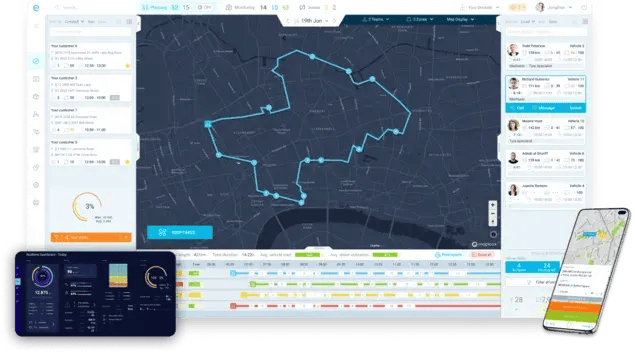
It doesn't replace anything - your CAFM remains the system of record for assets, compliance history, and financials. Planners still supervise outcomes and handle exceptions. Engineers still use the tools they're familiar with.
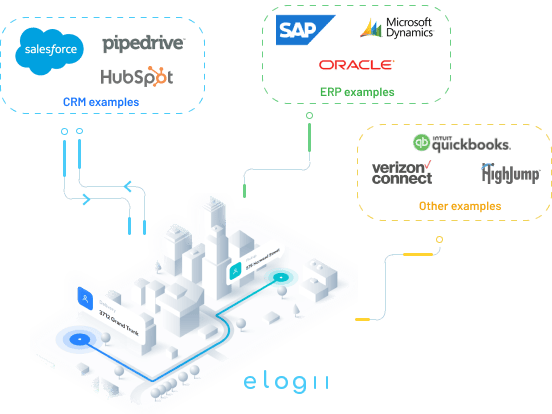
What changes is where coordination complexity lives.
eLogii integrates via API with existing CAFM platforms, pulling work orders and engineer data while pushing optimized routes and real-time updates back.
That connection means continuous re-optimization happens automatically when operational reality shifts - an engineer calls in sick, a job runs long, an urgent repair comes in, access gets denied.
The system handles what humans struggle with at scale:
-
Multi-trade and multi-skill routing that respects each engineer's actual capabilities
-
SLA-aware prioritization that protects compliance deadlines without manual tracking
-
Geographic clustering and travel time optimization across hundreds of daily decisions
Planner workload drops because routine coordination decisions migrate from human cognitive work to automated system logic. Planners shift from building routes to reviewing them, from protecting every SLA manually to handling exceptions the system flags.
This architecture works for property maintenance operations managing 50-500+ engineers across multi-site portfolios where reactive repairs and planned maintenance compete for the same resources daily.
Below that scale, manual coordination remains viable.
Above that scale without execution infrastructure, you're already experiencing what we've described throughout this article - planner overload as the inevitable outcome of coordination complexity outpacing human processing capacity.
Who This Approach to Property Maintenance Management Is (and Isn't) For
This execution infrastructure makes sense for large housing associations, property maintenance providers, and facilities management operations managing 50-500+ field engineers across multi-site portfolios.
You're the right fit if you handle mixed reactive and planned maintenance, coordinate multiple trades (gas, electrical, repairs, voids), face SLA penalties and compliance requirements, and already use CAFM or FSM systems.
The qualification filter is simple: if your planners aren't constantly firefighting and daily replans aren't normalized, you likely don't need this yet.
This approach isn't built for small maintenance teams under 20 engineers, single-trade operations, static preventive maintenance environments without reactive work, or low-variance operations with predictable schedules.
Coordination complexity only overwhelms human capacity beyond certain operational thresholds - smaller teams don't face the same exponential mathematics.
The investment logic is straightforward: six-figure software investments make sense when planner overload costs exceed that annually through headcount, overtime, SLA penalties, and lost productivity.
Bottom Line: You Can't Reduce Planner Workload by Hiring More Planners
Planner overload at scale isn't a resourcing problem - it's structural. When humans remain the execution coordination layer, complexity overwhelms capacity regardless of headcount. High-maturity operations recognize that execution and scheduling require separate infrastructure: CAFM systems manage records, execution platforms absorb coordination decisions.
If your planners stay underwater despite hiring, and you're managing 50-500+ engineers across mixed reactive and planned work, you're facing a coordination problem that won't resolve through process improvement.
Start here: audit how planners spend their time, calculate the full cost of overload (headcount, overtime, SLA penalties, productivity losses), and evaluate whether execution infrastructure ROI is clear for your operation.
See how property maintenance operations reduce planner load with execution-first infrastructure designed for housing and facilities management at scale.
FAQ about Property Maintenance Operations
What causes planner overload in property maintenance operations?
Planner overload stems from coordination mathematics that scale exponentially, not linearly. Each new variable - engineers, trades, territories, job types - multiplies decision points rather than adding them. Managing 50+ engineers across reactive repairs, planned maintenance, and multiple trades creates thousands of daily scheduling decisions.
Why doesn't hiring more planners solve the problem?
Adding planners creates diminishing returns because coordination overhead grows between team members. Multiple planners need to communicate about engineer assignments, territory boundaries, and priority conflicts. These handoffs introduce decision latency and information gaps that slow operations.
What's the difference between CAFM systems and execution infrastructure?
CAFM platforms are systems of record that organize asset databases, work order histories, compliance documentation, and audit trails. They excel at information management and reporting. Execution infrastructure makes real-time coordination decisions - dynamically rerouting engineers when jobs overrun, automatically resequencing work when priorities shift, and continuously re-optimizing schedules as operational reality diverges from the plan.
How do high-maturity property maintenance operations reduce planner workload?
They shift routine coordination decisions from human cognitive load into automated system logic. Instead of manually triaging every reactive job, sequencing multi-trade dependencies, and rerouting engineers for each schedule change, planners supervise outcomes and handle genuine exceptions. The system manages continuous re-optimization while planners focus on complex escalations, strategic improvements, and situations requiring human judgment.
Is execution infrastructure only for large enterprise property maintenance operations?
The scale threshold matters more than organization size. Operations managing 50-500+ field engineers with multi-trade complexity, mixed reactive and planned work, and SLA exposure see clear ROI. Below 50 engineers with predictable job types and stable schedules, manual coordination remains manageable.