FieldRoutes is one of the most popular scheduling software for field service. And it long stood as the go-to platform for route optimization, as well.
But it’s no longer the best option for most field service enterprises, primarily due to a lack of execution capabilities at scale. It still offers some great features for customer management though, along with effective billing and performance tracking.
In this guide, we’ll break down everything you need to know, including:
-
What FieldRoutes does well
-
What are the limitations of FSM tools
-
Real costs of limiting your field service routing
-
Why you need plug-and-play integration
In the end, you’ll understand why FieldRoutes software integration with an execution layer can open up your operations to advanced route optimization at scale. (Regardless of the complexity or industry you’re in.)
Here’s a quick rundown of everything that’s in this guide:
Key Takeaways
-
FieldRoutes handles customer management, billing, and field service scheduling exceptionally well as a system of record, but daily route optimization requires a different type of engine that FSM platforms aren't designed to build.
-
Manual route adjustments consume 2-3 hours of dispatcher time daily because FieldRoutes can't handle multi-day service windows, skill-based assignments, dynamic SLA priorities, and last-minute reactive calls layered over preventive maintenance schedules at scale.
-
The operational cost is measurable translating to lost billable capacity, plus hours of operations talent doing work algorithms should handle.
-
Advanced route optimization systems integrate with FieldRoutes without replacing workflows or migrating data, functioning as an execution layer that consumes jobs from your FSM and returns optimized route sequences while FieldRoutes continues managing customers, contracts, and billing.
-
Purpose-built route optimization engines run continuous algorithmic problem-solving across your entire fleet simultaneously, handling hundreds of constraint variables per route and updating dynamically when jobs run long, emergencies arise, or technicians become unavailable.
-
The integration maintains FieldRoutes as your single source of truth while adding real-time execution management. This includes constraint satisfaction, multi-objective field service optimization, and dynamic re-routing capabilities that reduce drive time, improve SLA compliance, and eliminate manual dispatcher adjustments.
What FieldRoutes Is Designed to Do Extremely Well
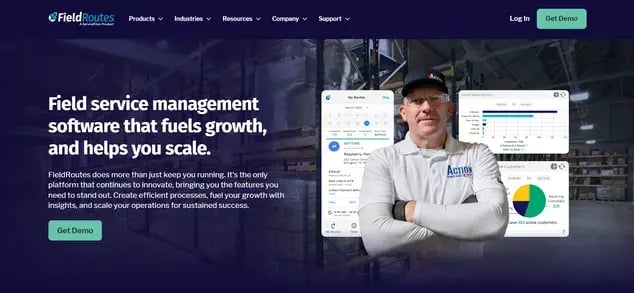
FieldRoutes excels at what field service management platforms are supposed to do: serve as your system of record for customer relationships, contracts, and business processes.
The platform handles comprehensive customer data management, subscription and contract billing, work order tracking, and technician scheduling.
This isn't trivial stuff.
Your sales team enters customer contracts, your operations team schedules recurring preventive maintenance visits and reactive service calls, technicians receive job assignments through the mobile app, and billing automatically processes based on completed work.
If you're running 150+ technicians across multiple regions, you've invested significant time building processes around these capabilities. Your customer management workflows function well. Territory assignments make sense. Billing cycles run smoothly. Your team knows the system.
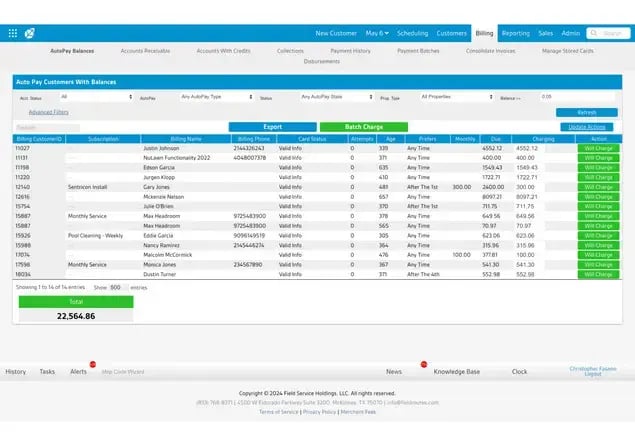
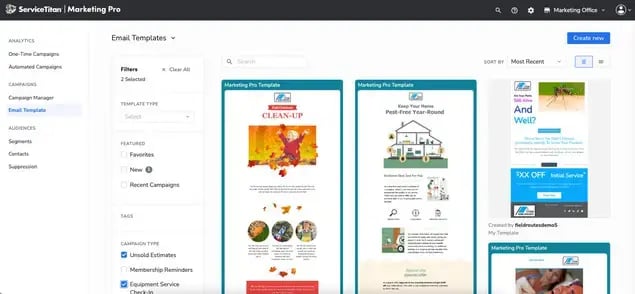
FieldRoutes also sits at the center of your field service tech stack, connecting with accounting systems, payment processors, and marketing tools. That integration ecosystem matters when you're managing complex operations.
Here's the thing, though:
FieldRoutes does exactly what FSM platforms should do, which is manage customer relationships and business processes.
The routing challenge sits in a different category entirely. That's because t's about the daily execution problem of getting the right technician to the right job at the right time while minimizing drive time and maximizing productivity.
Why FieldRoutes Users Still Struggle With Routing
You're running FieldRoutes across 150+ technicians, and the platform handles CRM, billing, and customer management beautifully.
But every morning, your dispatchers spend 2-3 hours manually adjusting routes because the system can't account for multi-day service windows, skill-based assignments, dynamic SLA priorities, and last-minute reactive calls layered over preventive maintenance schedules.
That daily adjustment time adds up fast. More importantly, it's costing you 15-25% excess drive time, missed service windows, frustrated technicians who backtrack unnecessarily, and customer satisfaction pressure when ETAs slip or appointments get bumped.
Here's the thing:
This isn't a FieldRoutes problem.
This problem reflects a fundamental difference between FSM platforms built as systems of record and execution layers designed for real-time route optimization.
FieldRoutes does what it's designed to do extremely well. Advanced routing complexity just requires a different type of engine.
Where Does Scheduling with FSM Tools Reach Its Limits
If your operations team spends 2-3 hours every morning reorganizing routes that FieldRoutes generated, you're seeing a category distinction in action, not a platform deficiency.
Field service scheduling software prioritizes breadth over depth in any single execution function.
FieldRoutes allocates development resources to customer management features, compliance updates, and billing logic because that's what systems of record do well.
Advanced routing optimization simply sits outside that scope.
The routing complexity your team faces requires dedicated algorithmic infrastructure that FSM platforms don't build:
-
Multi-day appointment windows layered with customer preferences
-
Skill and certification matching across your entire technician pool
-
SLA-based prioritization for VIP customers and contract terms
-
Real-time re-routing when jobs run long or emergencies arise
-
Constant balancing act between PPM schedule adherence and reactive demand
Without constraint solvers and continuous optimization engines purpose-built for this problem, you get the operational pattern FieldRoutes users recognize:
-
Technicians call dispatch questioning route logic
-
Drive time consistently exceeds estimates
-
Manual adjustments steal hours from your operations team daily
The operational cost compounds quickly. That 15-25% excess drive time multiplies across fleet size. Missed SLA windows damage customer relationships. Manual routing adjustments drain capacity your operations team could spend elsewhere.
These limitations create measurable operational costs that justify specialized solutions.
The Real-World Cost of Routing Limitations
When you quantify the impact, the numbers get uncomfortable fast.
A 150-technician operation running 15% excess drive time wastes roughly 22.5 technician-days every week. That's not just fuel cost. It's also lost capacity to generate revenue. Your technicians are sitting in traffic instead of completing billable work, and that gap compounds across quarters.
The operational burden is equally expensive.
If your dispatchers spend 2-3 hours daily adjusting routes manually, that's 500-750 hours annually of senior operations talent doing work that algorithms should handle.
And that manual adjustment process doesn't scale linearly. Adding regions or technicians increases complexity exponentially, turning your operations managers into bottlenecks that prevent growth.
Your technicians notice the inefficiency too.
Experienced field teams recognize illogical route sequences, and higher drive time directly reduces their ability to complete jobs and take-home pay when compensation is commission-based. In tight labor markets, poor routing damages retention rates.
Customer satisfaction takes the hit downstream.
Late arrivals and missed appointment windows erode trust, and your customers are comparing your field service experience to Amazon delivery expectations. Repeat delays push them toward competitors.
Commercial contracts make this even more urgent.
When SLA response windows or appointment accuracy are contractually specified, missed windows trigger penalty clauses or customer escalations that affect your bottom line directly.
All of these costs justify evaluating purpose-built route optimization that integrates with your existing FieldRoutes workflows.
What Is Advanced Route Optimisation Actually
Advanced route optimization is purpose-built software that accounts for job requirements, technician availability, vehicle capacity, and operational constraints to generate optimal route sequences in real-time.
The distinction from FieldRoutes' native scheduling is fundamental.
While FieldRoutes allocates jobs to technicians, advanced optimization applies algorithms to run continuous problem-solving across your entire fleet simultaneously. It considers hundreds of constraint variables per route and updates dynamically as conditions change. This includes events such as jobs run long, emergencies, or the availability of field service technicians.
The capabilities this unlocks are substantial:
You get multi-objective optimization that minimizes drive time while maximizing job completion and meeting SLA windows.
The system handles constraint satisfaction:
More importantly:
Advanced route optimization DOESN'T replace FieldRoutes. It integrates with and plugs into the software, takes into account jobs and constraints, and continuously optimizes execution.
FieldRoutes continues managing customers, contracts, and billing as your system of record. The optimization engine handles route sequencing and execution logic. While your operations teams shift to reviewing optimized routes instead of building them manually.
FieldRoutes creates jobs and applies business rules → The execution layer then determines the most efficient completion sequence.
How Does FieldRoutes Software Integration with an Execution Layer Work in Practice
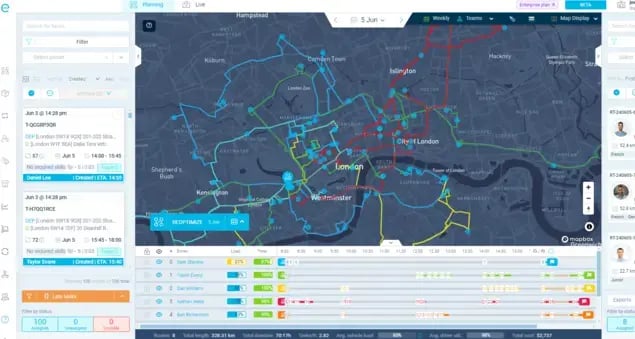
eLogii provides a plug-and-play integration with FieldRoutes designed specifically for operations teams managing complex routing scenarios across multiple regions or service types.
Here's what doesn't change:
Your workflows.
Operations teams continue using FieldRoutes for customer management, scheduling, and billing exactly as they do today. There's no data migration, no workflow rebuild, and no disruption to existing processes.
FieldRoutes remains your system of record. It still owns customers, contracts, service history, and billing. Those never migrate.
The integration works conceptually like this:
eLogii extracts job data, technician schedules, and operational constraints from FieldRoutes. The optimization engine calculates optimal routes considering all constraints simultaneously. This includes:
-
Skill matching
-
Time windows
-
SLA priorities
-
Vehicle capacity
-
Traffic patterns
-
Service zones or regions
-
And more
Optimized routes and sequences then return to FieldRoutes, where technicians access them through the same mobile interface they already use.
The integration sits alongside FieldRoutes without replacing core functionality.
Field service teams can compare manually-built routes against optimized routes before full adoption. If needed, you can revert to previous workflows without data loss.
From an IT perspective, this is configuration and credential setup, not system replacement. The focus is operational improvement, not technical transformation.
Your FieldRoutes environment stays intact while route sequencing logic happens in the execution layer.
When Should FieldRoutes Users Consider Adding Route Optimization
What's the clearest signal you're ready for integration?
Your operations team spends 2+ hours every morning manually adjusting routes that FieldRoutes generated overnight.
That's not a workflow problem! That's routing complexity exceeding your current toolset's capacity.
Other symptoms stack up quickly:
-
If drive time consistently exceeds 25-30% of total work time, you're bleeding capacity.
-
If technicians regularly call dispatch questioning route logic, you're losing credibility.
-
If missed SLA windows or late arrivals generate customer complaints, you're risking contract renewal.
The operational profile matters as much as the pain.
Route optimization delivers meaningful ROI when you're managing 50-300+ field technicians across multiple regions or service branches.
The complexity justifies specialized tools when you're
-
Balancing PPM schedules against reactive service demands
-
Coordinating home-based technicians without a central dispatch location
-
Facing contractual time windows that require optimization accuracy
When to wait:
-
If you're running under 50 technicians in a single region with predictable schedules, FieldRoutes' native scheduling probably handles your needs fine.
-
If you're still stabilizing basic FieldRoutes workflows: getting customer data clean, establishing dispatch processes - master those fundamentals first.
The best time to evaluate is when routing pain actively limits operational performance or growth, not during ERP migrations, office relocations, or leadership transitions.
Stack too many changes simultaneously and you'll struggle to measure what's actually working.
Where Does eLogii Fit If You're a FieldRoutes User
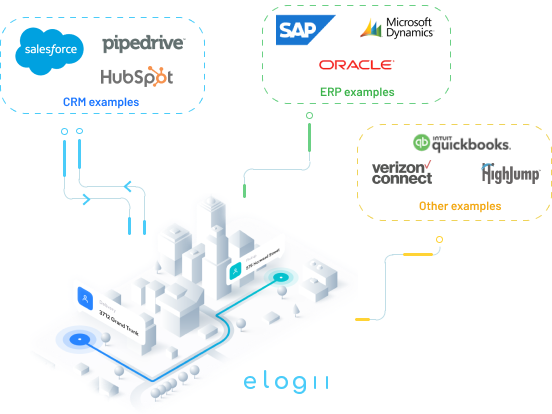
eLogii provides a plug-and-play integration with FieldRoutes designed specifically for operations teams managing PPM plus reactive complexity across distributed technician fleets.
The handoff is simple:
FieldRoutes keeps managing customer relationships, work orders, business rules, and contract terms. eLogii steps in after that, taking job requirements and returning optimized route sequences.
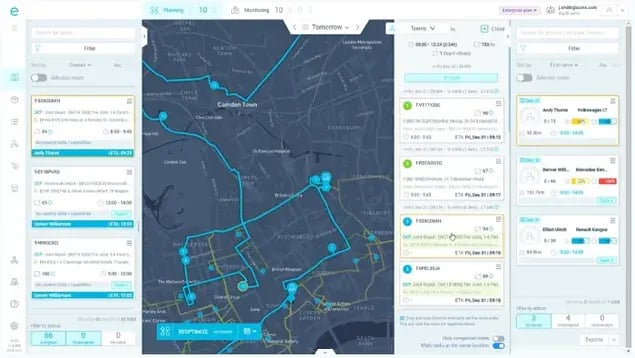
Your technicians continue using the FieldRoutes mobile interface for job execution, so nothing changes on their end.
FieldRoutes remains your system of record. Customer data, service history, billing processes, contract commitments - all stay exactly where they are. eLogii doesn't touch any of that.
Instead, our software sits in the execution layer, optimizing how work gets sequenced and routed across your fleet.
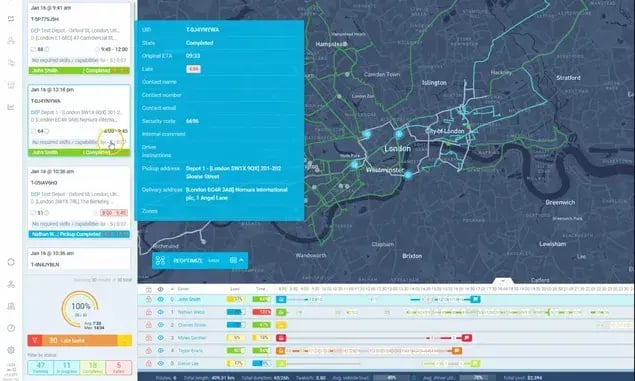
This approach makes the most sense when you're dealing with specific operational scenarios:
-
Mixed PPM and reactive workload balancing that requires continuous re-optimization
-
Multi-day appointment windows with complex constraint satisfaction
-
SLA-based prioritization for VIP customers or contract commitments
-
Skill and certification matching across technicians
-
Real-time dynamic re-routing when jobs run long or emergencies disrupt plans
We've kept the integration focused on solving FieldRoutes' execution layer challenges, not adding feature sprawl or claiming we integrate with everything.
The goal for us (and for you) is operational safety and workflow continuity.
Who FieldRoutes Integration Is (and Isn't) For
This integration fits best if:
-
You're managing 50-300+ technicians across multiple regions
-
You're handling a mix of PPM and reactive work that creates daily routing complexity
-
You already satisfied with how FieldRoutes manages customer relationships, billing, and contracts
-
You just need better routing execution
The clearest signal?
Your operations team recognizes routing as the bottleneck. You're spending hours on manual adjustments. SLA commitments mean you can't afford the current margin for error. And you have a budget for operational improvement tools without needing to justify a full FSM replacement.
When IT and operations leadership both understand the scope, adoption goes smoothly:
This approach isn't right if:
-
You're running fewer than 50 technicians where manual routing still works fine
-
You're still implementing or stabilizing basic FieldRoutes workflows (finish that first)
-
You're thinking of switching FSM platforms (make that decision before adding execution layers)
Basically, the self-selection test is pretty straightforward:
If routing pain exists and FieldRoutes otherwise serves you well, this approach addresses your specific constraint without forcing you to abandon what's working.
Bottom Line: Integrate FieldRoutes with eLogii for Advanced Route Optimization
FieldRoutes excels as your system of record for customer relationships and billing, but route optimization complexity justifies adding a specialized execution layer that integrates cleanly without disrupting your workflows.
Start by auditing your current routing performance. Measure daily manual adjustment time, excess drive time percentage, and SLA miss frequency to establish your baseline.
Then evaluate operational fit against the qualification criteria - team size, geographic complexity, workload mix, and SLA pressure all determine whether an execution layer makes sense for your operation.
The business case is straightforward:
Organizations adding execution layers typically see 15-25% drive time reduction, 2-3 hours daily saved on manual adjustments, and improved SLA compliance.
That's measurable ROI justifying the integration investment.
Ready to explore how this works with your specific FieldRoutes setup?
To understand what changes?
And what stays the same?
See how FieldRoutes teams add a plug-and-play execution layer without replacing workflows.
FieldRoutes Integration with Route Optimization FAQ
Does adding route optimization mean replacing FieldRoutes?
No. FieldRoutes remains your system of record for customer data, contracts, billing, and business processes. The execution layer only handles route sequencing logic.
Your team continues managing customers, creating jobs, and running operations entirely within FieldRoutes. There's no data migration, no workflow replacement, and no disruption to existing processes.
The integration adds optimization capability without touching what FieldRoutes already does well.
How does a plug-and-play integration actually work with FieldRoutes?
The integration connects via API to extract jobs, technician availability, and operational constraints directly from FieldRoutes. The execution layer runs optimization algorithms and returns improved route sequences back into the FieldRoutes interface your technicians already use.
Your operations team continues working in FieldRoutes for customer management, scheduling, and dispatch. The difference is that routes come back algorithmically optimized instead of manually adjusted.
What size operation justifies adding specialized route optimization?
Operations with 50-300+ technicians across multiple regions typically see immediate ROI, especially when running mixed PPM and reactive work under SLA pressure.
If your dispatchers spend 2+ hours daily manually adjusting routes, you're seeing excess drive time of 15-25%, or technicians regularly question route logic, the operational cost justifies dedicated optimization. Smaller teams managing simple territory assignments probably don't need it yet.
Will our technicians need to learn new software or change workflows?
No. Your technicians continue using the FieldRoutes mobile app exactly as they do now. Route sequences improve, but the interface remains identical.
They receive assignments, complete jobs, and update statuses through the same familiar workflow. There's no retraining required for field teams because nothing changes from their perspective except reduced backtracking and more logical stop sequences.
How long does integration setup typically take for FieldRoutes customers?
Integration focuses on configuration rather than transformation. IT involvement centers on credential setup and API connection.
Your operations team can run parallel routes to compare optimization results before full adoption. The process is reversible if routing logic doesn't match expectations.
Setup duration varies based on operational complexity and constraint configuration needs, but the approach prioritizes minimal disruption to daily operations.