You inherited an operation that has to run every day, and the software underneath it was chosen years before the problems you now manage.
When execution slips, it rarely shows up as a technical error. It shows up as a missed SLA, an overtime spike, or a planner working late to rebuild a day that fell apart by 9 AM.
This guide covers how COOs actually decide whether field operations software will survive real-world execution, rather than how it performs in a controlled demo.
Here's a quick overview of what you can expect:
Key Takeaways
- Focus on control over software features. COOs buy field operations software to reduce execution risk and protect margin.
- Worst-day behavior, not how it looks on demo. The decisive test is how software behaves when the plan breaks during the day.
- Execution is a separate job. Systems of record (FSM, ERP, CRM) plan and store work. But turning plans into completed jobs under changing demands of real-world operations requires a distinct layer.
- Risk removal is the key metric. The right software absorbs volatility, re-optimizes continuously, and reduces planner dependency.
- Layer, don't replace existing software. Mature operations add an execution layer on top of FSM, CAFM, ERP, and telematics rather than ripping them out.
COOs Don't Buy Features, They Buy Control Over Field Operations
COOs buy field operations software to gain control over execution, not to collect features. The feature list gets you into the demo.
What keeps the operation stable across the next three years is whether the tool holds up when reality diverges from the plan.
You live with these decisions long after the vendor's sales team moves on.
A poor fit doesn't announce itself in an error log. It surfaces as chronic firefighting, planners who become single points of failure, and SLAs that slip when volume rises.
That's why senior operators evaluate differently than buyers shopping on capability.
The frame that matters:
COOs evaluate software based on how it behaves on the worst day. So you shouldn't focus on the demo day.
A clean demo proves the tool works when nothing goes wrong. Your operation is defined by what happens when something does.
This guide is for operators who already have "good systems" and still feel fragile. If that describes you, keep reading.
What COOs Are Actually Accountable For In Field Service Operations
COOs are measured on operational outcomes, not software specifications. The numbers on your board pack sit downstream of thousands of field decisions made every day, and you carry the risk personally when those decisions go wrong.
Your accountability set looks like this:
- SLA and penalty exposure: Missed windows trigger financial penalties and contract risk.
- Labor efficiency: Every hour of idle or overtime time hits directly.
- Margin stability: Rework, failed visits, and inefficient routing erode profitability.
- Scalability without chaos: Growth can't depend on adding a planner for every new region.
- Operational resilience: The day has to hold together when disruption hits.
These metrics compound.
When execution slips, penalties trigger, overtime rises, and margin erodes in the same week. You own those numbers, rather than the vendor's demo environment.
Software only matters to a COO if it changes execution outcomes. A tool can be elegant and well-reviewed and still leave your worst-day performance exactly where it was.
Why Traditional Evaluation Criteria Fall Short
Standard vendor evaluation artifacts measure the wrong things for an execution-driven operation. They answer "what can this do?" when the real question is "what will this do when my day falls apart?"
Here's why senior operators discount them:
- Feature matrices reward breadth over reliability, so the widest checklist wins instead of the most dependable tool.
- Roadmaps sell the future you might get instead of the execution you need today.
- Configurability claims hide the implementation and maintenance burden that lands on your team.
- Dashboards show you problems in high resolution without doing anything to solve them.
That last point matters most. Visibility without control increases stress, not confidence. Seeing a route collapse in real time is worse than useless if the system can't help you fix it.
| Evaluation Lens |
What Vendors Emphasize |
What COOs Actually Weigh |
| Features |
Longest capability list |
Reliability under real load |
| Roadmap |
What's coming next year |
What holds up today |
| Configurability |
Everything is customizable |
Cost and burden to maintain it |
| Dashboards |
Real-time visibility |
Whether it drives a decision |
| Success metric |
Adoption and logins |
Completed jobs and SLA adherence |
The First Question COOs Ask (But Rarely Say Out Loud)
What happens when the plan breaks?
That single question sits underneath every polite demo question about integrations, reporting, and mobile apps.
The morning plan is the easy part. Any system can build a tidy schedule when every variable is known. Your operation runs on the gap between that plan and the conditions it meets a few hours later.
The volatility that breaks a clean plan includes:
- Same-day job additions and cancellations
- Failed or aborted visits
- Priority overrides from key accounts
- Technician sick calls and availability changes
- No-access sites where nobody's home
- Urgent reactive work dropped in mid-day
A plan that looks perfect at 6 AM meets reality by 9 AM, and the software's response inside that window decides the day. Tools that force a manual rebuild every time something moves don't reduce your risk.
They relocate it onto your planners.
How COOs Think About Execution Risk When Managing Field Operations
Execution risk is the gap between the plan and what actually gets delivered in the field. Everything a COO cares about, SLAs, labor cost, margin, lives inside that gap.
The main sources of execution risk are predictable:
- Human bottlenecks: Changes route through a small number of planners who can only work so fast.
- Decision latency: The minutes or hours between a disruption and a corrected plan compound across the day.
- Planner dependency: Knowledge and judgment sit in individual heads. Your operation is only as resilient as who's on call.
- Cascading failure: One change forces a chain of manual fixes, each introducing new fragility.
Each of these grows faster than headcount can absorb it. In a multi-region operation, planners in regional silos build logical-looking schedules. But every disruption becomes a manual fire drill that repeats zone by zone.
Double the volume and you more than double the coordination load.
The insight that follows:
COOs evaluate software by how much execution risk it removes.
Why Systems of Record (FSM, CAFM, ERP, Telematics) Aren't Enough for Field Services
Systems of record are built to plan and record work, not to execute it under change. They do their job well. Execution is simply a different job.
Here's how the layers divide:
- FSM and CAFM create and store work orders, assets, compliance logs, and SLAs.
- ERP owns billing, finance, and master data.
- Telematics tracks vehicles and provides the visibility layer.
Each of these stops at planning and recording. None of them re-optimizes the day when a technician calls in sick or a priority job lands at 11 AM. That intraday work stays manual and dependent on people, which is exactly where execution risk lives.
No COO believes plans survive contact with reality. The question is whether your stack has anything that acts when the plan changes, or whether that responsibility falls back on a planner and a spreadsheet.
| Layer |
Primary Job |
Where It Stops |
| System of record (FSM/CAFM/ERP) |
Create, store, and bill work |
Once the plan is set |
| Visibility layer (telematics) |
Track vehicles and location |
At showing you what happened |
| Execution layer |
Turn plans into completed jobs under change |
It doesn't - it acts continuously |
What COOs Should Look for Instead When Evaluating Field Operations Software
Once COOs move past features, they evaluate field operations software on a short list of execution capabilities. Each one maps directly to a metric you're accountable for. The guiding principle: COOs buy execution capacity, not scheduling features.
Absorbing Volatility
The software should absorb a same-day change without forcing a full replan. When a job is added, cancelled, or fails, the system adjusts the affected routes rather than sending your team back to square one. This is the worst-day test from the start of this guide, and it maps straight to SLA adherence.
Continuous Decision-Making
Look for live re-optimization that re-plans in seconds rather than hours. Static overnight plans assume the day unfolds as written. Continuous decision-making shrinks the gap between plan and execution as conditions change, which protects both SLAs and labor cost.
Reduced Planner Dependency
The right tool moves planners from building the day by hand to supervising exceptions. When the system handles routine reoptimization, fewer planners manage more volume. That's how you scale into new regions without linearly adding coordination headcount.
Stable Throughput Under Change
Throughput stability means completing a consistent number of jobs per day regardless of disruption. When throughput holds through a chaotic morning, margin and SLA outcomes hold with it. That consistency is what turns a fragile operation into a predictable one.
How High-Maturity COOs Structure Their Field Software Stack
Mature operations separate the system of record from the execution layer rather than forcing one tool to do both. This is the architectural decision that distinguishes a resilient stack from a fragile one.
The principles are straightforward:
- Separation of record versus execution - Let each layer do the job it was built for.
- Layering, not replacing - Add execution capability on top of existing systems instead of ripping them out.
- Planners supervising outcomes - Free your team from manual plan-building so they manage exceptions.
In practice, FSM, CAFM, and ERP keep owning work orders, compliance, and finance. An execution layer handles dynamic scheduling, dispatch, live route optimization, guided workflows, proof of delivery, and field visibility.
The two connect through API and pre-built integrations, so completion data flows back into your systems of record. Billing and compliance reflect the work actually done, not the work originally planned. Record, visibility, and execution each stay in their lane.
Where the Execution Layer Fits in Your Software Stack
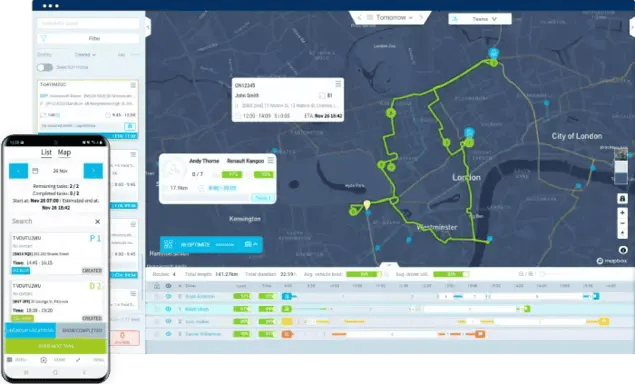
The execution layer is infrastructure that sits between your planning systems and the field, turning plans into completed work under real conditions. It's the piece that acts when the plan changes.
eLogii is one example of an execution layer.
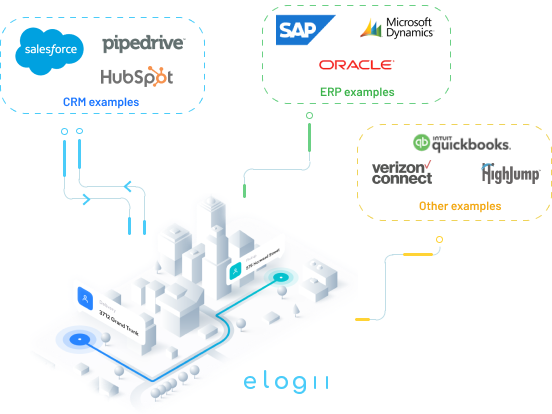
eLogii sits alongside your CRM, ERP, CAFM, and telematics and upgrades the scheduling, dispatch, and re-optimization those record systems were never built to handle. It doesn't replace them.
Our software layers on and restores execution control without disrupting the upstream systems your business already runs on.
eLogii is built for field service teams with 50 to 500+ people in the field, which is the profile where execution risk becomes the dominant operational constraint.
If your operation feels fragile despite solid systems of record, that fragility usually lives in the execution gap, not in the planning tools you already trust.
Which COOs Should Use This Evaluation Framework (and Which Shouldn't)
This framework fits high-variance, SLA-driven operations and repels everything else. Self-selection here saves you a wasted evaluation.
It's built for:
- Complex, SLA-driven or penalty-driven operations
- PE-backed platforms scaling across multiple regions
- Multi-region or multi-job-day field teams whose existing systems feel fragile under load
It's not built for:
- Static-route operations that rarely change
- Low-variance, repetitive work with predictable days
- Early-stage teams still comparing feature lists
If your operation is high-variance and penalty-driven, this lens fits how you already think about risk. If your routes are static and your days are predictable, simpler tools will serve you better, and there's no reason to over-invest.
Bottom Line: Choosing the Right Field Operations Software
Evaluate field operations software on its worst-day behavior, because that's the day that defines your SLAs, your labor cost, and your margin.
The tool that wins isn't the one with the most features. It's the one that removes the most execution risk when the plan breaks.
Take your own operation's worst recent day and walk any tool through it: the sick call, the priority override, the failed visit at 11 AM.
Ask what the software actually does in that window, and whether a planner still has to rebuild the day by hand.
If you want to see how an execution layer handles that scenario, explore how eLogii fits alongside your existing stack.
FAQ about Field Operations Software
What is field operations software?
Field operations software plans, schedules, dispatches, and tracks work for teams operating across multiple sites and regions. It spans two distinct roles: systems of record like FSM, CAFM, and ERP that create and store the work, and the execution layer that turns those plans into completed jobs when conditions change during the day.
How should a COO evaluate field operations software?
Judge it on execution behavior under volatility, not on feature breadth or demo performance. Test how it handles same-day changes, failed jobs, and priority overrides after the plan has already been set. The decisive question is whether the tool acts on disruption itself or hands the problem back to a planner.
What's the difference between a system of record and an execution layer?
Systems of record (FSM, CAFM, ERP) create and store work orders, assets, compliance data, and finance. The execution layer turns those plans into completed jobs and re-optimizes routes and schedules when reality changes intraday. One holds the truth about the work; the other makes the work happen under real conditions.
Do I need to replace my existing FSM, CAFM, or ERP?
No. An execution layer adds on top of your existing systems through integrations and pushes completion data back to them. Your record systems keep owning work orders, compliance, and billing, while the execution layer handles the intraday scheduling and dispatch they were never built for.
Why do software investments often disappoint COOs?
Tools chosen on features and dashboards deliver visibility without control. You can see problems in real time, but execution stays manual and dependent on planners, so the operation remains fragile under change. The investment improves reporting without improving worst-day outcomes.
What does execution risk mean in field operations?
Execution risk is the gap between the plan and what actually gets delivered in the field. It's driven by human bottlenecks, decision latency, and planner dependency, and it grows faster than headcount as volume and regions increase. Reducing that gap is how you protect SLAs and margin.
Is this evaluation approach right for smaller or static operations?
It's built for complex, SLA-driven, multi-region work where the day changes constantly. Static-route operations and low-variance, repetitive work don't carry enough execution risk to justify this lens, and simpler scheduling tools will serve them well.