Managing large-scale inspection and maintenance routes is a different discipline once your operation spans multiple regions, hundreds to thousands of assets, and 100 or more inspectors, engineers, and technicians in the field.
If you run statutory inspection and preventive maintenance across territories with their own rules, crews, and geography, you already know the daily schedule rarely survives contact with reality.
Four forces compound the problem at once:
- Asset growth
- Geographic spread
- Regulatory and compliance pressure
- Workforce constraints
Each one is manageable alone. But together, they overwhelm the way most teams plan their field operations.
The reframe worth holding onto is simple.
Inspection routes break because execution can't keep up with geography and operational change.
So in this article we give you a clear model for why multi-region inspection routing fails at scale. And how you can structurally fix field operations just like high-performing organizations.
Key Takeaways
- Routing failure in large inspection and maintenance field services is systemic. The reason we typically see routes break in these operations is because execution can't adapt to regional variability and volatility.
- Each region behaves like a separate operation with its own compliance windows, critical assets, workforce certifications, and distances between jobs. This is why operations seem different across different territories.
- Software that functions as your system of record (FSM, EAM, ERP and CAFM) don't work for managing daily service execution. They allow you to track inspection commitments, but don't let you rebalance jobs across regions in real time.
- Relying on regional planners to manually coordinate jobs across time zones prevents you from scaling their execution. Making decisions off of one region raises compliance risk and limits how your teams manage technicians and other assets across the entire operation.
- Reactive work, emergency callouts, urgent inspections, and critical maintenance repairs is where routing collapses. One urgent job that pulls a certified technician off planned inspections can cause cascading delays across multiple regions.
- Continuous re-optimization, compliance-aware prioritization, and inspection-maintenance bundling has to be layered onto existing tech stacks. This is known as an execution layer, and it's how multi-region test and inspections handle large scale execution.
What Makes Large-Scale, Multi-Region Inspections Different
At scale, inspection and maintenance routes across regions don't behave as one operation. Once you reach a certain point, they start behaving as multiple operations.
This is when you realize that what worked with a single coordinated plan doesn't work anymore. And instead, it fractures into a set of loosely connected local operations, each with its own logic.
Four things drive this breaking point:
- Regional compliance differences: Statutory inspection windows and rules vary by jurisdiction, so the same asset type carries different deadlines in different territories.
- Critical asset variations: A substation, a lift, or a fire panel does not carry equal consequence-of-failure everywhere, which changes prioritization.
- Different teams and workforce: Skills, certifications, and local knowledge differ crew to crew, and a certification mismatch turns a planned job into an aborted visit.
- Different driving distances between jobs: Dense urban territories and sparse rural ones produce wildly uneven mileage and drive time.
Each region behaves like a different operation.
Treating them as one uniform network is where the first cracks in your routing appear.
Why Traditional Route Planning Works Until You Add More Regions
Traditional, static route planning works for a single region because it has a smaller footprint with fewer exceptions. When you add more regions to expand your operation, you're adding compliance windows, access requirements, and the asset mix for each region.
And because they're a part of your operation as a whole, each one of the regions you add has to interact with the others.
Static, centralized route planning has a problem overcoming this because as your regions multiply so do operational exceptions. And in a single region, static planning works because the inputs are stable:
- Inspection cycles are predictable
- Exception volume stays manageable
- Planners know their territory well enough to manually handle reactive work
Centralized planning also struggles as scale grows because one central team cannot hold the local constraints for every region in their heads.
This includes different access rules, statutory and customer time windows, site-specific hazards, and crew certifications. All of these routing constraints multiply past what any group of planners can track manually.
And because regional exceptions expand and compound, your static route planning model itself hits a wall.
Structural Limits of FSM and EAM Scheduling for Inspections
FSM, EAM, and CAFM systems are strong systems of record for inspection obligations, assets, and PPM cycles. But they aren't built to continuously rebalance live execution across multiple regions.
This distinction matters at scale, and it shows up in three structural gaps in inspection and maintenance operations:
- Planned inspections vs Live execution: FSM and EAM systems know what is due and when, but you can't use them to re-sequence jobs when operational reality shifts during the day.
- Static optimization windows: Routes and schedules are built once, before operations begin. Once they start, unexpected events occur such as inspectors calling in sick, no-access to job site, cancellations, traffic, and emergency callouts, which make those routes and schedules outdated.
- Manual replanning: When operational conditions change, it requires dispatchers and planners to rebuild schedules and routes by hand. As unexpected events are a regular part of field operations, this takes up a lot of your planning capacity.
To see where your stack actually breaks, it helps to separate the field operations layers:
| Layer |
What It Does |
Example Systems |
What It Cannot Do at Regional Scale |
| Systems of record |
Hold assets, obligations, PPM cycles, work orders |
FSM, EAM, CAFM, asset management |
Continuously re-optimize live routes across regions |
| Visibility layer |
Show where crews and assets are |
Telematics, GPS, ETAs, dashboards |
Decide what to do about what it shows |
| Planning and scheduling |
Build inspection cycles and maintenance plans |
Scheduling modules, planning boards |
Adapt plans intraday as conditions change |
| Execution layer |
Turn planned and reactive work into optimized routes |
Continuous re-optimization, decisioning, trade-offs |
(This is the layer most stacks are missing) |
Each layer is necessary.
Because of that, the point is to layer different systems on top of each other.
(Not replace what you already own and use.)
Our breakdown of field operations software categories explains where each one fits in the larger stack.
Planner Bottleneck for Routing Multi-Region Inspections
As the number of regions where your inspection services reach multiplies, most of workload to coordinate them falls on your regional planners.
And despite levels of experience, expertise, and their headcount, all human planners have ceiling to what they can and can't physically do. Which is what puts a coordination ceiling on the whole operation, and creates a routing bottleneck.
The mechanics are probably familiar to you:
→ Planners have to coordinate jobs across time and service zones
→ They have to make decisions that are different region to region
→ They rely heavily on experience and local knowledge to do it
This typically includes which crew can access which site, which shortcut avoids the depot detour, which inspection can safely slip a day, and more.
None of these exceptions are written down, but all of them are a part of your operation.
And that model of route planning DOESN'T scale.
That's why for most inspection and maintenance field operations adding more regions means adding more route planners.
This is also WRONG.
As headcount capacity grows, so does coordination complexity.
Two planners facing identical trade-offs make different calls. While having more people in the mix means making more calls to align actions, having more organizational complexity, and leaving more room for human error.
The consequences is a loss in efficiency, but also higher risk of missed inspections that push statutory windows toward breach, missed SLAs and compliance, and operational overhead that climbs as you hire coordinators just to keep pace.
This is then compounded by emergency callouts, urgent inspections, and other reactive jobs.
If you'd like to analyze your current number of planners, try out our free headcount capacity planning calculator for test and inspection field operations. See if your current planner headcount matches actual requirements of your operation, region by region, across all regions.
How Reactive Work Disrupts Inspection Routes
Reactive work is where multi-region inspection routing actually falls apart, because urgent jobs collide with planned inspection cycles that were already tightly packed.
The disruption sources are specific:
- Urgent maintenance that cannot wait for the next cycle
- Safety incidents that demand immediate response
- Asset failures that pull crews off their planned runs
- The cascading delays each of these triggers across a region and beyond
Roughly 70% of field operations is planned work and 30% is reactive. And that reactive slice is expensive.
In fact, the U.S. Department of Energy documents reactive maintenance costing 3–5 times more than planned preventive maintenance when all costs are counted.
At scale, one regional disruption affects national execution.
A single asset failure pulls a certified technician off planned inspections, pushes statutory windows toward breach, and forces manual replanning that ripples into neighboring regions as crews and slots get reshuffled to cover the gap.
What Inspection and Maintenance Routing Must Do at Scale
Large-scale inspection routing has to optimize operational outcomes and compliance, not just the shortest sequence of stops. Distance is one input among many.
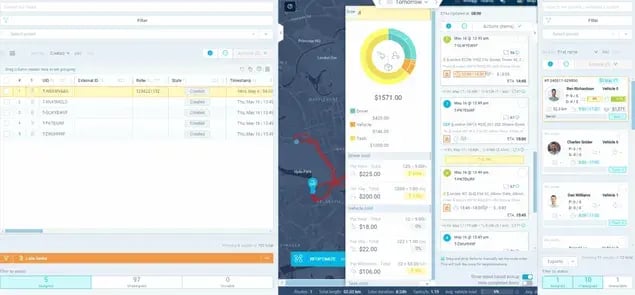
The capabilities that matter, independent of any tool:
- Continuous re-optimization: Rebuild the day automatically as sickness, no-access, and emergencies land, instead of triggering a manual rebuild.
- Region-aware trade-offs: Weigh local constraints - access rules, asset mix, travel asymmetry - rather than applying one national logic.
- Compliance-aware prioritization: Treat statutory inspection windows as hard constraints, not soft preferences.
- Inspection-maintenance bundling: Group planned inspections with due or reactive maintenance at the same site or asset cluster.
Large-scale inspection routing must optimize outcomes.
Bundling is the largest single lever on cost-to-serve, because every avoided repeat visit to the same site removes drive time, an appointment, and a coordination touch.
When you have thousands of assets clustered across estates and networks, cutting repeat visits compounds fast.
How High-Performing Organizations Manage Across Regions
High performers pair local autonomy with central control, so regions keep their constraints while the operation stays consistent.
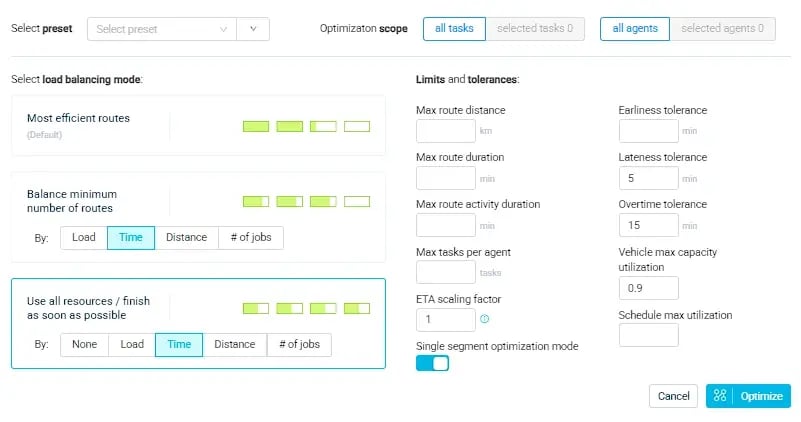
Neither pure centralization nor pure regional independence survives at scale.
And the best operators refuse to choose between them.
The patterns are consistent:
- Execution logic applied consistently: Rules run the same way everywhere, instead of manual, region-by-region intervention that varies by planner.
- Planners supervise: Coordinators handle exceptions and edge cases rather than building every route by hand.
This resolves the earlier bottlenecks directly.
Rules enforced consistently across regions replace tribal knowledge locked in individual heads. Compliance prioritization becomes systematic, so statutory windows are protected regardless of who is on shift that day.
The result is an operating model. Local judgment stays where it belongs, and consistency stops depending on heroics.
This is the standard buyers should evaluate any solution against.
The Role of an Execution Layer in Multi-Region Operations
An execution layer is the layer that continuously turns planned and reactive work into optimized, executable routes and re-optimizes the moment reality changes, sitting on top of your systems of record and visibility layers.
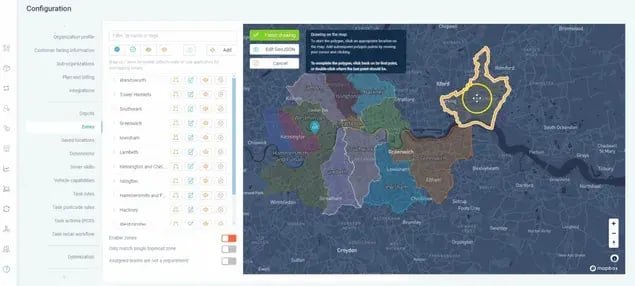
Across regions, that layer does four jobs at once:
- Absorbs regional volatility: Unavailable technicians, no-access chains, and emergencies get reworked automatically instead of collapsing the day.
- Stabilizes compliance: Statutory windows are enforced as hard constraints across every territory.
- Reduces planner dependency: Consistent logic replaces manual coordination, so a small team runs a large operation.
- Maintains throughput nationally: Local disruptions stay contained rather than rippling outward.
This is a capability category.
It complements FSM, EAM, and CAFM rather than replacing them, drawing obligations and asset data from the system of record and pushing completion data back into it.
The systems of record stay authoritative, while the execution layer makes them actionable at scale.
How eLogii Helps You to Plan, Optimize, and Execute Multi-Region Routing

eLogii is execution-layer infrastructure built for multi-region complexity that sits alongside your FSM and EAM rather than replacing them.
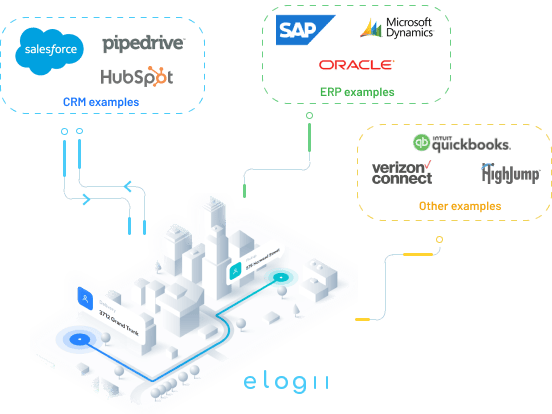
This enables you to pull planned PPM and reactive work from the system of record and turn it into optimized daily routes that start from home, depot, or zone.
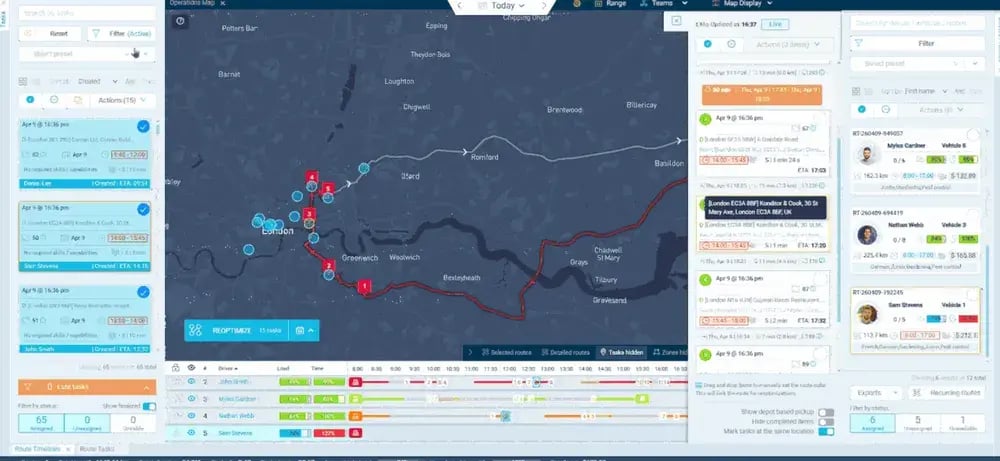
Those routes re-optimize when a technician calls in sick, a site is no-access, a job overruns, or an emergency lands, so coordinators are not rebuilding the board by hand.
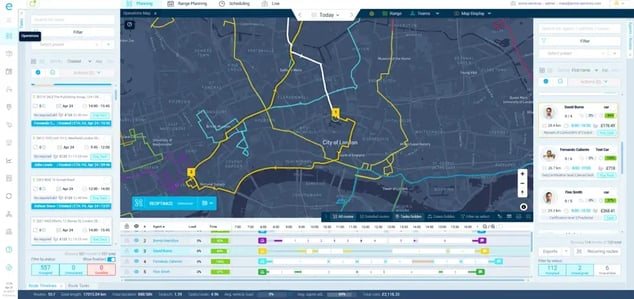
For asset-heavy, multi-region operations, that cuts three failure modes that appear once you leave a single control room:
- Coordination risk when regions plan in isolation.
- Planner dependency on tribal knowledge about skills, SLAs, and access.
- Manual replanning that eats a planner's or dispatcher's day.
The outcomes we see in field service deployments are conservative and consistent:
- 20-40% mileage reduction
- 50-70% lower planning workload
If you want to go deeper on the utilities context, see our guide to route optimization for utilities field operations.
The point is layering, never rip-and-replace.
Who This Approach Is (and Isn't) For
This approach earns its keep in complex, high-stakes, multi-region operations. In simple operations, it's overkill.
To know if an execution layer is the right path for your inspection operation, here's a quick overview before investing:
| This Approach Fits |
This Approach Is Not For |
| National utilities, infrastructure operators, asset-intensive enterprises |
Single-region teams with one depot and one crew pool |
| Inspection- and compliance-driven work with statutory windows |
Simple contractor routing with few constraints |
| Multi-region operations with local constraints per territory |
Predictable single-region routing that rarely changes |
| Statutory, high-stakes compliance profiles |
Low-compliance work or logistics and parcel delivery |
If you run a single region, predictable routes, or low-compliance work, you won't get value from an execution layer.
And that's fine.
Because the complexity its meant to manage is the complexity you don't have, yet.
But if you feeling the strain of regional scale on compliance and cost-to-serve every week, you should seriously consider it.
Bottom Line
If your inspection and maintenance routing is breaking, the fix is almost never better planning.
Instead, think about adding an execution layer that helps your field operation adapt across regions in real time.
This won't replace your systems of record. They'll still hold key resource, asset, and compliance data.
But execution is the single most useful lens for evaluating how you route, schedule, and manage inspections across multiple regions.
The next step?
Take your own operation through the model above:
Identify which layer is actually failing you at scale.
Is it systems of record, visibility, planning, or execution?
Most asset-heavy multi-region operators find the gap sits squarely at execution.
Once you can name it, you can fix routing deliberately.
(Instead of hiring another planner and hoping for the best.)
The practical next step?
See how large-scale teams stabilize maintenance execution across regions, compare your current model against the execution-first patterns high performers use.
To do it, click on the banner and book a demo.
FAQ
How do organizations manage inspection and maintenance routes across regions?
They apply an execution layer that enforces consistent rules while respecting local constraints, sitting on top of their FSM or EAM systems of record. Regions keep their compliance windows, access rules, and crew certifications, while a shared logic continuously turns planned and reactive work into optimized routes. This pairs local autonomy with central control.
Why does inspection routing break at large scale?
It breaks because execution cannot adapt to regional variability and volatility, not because routes are wrong or planners are weak. Static plans degrade the moment sickness, no-access, or emergencies land, and manual replanning cannot keep pace across many regions. The failure is systemic and rooted in the operating model.
How do multi-region maintenance teams stay compliant?
They treat statutory inspection windows as hard constraints rather than soft targets, and prioritize systematically instead of manually region by region. Compliance-aware routing protects due dates automatically, so a window is not missed because a particular planner was busy. SMRP Best Practices targets 85–90% planned work, which requires systematic scheduling to sustain.
Why does FSM scheduling struggle with inspections?
FSM systems are strong systems of record. They track obligations, assets, and PPM cycles accurately. They were not built to continuously rebalance live execution across regions, so when reality shifts they rely on manual replanning. They know what is due; they don't decide how to re-sequence the day when conditions change.
How do high-performers manage regional variability?
They combine local autonomy with central control. Execution logic runs consistently across every region, replacing manual, region-by-region intervention, and planners supervise and handle exceptions rather than sequencing every route by hand. This makes compliance prioritization systematic rather than dependent on who is planning that day.
How do organizations optimize inspection routes without central chaos?
They use an execution layer that absorbs volatility and enforces rules consistently, keeping regions autonomous but coordinated. Local constraints stay local, while a shared engine contains disruptions so one region's emergency does not ripple into national delays.