If you're evaluating route optimization software for distribution companies in 2026, you're probably feeling the squeeze from multiple directions at once:
- Delivery costs are climbing 15-25% YoY
- Driver shortages aren't going away
- Customers are demanding 95%+ on-time-in-full (OTIF) performance
All of that on top of failed delivery costs hitting $150-300 per occurrence when you miss the mark.
The operational reality matches the financial pressure:
More than half of wholesale distributors rate their delivery planning effectiveness as below excellent. Another 40% are adjusting distribution routes multiple times daily just to handle unexpected delays.
That's not optimization. That's firefighting!
For many distribution operations, the root problem isn't effort or expertise. It's infrastructure.
ERP routing modules were designed for simple workflows, and they break down under the weight of multi-depot operations managing 500+ daily stops across complex distribution route planning scenarios.
What works for 50 deliveries a day collapses at scale. That leaves planners manually rebuilding routes in spreadsheets while dispatch tries to keep drivers productive.
This guide is your enterprise buyer checklist for choosing route planning for logistics and distribution companies that actually handle real-world complexity.
We'll walk through:
- 10+ evaluation criteria that matter for wholesale and trade distribution routing
- Compare ERP modules against dedicated optimization platforms
- Exact questions to ask in vendor demos
- What best-in-class distributors are actually using these systems to accomplish
Here's a quick overview of what else you'll find in this guide:
Key Takeaways for Enterprise Buyers
- Distribution routing handles more complexity than courier delivery: 50-150 stops daily instead of 10-20, bulky cargo requiring weight and volume constraints, and repeat customers with strict time windows where failures cost more.
- ERP routing modules weren't built for multi-depot operations managing 500+ daily stops. Over half of wholesale distributors rate their delivery planning as below excellent, and 40% adjust routes multiple times daily to handle disruptions.
- Enterprise route optimization platforms must optimize 500+ stops across multiple depots in under five minutes, enforce strict time windows, handle granular driver and vehicle constraints, and calculate both weight and volume capacity for bulky cargo.
- Dedicated platforms like eLogii, Routific, and WorkWave integrate routing, dispatch, and mobile execution in one system. They handle loading sequence optimization, proof of delivery, and real-time visibility that ERP modules can't match.
- Leading distributors in foodservice, building materials, and trade wholesale use these platforms to cut delivery costs by 20-30%, eliminate spreadsheet planning, and maintain OTIF compliance that protects customer relationships.

Why Distribution Routing Is Different from Standard Delivery Planning
When you're planning distribution routes, you're solving a fundamentally different problem than DoorDash or gig-economy courier services.
A typical distribution route handles 50-150 stops per day.
Courier routes? Maybe 10-20.
That difference is about mathematical complexity.
When you're planning multi-depot routes with hundreds of addresses, you're choosing between billions of possible scenarios. Which depot serves which customer isn't obvious, even when one location seems closer.
Driver availability, delivery time windows, vehicle capacity, and average road speeds often matter more than physical proximity.
Then there's the cargo itself.
Distribution companies move bulky, high-value goods (building materials, flooring, kitchen products) where weight capacity, loading sequence, and fragile handling determine what's actually possible. You can't just throw everything in a van and figure it out later.
The operational rhythm looks different too. Distribution routing follows repeat weekly patterns with established customer relationships and predictable delivery schedules.
Gig delivery is dynamic and on-demand. Your drivers need to coordinate with jobsites and honor strict customer time windows, not just drop packages on porches.
The stakes reflect this difference.
When a courier misses a $30 parcel delivery, it's annoying. When you miss a $5,000 wholesale order to a contractor's jobsite, you've potentially stalled an entire construction timeline and damaged a long-term customer relationship.
Failed deliveries in distribution cost $150-300 per occurrence, not counting the relationship damage.
This is why you need a distribution routing solution built for these constraints. The distribution route planning complexity requires different algorithms, different constraint handling, and different operational assumptions from the start.
Enterprise Buyer Checklist for Route Optimization Software
Core evaluation criteria for shortlisting enterprise route optimization software for distribution companies should cover both technical capability and operational readiness.
Here's what separates basic routing tools from platforms built for distribution scale:
1. Multi-Stop Optimization at Scale
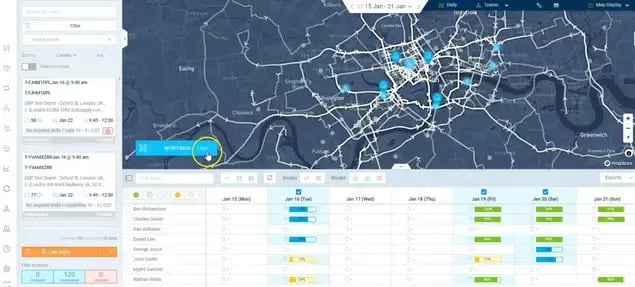
Your distribution routing software needs to handle hundreds to thousands of daily drops without breaking.
Basic route planners optimize one route at a time. Enterprise platforms optimize 500+ stops across your entire fleet simultaneously.
What to ask vendors:
Can you optimize 500+ stops across multiple depots in a single planning task?
If they hesitate or mention performance limitations, keep looking.
Good distribution route planning software handles this scale in minutes, not hours.
2. Multi-Depot & Territory Planning
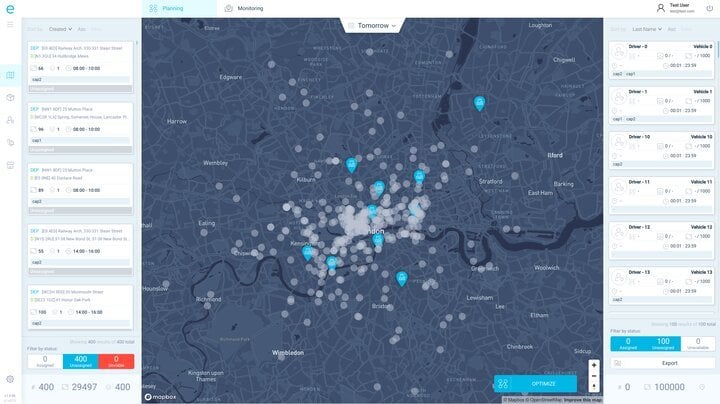
Multi-depot optimization starts around $600/month because it requires sophisticated constraint handling.
The system should dynamically allocate orders to depots based on capacity, time windows, and vehicle availability. Not just proximity.
Territory balancing matters for foodservice distribution routing and building materials delivery routing where repeat routes and driver familiarity drive efficiency.
Look for platforms that let you manage route planning across multiple sites in a single task, maximizing vehicle and driver use across your operation.
What to ask vendors:
How do you handle depot capacity constraints and cross-depot optimization?
3. Dynamic Re-Optimization (Same-Day Changes)
Static routes become outdated the moment conditions change. Last-minute order insertions, cancellations, and traffic disruptions happen daily in distribution operations.
What good capabilities look like:
Re-optimization in under 5 minutes for a 200-vehicle fleet.
Your routing platform should continuously optimize delivery routes based on real-time data, allowing quick adjustments without forcing dispatchers to manually rebuild routes.
4. Time Window & SLA Enforcement
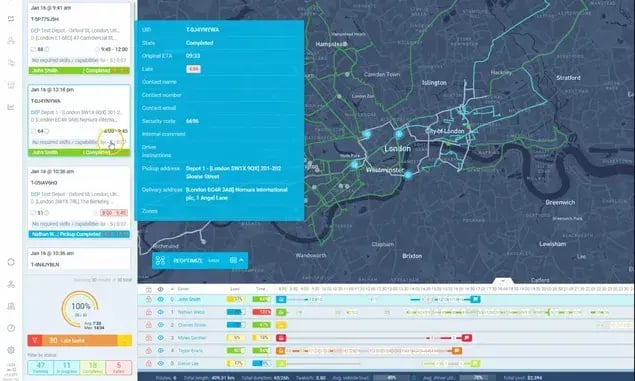
Customer delivery window compliance drives 95%+ OTIF targets in distribution. The platform must enforce hard time windows, manage jobsite coordination for trade deliveries, and prevent SLA violations that cost $150-300 per failed delivery.
Multi-drop route planning software should flag potential window conflicts during optimization, not after routes are dispatched. Penalty avoidance for missed windows pays for the software within months.
5. Fleet & Driver Constraints
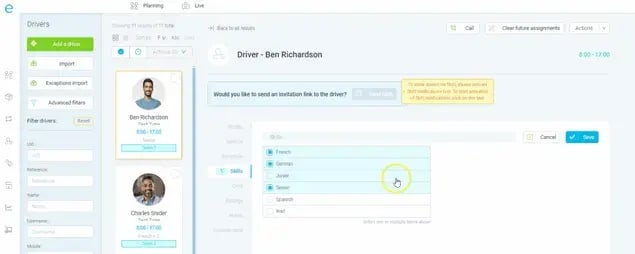
How granular can you configure driver and vehicle constraints?
This matters more than most buyers realize.
Driver skills (fragile goods handling, forklift certification, customer relationship assignments), shift rules, break times, and overtime thresholds all impact route feasibility.
Vehicle types matter too: refrigerated trucks, liftgate requirements, weight capacity limits.
Platforms like eLogii offer configurable constraint handling that respects these operational realities rather than forcing you to work around software limitations.
6. Support for Bulky / Weighted Loads
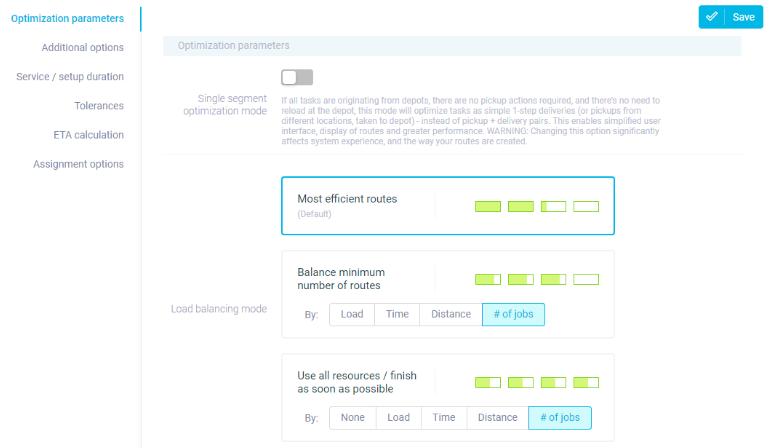
Building materials, flooring, and bathroom and kitchen product delivery involve weight and volume constraints that standard routing tools ignore.
Your platform needs vehicle capacity modeling that accounts for both cubic feet and weight limits simultaneously.
Loading sequence optimization matters for multi-drop routes:
Last-on-first-off logic prevents unloading half the truck to access one delivery.
This is table stakes for flooring distributor route planning and trade wholesale multi-drop delivery.
7. Proof of Delivery + Execution Layer
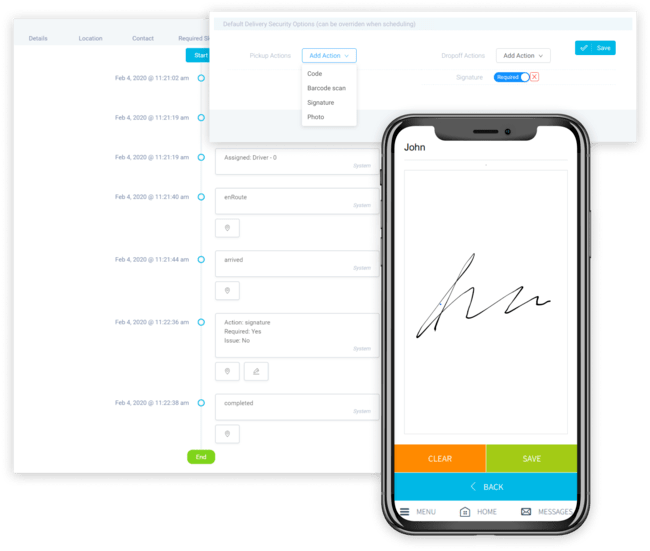
Route optimization and execution within a single platform avoids data silos and creates a continuous feedback loop to improve both planning and execution over time.
Look for routing, dispatch, and mobile app in one platform versus stitching together point solutions. Electronic POD, photo capture, signature collection, and real-time driver communication should be native capabilities.
eLogii includes unlimited vehicles and users in all plans, which matters when you're rolling out to 200+ drivers.
8. ERP + TMS Integration Capability
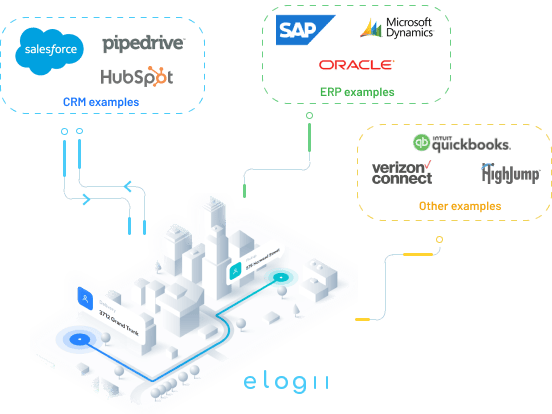
ERP integration challenges kill more routing implementations than any other factor.
Expensive modifications to support multiple ERPs, upgrading from batch to real-time integration. These issues surface late in evaluations.
API-first architecture is non-negotiable. You need proven integration patterns for Dynamics 365, SAP, NetSuite, or custom ERP systems.
What to ask:
Show us your API documentation and integration examples for our specific ERP platform.
9. Enterprise Reporting + KPIs
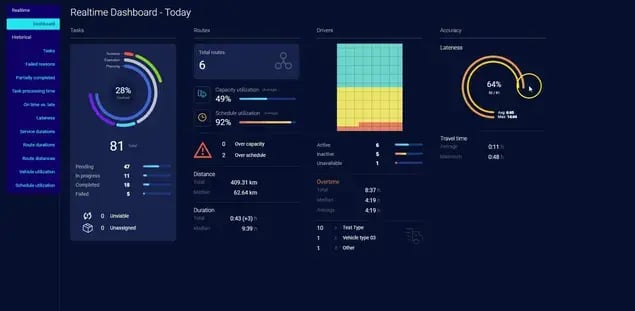
Executive dashboards for CFO visibility should track OTIF, cost per drop analysis, and planned vs actual route comparison.
Route density maximization and idle-time reduction can cut costs by 20-30%. But this only happens if you can measure and track these metrics consistently.
Your routing software that integrates with ERP should pull actual cost data for accurate ROI reporting.
10. Security + Compliance Readiness
SOC2 and ISO certifications are expectations for enterprise buyers, not nice-to-haves.
Data encryption, access controls, and GDPR compliance for EU operations protect you from audit failures and data breaches.
What to ask:
What certifications do you hold, and can we review your security documentation?
11. Fast Implementation Without Disruption
Production-ready systems typically deliver within 60-90 days, including model development, integration, and validation. Phased rollout capability lets you pilot one depot then expand.
Training requirements for 200+ users and change management support separate smooth implementations from disrupted operations.
Ask vendors to walk through their implementation methodology, not just show you the software.
12. Vendor Support + Enterprise SLA
Dedicated account managers, priority support, custom integrations, and SLA agreements matter for large-scale enterprises.
Implementation support depth and ongoing optimization consulting determine whether you maximize ROI or just deploy another underutilized tool.
Uptime guarantees should be in writing, with meaningful penalties for violations. Your distribution routes can't wait for vendor support to get back from lunch.
ERP Routing Modules vs Dedicated Optimization Platforms
If you're running 20 vehicles with predictable routes, your ERP's bundled routing module might work fine. But once you cross 100+ vehicles, multiple depots, or 500+ daily stops, those ERP routing module limitations start costing you real money.
We've seen this pattern repeatedly:
ERP routing is designed for basic planning, not operational complexity. It breaks beyond 50-100 stops per route. You can't model driver skills, bulky goods constraints, or loading sequences:
- There's no dynamic re-optimization when customers call with changes mid-route
- The dispatcher interface wasn't built for routing workflows. (It's clunky, slow, and frustrates teams.)
And here's what really hurts:
Most ERP routing modules don't integrate with mobile driver apps, so you're still calling drivers or texting route changes.
That's when routing software that integrates with ERP becomes the right move - a dedicated platform that pulls order data from your ERP but handles the actual optimization and dispatch workflow.
Here's how the capabilities compare:
| Capability |
ERP Module |
Dedicated Platform |
| Route optimization scale |
50-100 stops max |
1,000+ stops per route |
| Constraint handling |
Basic distance/time |
Driver skills, vehicle types, loading sequence, time windows |
| Dynamic re-optimization |
Manual replanning |
Real-time automatic adjustments |
| Mobile driver app |
Usually none |
Purpose-built execution layer |
| Multi-depot optimization |
Limited or none |
Full territory balancing |
The cost justification is straightforward:
If a dedicated platform saves your dispatchers 2 hours daily per vehicle in planning time, that's $15,600 annually per vehicle in labor savings alone. (Before you factor in fuel reduction, better capacity utilization, or improved OTIF performance.)
For distribution operations with 100+ vehicles, multi-depot complexity, or tight customer SLA requirements, the ERP routing module quickly becomes the bottleneck, not the solution.
Questions to Ask During a Distribution Routing Software Demo
Demos reveal whether a platform can actually handle your operational complexity or whether it's just good at selling.
Here's what to ask to separate enterprise-grade delivery scheduling and routing software from tools that break at scale.
Start with technical capability questions that stress-test the platform:
- Can you optimize across multiple depots simultaneously? Show us a live example with 500 stops across 3 depots.
- How do you handle failed deliveries or order cancellations mid-route? Can you re-optimize in real-time without rebuilding the entire day?
- What constraints can we model? Walk through driver skills, vehicle types, customer time windows, weight capacity, and loading sequence for bulky goods.
- Show us your dispatcher interface. Can dispatch override optimized routes in real-time when a customer calls with an urgent change?
Dig into integration and implementation reality:
- Walk us through your API documentation. How does integration with Dynamics 365 or SAP actually work? What data flows in real-time versus batch?
- What does rollout look like for 200+ vehicles across 5 depots? Show us the implementation timeline and what resources we'll need internally.
- How does your mobile driver app handle proof of delivery? What happens when drivers lose connectivity in rural areas?
Ask about business model fit:
- What's your pricing structure - per vehicle, per order, or per optimization run? How does pricing scale when we grow from 200 to 500 vehicles?
- Show us your reporting. We need OTIF tracking, cost per drop, and route efficiency KPIs that integrate with our executive dashboards.
- What's your security posture? Do you have SOC2 or ISO certifications?
- What support do we actually get? Dedicated account manager, optimization consulting, or just a ticket system?
These questions quickly reveal whether you're talking to a distribution routing solution built for enterprise scale or a basic route planner with good marketing.
If you're evaluating vendors, book a demo to see how enterprise distribution routing capabilities handle these scenarios.
Route Optimization Software Checklist for Enterprise Distributors
Use this checklist when evaluating enterprise route optimization software vendors. Print it, share it with your team, and bring it to demos.
Platform Capabilities
- ☐ Multi-depot optimization (500+ stops across multiple facilities simultaneously)
- ☐ Dynamic re-optimization under 5 minutes for 200+ vehicle fleets
- ☐ Advanced constraint handling (driver skills, vehicle types, time windows, bulky goods)
- ☐ Multi-drop route planning software that handles 100-1,000+ daily stops per route
- ☐ Proof of delivery and mobile driver app integrated into single platform
- ☐ Territory planning and recurring route templates
Integration & Technical
- ☐ API-first architecture with comprehensive documentation
- ☐ ERP integration capability (Dynamics 365, SAP, NetSuite native connectors)
- ☐ Real-time data sync, not batch processing
- ☐ Security certifications (SOC2, ISO 27001, GDPR compliance)
- ☐ Routing software that integrates with ERP without custom middleware
Implementation & Support
- ☐ 60-90 day rollout timeline for 200+ vehicle operations
- ☐ Phased deployment capability across multiple depots
- ☐ Dedicated account manager and priority support tier
- ☐ Enterprise SLA with uptime guarantees (99.9%+)
- ☐ Ongoing optimization consulting, not just technical support
Business Impact
- ☐ ROI projections showing 200-400% return within 6 months
- ☐ Cost per drop reduction target of 20-30%
- ☐ Planning time reduction of 50%+ (from 8 hours to under 2 hours daily)
- ☐ OTIF improvement to 95%+ with delivery route optimization platform
- ☐ Scalable pricing model (unlimited users/vehicles, not per-seat fees)
If a vendor can't check 18+ of these boxes, keep looking.
Common Mistakes Enterprises Make When Buying Routing Software
The biggest mistake we see? Buying based on upfront cost rather than total cost of ownership.
A free or cheap routing tool might seem like a win until you realize it can't optimize effectively. Routes that should take 6 hours end up taking 8 hours.
That 2-hour difference costs you $15,600 annually per vehicle in wasted labor. Multiply that across 100 vehicles, and you've lost $1.56 million trying to save on software.
The second trap is buying your ERP's native routing module without stress-testing its constraint handling.
ERP routing works fine for basic scenarios, but it breaks when you need real distribution complexity (driver skills, multi-depot optimization, bulky goods handling, or dynamic re-optimization).
By the time you discover the limitations, you've already committed budget and political capital.
Most enterprises also focus on feature checklists instead of business outcomes.
You don't need routing software with 47 features. You need software that reduces your cost per drop by 25%, improves OTIF to 95%+, and cuts planning time from 8 hours to under 2 hours. Model the ROI with your actual fleet metrics before you buy.
Three more mistakes that delay value:
- Skipping pilot programs and deploying to all 200 vehicles on day one
- Failing to involve IT early, making integration the bottleneck six months in
- Ignoring change requirements for dispatchers and drivers who'll actually use the system
The disconnect between C-level buyers and operational teams causes most of these problems. Decision-makers who never see the dispatcher's screen end up buying tools that don't solve real routing complexity.
What Best-in-Class Distributors Use Routing Optimization for
The answer depends entirely on what you're delivering and where operational complexity hits hardest.
Foodservice Distribution
Foodservice distribution routing deals with time-critical perishables and temperature control requirements that don't forgive mistakes. Planning teams wrestle with last-minute orders flooding in each evening, outdated routes, and unpredictable variables like restaurant prep schedules.
The distributors getting this right have increased their on-time rates to 95%+, cut route planning from 8 hours to under 2 hours, and consistently get drivers back within their delivery windows.
Building Materials Distribution
Building materials delivery routing solves a different puzzle entirely. You're coordinating bulky loads with weight capacity constraints, optimizing loading sequences so drywall doesn't end up under concrete bags, and matching delivery times to construction site windows when forklifts and cranes are actually available. The coordination complexity here can kill margins if you're still planning routes manually.
Flooring Distribution
Flooring distributor route planning focuses on fragile, high-value product handling combined with installer coordination. When you're delivering $8,000 worth of hardwood to a customer's home, you need precise appointment windows and white-glove service expectations baked into your routes.
Trade and Wholesale Distribution
Trade wholesale multi-drop delivery operations handle 20-40 stops per route in concentrated geographies with mixed product types (plumbing supplies, HVAC equipment, electrical components) often going to the same weekly customers. The route density and repeat patterns make optimization critical for capacity planning.
The common thread?
Distribution routing complexity that basic ERP modules and manual planning can't handle at scale.
Bottom Line: The Right Route Optimization Software Pays for Itself
If you're evaluating route optimization software for distribution companies, the right platform pays for itself fast.
We're talking 2-8 week payback periods and 200-400% ROI within six months for most distribution routing operations.
Your shortlist should focus on four non-negotiables:
-
Multi-depot optimization capability
-
Constraint handling depth (bulky goods, time windows, driver skills)
-
ERP integration architecture that doesn't require middleware
-
Implementation support that won't disrupt operations.
One differentiation point matters more than most buyers realize upfront: unlimited users and vehicles versus per-driver pricing. That pricing model determines whether you can scale without renegotiating contracts every time you add capacity.
Ready to see what enterprise distribution route planning looks like in action?
Book a personalized demo with eLogii to see how we handle multi-depot complexity, bulky goods constraints, and tight delivery windows with API-first architecture built for scale.
Or get a custom ROI assessment where we'll model savings based on your current fleet size and cost per drop.
One timing note:
Q1 2026 budget cycles are closing, and enterprise implementations typically take 60-90 days.
If you're planning to optimize operations this year, involve your IT team now and start modeling ROI with your current fleet metrics.
The complexity isn't going away. The question is whether you're building routing infrastructure that scales with it.
FAQ about Route Optimization Software for Distribution
What is route optimization software for distribution companies?
Route optimization software for distribution companies is enterprise infrastructure that automatically calculates the most efficient delivery routes for multi-depot, high-volume wholesale operations. Unlike basic route planners, distribution-focused platforms handle complex constraints including bulky goods, vehicle weight limits, driver skills, customer time windows, and multi-drop sequences. The route optimization software market is expected to reach $16.78 billion by 2031, growing at 13.32% CAGR, driven by e-commerce growth and AI integration.
How is distribution routing different from last-mile courier delivery?
Distribution routing involves depot-based operations serving 50-150 stops per route with bulky/high-value goods ($1,000-10,000 orders), repeat weekly patterns, and complex constraints (weight capacity, loading sequence, jobsite coordination). Last-mile courier delivery typically handles 10-20 stops per route with small parcels, on-demand dynamic routing, and simpler constraints. Physical proximity to depot is often trumped by driver availability, delivery time windows, vehicle availability, and average road speeds in distribution operations.
Can route optimization software integrate with existing ERP systems?
Yes, modern route optimization platforms offer API-first architectures for ERP integration (Dynamics 365, SAP, NetSuite). Routing integration through APIs makes automatic data handoff between optimization software and third-party apps possible, reducing chances of error and saving time. Key evaluation criteria: comprehensive API documentation, real-time data sync (not batch), pre-built ERP connectors, and integration consulting support.
What ROI can distribution companies expect from route optimization software?
Most delivery companies achieve 200-400% ROI within six months with payback periods averaging 2-8 weeks. Key savings come from reduced fuel costs (20-40% less driving), decreased planning time (from 2-3 hours to 15-30 minutes daily), and fewer failed delivery attempts. Additional ROI sources: route density maximization and idle-time reduction cutting costs by 20-30%, and improved OTIF performance reducing customer penalties.
What features should enterprise distribution buyers prioritize?
Critical features for enterprise distribution buyers: multi-depot optimization capability (500+ stops across facilities), dynamic real-time re-optimization (under 5 minutes), advanced constraint handling (driver skills, bulky goods, time windows), API-first ERP integration architecture, routing + execution in single platform, unlimited users/vehicles pricing model, and dedicated account managers, priority support, custom integrations, and SLA agreements for large-scale deployments.
