If you're evaluating Delivery Route Optimization vs ERP routing modules (SAP, Dynamics 365, NetSuite) for your distribution, this guide is for you.
ON THIS PAGE
When you're evaluating delivery route optimization vs ERP routing modules, the logic seems straightforward:
If your ERP already manages orders, inventory, and billing, why not let it handle routing too?
It keeps everything in one system, reduces vendor count, and looks simpler on paper.
For many enterprise distributors, that decision makes sense initially. ERP routing works fine when you're running 20 stops per day across predictable territories.
But thing is:
The problems accumulate quietly as your operation scales.
At 200 stops per day across multiple depots with complex time windows, driver skills, and vehicle constraints, something shifts:
- Routes that should take 15 minutes to optimize now take hours
- Dispatchers start building manual workarounds
- Cost per delivery creeps up without dramatic failure to forces it
This isn't about ERP systems being inadequate. It's about fit-for-purpose architecture.
Route optimization is a fundamentally different problem. It requires real-time constraint solving across hundreds of variables simultaneously. Using a planning system for an optimization problem creates structural failure at scale.
The best-in-class distributors we work with separate these concerns: ERP handles planning and transactions, while dedicated routing platforms handle execution and optimization. They integrate cleanly, but they solve different problems.
This article exposes exactly:
- Where ERP routing breaks as complexity increases
- What those failures cost financially
- How enterprise architecture prevents them
- And more
Understanding these breaking points before you scale further can save millions in operational costs.
Here's what else you'll find in this guide:
Key Takeaways
- ERP routing modules handle small operations (under 50 stops daily) with rule-based sequencing, but they can't optimize mathematically across multiple vehicles and constraints. ERPs manage transactional planning, not real-time optimization.
- True optimization algorithms outperform ERP sequencing by 15-20% at scale, saving mid-sized distributors (150+ daily stops) one vehicle, 2-3 drivers, and $200,000+ annually through structural cost reductions that compound with volume.
- ERP routing breaks at scale with slow recalculation (hours vs. minutes), inability to handle mid-day changes, and poor constraint management across driver skills, vehicle types, and time windows.
- Best-in-class distributors separate concerns: ERP handles transactional planning (orders, inventory, billing) while dedicated route optimization platforms handle execution and continuous re-optimization through clean API integration.
- ERP routing costs accumulate quietly through excess fuel, overtime pay, missed windows, and forcing you to add vehicles and drivers instead of optimizing existing capacity as volume grows.

Why ERP Routing Looks Attractive for Enterprise Distribution (At First)
When you're evaluating delivery route optimization vs ERP routing modules, the ERP option makes intuitive sense. You've already invested millions in your ERP platform to manages orders, inventory, billing, and customer data.
Adding routing doesn't feel like a separate system to evaluate and integrate. And the appeal goes deeper than feature completeness:
- Procurement teams prefer vendor consolidation.
- Fewer contracts mean simpler renewals, consolidated spend, and stronger negotiating leverage.
- IT teams get unified support contracts rather than coordinating between multiple vendors when something breaks.
- Existing ERP expertise transfers directly to your team with no new skills to build, no separate security reviews, no additional authentication systems to manage.
The financial case looks equally straightforward:
ERP routing modules often come bundled or priced lower than dedicated route optimization software for distribution. That means you can avoid a separate capital approval process entirely.
For finance leaders evaluating total cost of ownership, that simplicity carries real weight.
For small-scale operations, these are legitimate advantages.
If you're running 15 vehicles across predictable territories with low stop density, basic ERP sequencing can genuinely handle the work. The routing isn't complex enough to require specialized algorithms.
We've found these reasons are entirely rational for the context in which they're made.
The challenge is that ERP routing limitations don't announce themselves until you're already invested and scaling.
By then, the constraints compound quickly, and the switching costs feel prohibitive.
ERP Routing vs Dedicated Route Optimization: Fundamental Design Differences
When you're evaluating ERP vs route optimization software, you're comparing fundamentally different system architectures built to solve different problems.
- ERP routing modules use rule-based sequencing: The software takes orders and arranges stops along routes following predetermined rules.
- Dedicated route optimization platforms use optimization algorithms: These tools simultaneously evaluate thousands of route combinations across multiple variables to find mathematically optimal solutions.
Here's a quick overview of the differences in software architecture and logic:
| ERP Routing Modules | Dedicated Route Optimization | |
|---|---|---|
| Optimization Approach | Rule-based sequencing | Algorithm-driven optimization |
| Planning Model | Static batch planning | Dynamic real-time re-planning |
| Architecture Focus | Order-centric (routes built around order sequences) | Route-centric optimization (orders assigned to optimized routes) |
| Recalculation Capability | Limited - manual rebuild required | Continuous - minutes to re-optimize |
| Constraint Handling | Basic rules only | Hundreds of simultaneous constraints |
| Primary Use Case | Transactional planning | Execution and continuous optimization |
This distinction matters:
Rule-based systems can sequence stops along a predetermined route, but they can't optimize across multiple routes simultaneously while considering dozens of variables.
It's like using a calculator versus a computer for complex mathematics. Both do arithmetic, but only one can handle problems with multiple variations at scale.
These architectural differences remain hidden when you're running 10-20 stops per day across predictable territories. But they create exponential failure as complexity grows. This includes:
- 100+ stops daily
- Multiple depots or start locations
- Variable delivery time windows
- Mixed vehicle types
- Driver skill requirements
- Multiple delivery zones
- And more
ERP routing is useful for many tasks and convenient to carry, but you wouldn't use it for specialized, high-volume work that demands purpose-built tools.
That's the fundamental trade-off between routing in ERP and dedicated dynamic route planning platforms built specifically for enterprise-scale distribution.
What Breaks ERP Routing at Scale
The problems with ERP routing modules don't announce themselves at 50 stops per day. They emerge gradually as volume climbs, constraints multiply, and operational complexity increases.
By the time you're running 200+ stops daily across multiple vehicles and zones, what looked like small inefficiencies have compounded into structural limitations that cost real money.
Here are six things that fall apart as you scale distribution operations while using ERP software to plan routes:
Multi-Drop Optimization Beyond Basic Sequencing
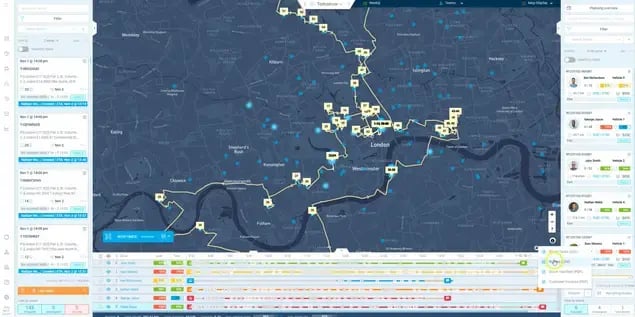
ERP routing modules can sequence stops in a logical order - nearest neighbor, time window priority, geographic clustering. What they can't do is optimize routes mathematically across multiple vehicles and hundreds of stops simultaneously.
The difference matters more than most executives realize.
Rule-based sequencing follows predetermined logic:
→ Take the next closest stop
→ Prioritize the earliest time window
→ Stay within a territory boundary
That works fine for a single route. But with 150 daily deliveries across 8 vehicles, you're solving a multi-vehicle routing problem where every stop assignment affects every other stop across all routes.
ERP routing creates workable routes. Dedicated multi-drop route optimization platforms find the mathematically optimal solution by simultaneously considering all stops, all vehicles, and all constraints.
The gap between "workable" and "optimal" typically runs 15-20% in efficiency gains:
Miles saved + Time reduced + Workloads balanced
That's not a minor difference.
For a mid-sized distributor running 150 stops daily, that 15-20% represents one fewer vehicle needed, 2-3 fewer drivers, and $200,000+ in annual operating costs.
ERP routing forces you to scale linearly (more volume means more trucks).
Vs:
Optimization algorithms let you scale efficiently.
Dynamic Re-Optimization During the Day

ERP routing modules create static morning plans. So when a rush order arrives at 11am or a vehicle breaks down at 1pm, you're on your own.
The architectural problem is fundamental.
ERP routing runs as batch planning jobs that require significant computation time. It typically takes 20-60 minutes to recalculate a full day's routes, because these systems weren't built like real-time optimization engines that can recalculate in seconds.
So when operational reality diverges from the morning plan (and it always does!) dispatchers manually reassign stops without optimization support.
They're left guessing which driver has capacity, which route makes geographic sense, what the ripple effects will be. That creates an inefficiency cascade for the remainder of the day.
The impact for a distribution enterprise extends beyond immediate inefficiency:
- You can't accept profitable rush orders because you have no fast way to slot them into existing routes.
- Customer service suffers when you can't respond quickly to delivery changes.
- Dispatcher stress increases as they manage constant manual workarounds.
- Peak season becomes a crisis because you can't handle the volume variability.
Dynamic route optimization distribution platforms recalculate optimized routes in under 60 seconds.
That's the difference between "We can't take that rush order" and "We can deliver it by 3pm."
Complex Constraints and Real-World Rules
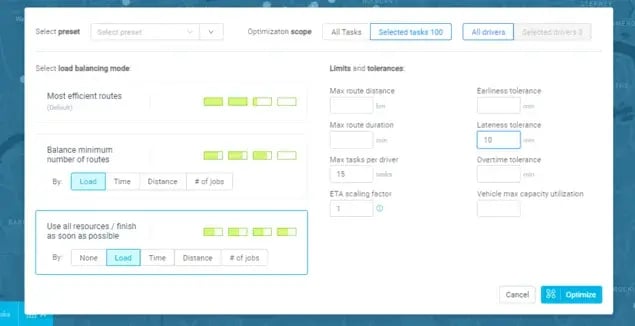
ERP routing handles basic constraints such as time windows, vehicle capacity, and maybe driver hours, reasonably well. But ERP software struggles when you layer on the multiple simultaneous constraints that reflect real-world distribution complexity.
Rule-based systems can apply constraints sequentially:
→ Check capacity
→ Check time windows
→ Check driver hours
They can't solve for optimal routes when 20+ constraints interact simultaneously.
A food distributor illustrates the problem clearly:
They run refrigerated and dry goods, different vehicle sizes, drivers with varying certifications, and customers with strict time windows. ERP routing forces an impossible choice:
- Manually build routes that respect all constraints (taking hours daily), or;
- Oversimplify the constraint model and accept violations that lead to failed deliveries.
The common constraints ERP routing struggles with tell the story:
- Vehicle type matching (refrigerated vs dry, truck size restrictions)
- Load compatibility rules (food safety, chemical segregation)
- Driver skill and certification requirements (hazmat, food handling)
- Customer access restrictions (loading dock hours, vehicle size limits)
- Equipment requirements (liftgate, temperature control, specialized handling)
- Delivery appointment precision (15-minute windows vs 4-hour windows)
Each constraint violation creates tangible costs: failed deliveries, customer complaints, safety incidents, regulatory exposure.
On the other hand, the planning overhead burns out your operations team. Your team can spend 3-4 hours daily building routes manually because the ERP can't handle your real operational constraints.
Multi-Depot and Territory Planning
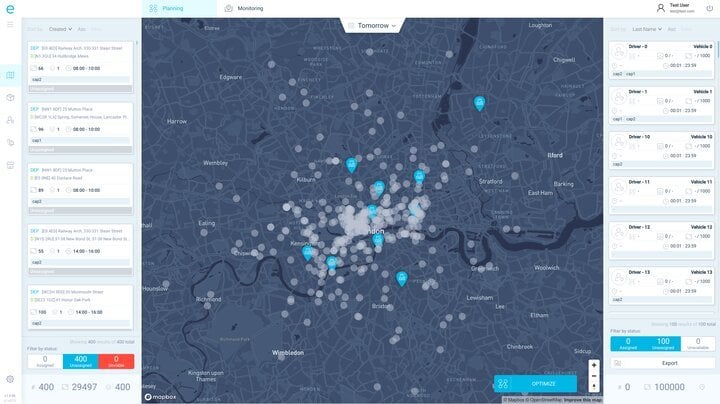
ERP routing modules are designed for single-depot operations. So when you scale to multiple depots with overlapping service areas, the system's limitations become painfully clear.
Territory and depot assignments are typically hardcoded in ERP configuration rather than optimized based on actual demand patterns.
You can't dynamically reassign territories or optimize across depots because each depot operates independently.
Consider a distributor with three depots serving a metro area with overlapping coverage zones:
Depot A is overloaded on Tuesday while Depot B has excess capacity. ERP routing can't see that imbalance or solve for it, because the territory boundaries are fixed in configuration.
This leaves you missing 10-15% efficiency from dynamic depot assignment and cross-depot consolidation in overlap zones.
The rigid structure can't adapt to demand shifts such as seasonal patterns, new customer concentrations, and changing delivery densities. This would require manual territory reconfiguration. But that's a process that typically happens once annually if at all.
You're left with a routing structure that's fixed while your business is evolving.
Dispatcher Usability and Control
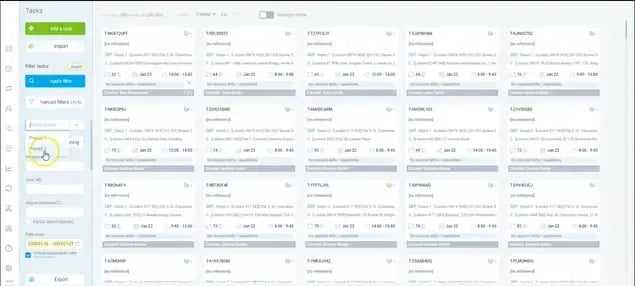
ERP routing modules are built for ERP system administrators and technical planners. Not for dispatcher workflow and rapid decision-making that defines your daily operations.
The interface reality is brutal. Dispatchers face complex ERP screens with technical workflows, limited drag-and-drop capabilities, difficult manual overrides, poor mobile visibility, and steep learning curves.
When a driver calls in sick and five stops need immediate reassignment, the dispatcher navigates multiple screens, lacks a visual map interface, and gets no guidance on optimal reassignment.
Contrast that with dedicated routing platforms built specifically for dispatcher personas:
✓ Visual drag-and-drop interfaces
✓ One-click optimization suggestions
✓ Real-time map views
✓ Mobile-first driver apps
✓ Workflows designed around operational speed
(NOT technical configuration)
Adoption compounds everything else:
When dispatchers find the system difficult and slow, they work around it rather than with it:
- Routes get built in spreadsheets
- Changes happen offline
- ERP becomes a record-keeping system (NOT an operational tool)
- Training requirements stay high
- Dispatcher satisfaction stays low
- Operational response times stay slow
Performance, Speed, and Scalability
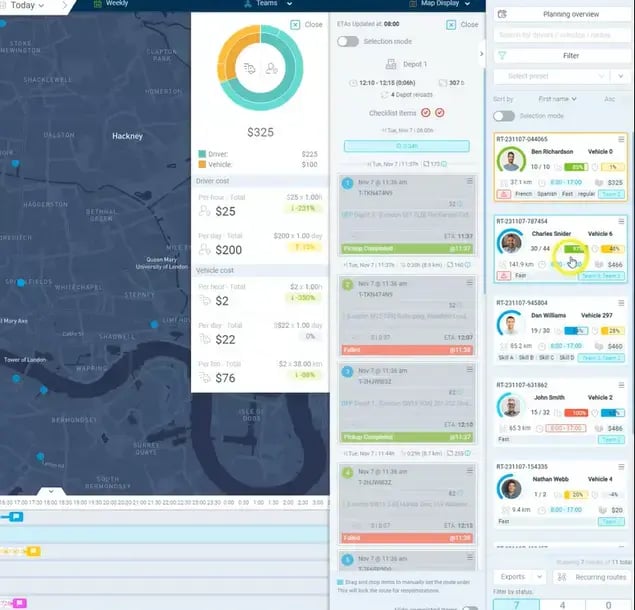
ERP routing performance degrades exponentially as stop counts increase. What takes 5 minutes at 50 stops takes 45+ minutes at 200 stops and becomes an overnight batch job at 500 stops.
That's because ERP databases are optimized for transactional queries. Things such as looking up orders, updating inventory, processing invoices, all of these work fine.
But they're not optimized for the intensive computation that route optimization requires.
Routing runs as background jobs competing for resources with core ERP functions. There are hard architectural limits on problem size.
Routing time increases exponentially rather than linearly. Dedicated route optimization platforms maintain sub-minute optimization even at 1000+ stops because they're architecturally designed for this specific computational problem.
The key thing to note here is that enterprise impact only escalates as you grow.
With ERP routing:
- Planning must start earlier each day. Or eventually moving to overnight batch processes.
- Peak season becomes an operational crisis because the system can't handle volume spikes.
- Growth itself creates a bottleneck.
- You become unable to respond to any intraday changes because recalculation takes too long.
- You're stuck planning yesterday's routes for tomorrow's deliveries.
Reporting, KPIs, and Continuous Improvement
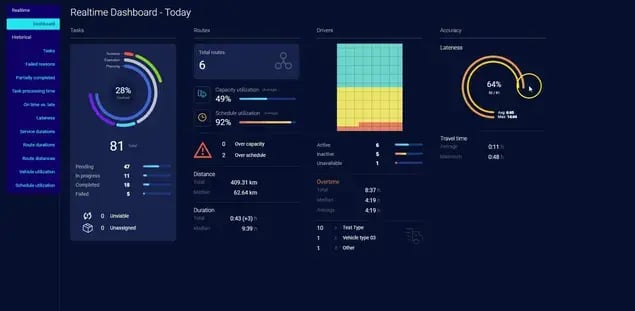
ERP routing modules provide basic execution reports: orders delivered, on-time percentage, driver hours logged.
What they don't provide are route-level optimization KPIs needed for continuous improvement.
ERP reporting is designed for order fulfillment metrics, not routing efficiency metrics. This means that your operations team can't answer fundamental questions:
- What's our cost per stop by territory?
- How efficient are our routes versus theoretical optimal?
- Which routes consistently run over planned time and why?
- What's our route density, and where are the gaps?
The missing KPIs list tells you what you're flying blind on:
- Cost per stop and cost per delivery
- Route efficiency score (actual vs optimal)
- Planned versus actual variance analysis
- Territory density metrics
- Driver productivity comparison
- Optimization savings quantification
Without this visibility, you can't identify optimization opportunities, quantify routing efficiency improvements, or benchmark performance against industry standards. You also lack the data to justify fleet expansion or prove ROI of routing investments.
You're making million-dollar fleet decisions with spreadsheet-level data.
The Financial Cost of Using ERP Routing at Scale
ERP routing fails financially through operational inefficiency that compounds daily across your entire distribution network.
When you run route optimization through your ERP routing module, you're typically driving 10-20% more miles than an optimized solution would produce. That translates to measurable costs:
A 50-vehicle fleet running just 15% inefficiently burns $300,000-$500,000 annually in excess labor, fuel, and vehicle costs alone - more than the license cost of dedicated route optimization software.
The inefficiency categories compound quickly.
Most enterprises using ERP routing operate 1-2 unnecessary vehicles for every 10 in their fleet because routes aren't densely packed.
Driver overtime runs 15-25% higher than optimized operations. Maintenance costs climb as excess miles accumulate. Fuel waste becomes a line item you can't explain to your CFO.
Delivery performance costs hit differently but just as hard.
Missed time windows create customer dissatisfaction that's difficult to quantify until contracts come up for renewal. Failed deliveries require expensive re-attempts. Customer churn accelerates when competitors deliver more reliably.
You lose competitive advantage in markets where delivery performance differentiates winners from everyone else.
Your planning and dispatcher teams absorb costs too.
Manual route building consumes hours daily. Firefighting mid-day issues becomes the norm rather than the exception. Training new dispatchers on complex ERP interfaces takes weeks.
Turnover increases when talented people get frustrated with inadequate tools.
The hidden opportunity cost might be the most expensive factor.
You've got capital tied up in extra vehicles that shouldn't be necessary. You can't handle growth without fleet expansion. You respond slowly to market opportunities because your routing infrastructure can't scale with demand.
As complexity increases, these inefficiencies don't scale linearly - they compound. The gap between ERP routing and optimized routing widens precisely when the financial impact matters most.
Where ERP Routing Still Makes Sense
We've spent most of this article explaining why ERP routing modules break at scale, but credibility requires honesty: not every business needs dedicated route optimization software.
If you're running 3-5 vehicles with 10-20 stops per day, serving mostly the same customers on predictable schedules from a single depot, ERP routing can work just fine.
Think small wholesalers with regular customer routes, field service teams handling scheduled maintenance appointments (not emergency dispatch), or companies in early distribution stages before operational complexity emerges.
The decision framework is straightforward: if your routes look largely the same week-to-week, you have minimal time windows and delivery constraints, and you're not planning significant growth, ERP routing may suffice for your current needs.
Some mid-size operations running 20-50 daily stops can get adequate results from ERP routing if complexity remains low, though they're approaching the functional limits.
The real challenge is tomorrow because businesses rarely stay small. As you add customers, vehicles, delivery constraints, and geographic coverage, you eventually hit ERP routing's structural limits.
Implementing dedicated routing before you reach crisis point is considerably easier than migrating during operational breakdown when your dispatch team is drowning and customers are complaining about late deliveries.
eLogii + ERP: The Modern Enterprise Architecture for Distribution Routing
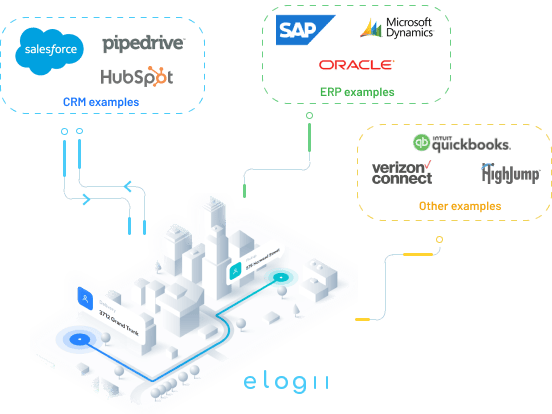
The best-practice architecture we've seen at enterprise scale separates planning from execution:
- Your ERP remains the system of record for orders, customers, inventory, and billing. Everything it was designed to do.
- A dedicated routing platform like eLogii owns route optimization, dispatch execution, and delivery tracking.
This isn't radical.
You're not using your ERP for CRM (you use Salesforce). You're not using your ERP for analytics (you use Tableau or Power BI). The same logic applies to route optimization.
Using the best distribution software means each system focuses on what it does best:
Your ERP tool excels at transactional planning + eLogii excels at optimization algorithms.
The integration architecture is straightforward.
Bidirectional API integration lets your ERP push orders and customer data to eLogii. Our routing platform returns optimized routes and delivery status back to your ERP for order fulfillment updates. Your ERP stays the source for business data.
eLogii is a modern API-first routing platform. It has pre-built connectors for SAP, Dynamics 365, NetSuite, and Oracle. Integration takes days to weeks, not months. The technical lift is smaller than most teams expect.
The implementation pattern that works:
→ Pilot with one region or customer segment
→ Prove ROI and expand gradually
→ Your ERP remains the backbone
→ eLogii becomes the execution layer
This ERP integration architecture prevents the forced-fit problems we covered earlier while maintaining data integrity across your enterprise systems.
Questions You Should Ask Before Relying on ERP Software for Route Optimization
Before committing to ERP routing as your long-term platform, these questions expose capability gaps before they become operational liabilities:
- Can we re-optimize all routes mid-day in under 5 minutes when orders change or disruptions occur?
- Can dispatch override routing logic with drag-and-drop controls without technical ERP training?
- How does performance scale when we go from 100 to 500 stops per day?
- What happens during peak season when volume doubles - can the system handle it without overnight batch processing?
- How many planners and dispatchers will we need as we scale?
- Can we optimize across multiple depots and dynamically balance territories based on real demand?
- What route-level KPIs can we track for continuous improvement: cost per stop, efficiency vs optimal, territory density?
- Can we handle multiple constraint types at once - vehicle specs, driver skills, time windows, load rules, access limits?
- What's total cost of ownership including operational inefficiency, not just software license costs?
- If we outgrow this in 2-3 years, how difficult and costly is migration to a dedicated platform?
Bottom Line: A Long-Term Decision for Distribution Efficiency
Here's the architectural reality:
ERP routing modules and dedicated route optimization platforms solve fundamentally different problems. Your ERP handles order sequencing, basic route assignment, load tracking. Dedicated routing software handles multi-variable optimization across hundreds of constraints in real-time.
At small scale with simple, static routes, that distinction doesn't matter much. ERP routing works fine for 3-5 vehicles serving predictable customers from a single depot.
But as complexity grows ERP routing breaks in seven predictable ways:
- Multi-drop optimization fails beyond basic sequencing,
- No mid-day re-optimization capability,
- Poor handling of real-world constraints (vehicle types, time windows, driver skills),
- Multi-depot struggles,
- Dispatcher usability problems,
- Exponential performance degradation,
- Lack of route-level KPIs for continuous improvement
These limitations compound into 15-20% operational inefficiency at enterprise scale. That translates to hundreds of thousands annually in excess labor, vehicles, and fuel. All costs that far exceed dedicated routing software investment.
Best-in-class distributors separate planning (ERP) from execution and optimization (eLogii) with clean integration.
This isn't replacing your ERP. It's using each system for its designed purpose.
This is a long-term platform decision that determines your operational scalability and competitive position for years.
Evaluate your routing requirements against ERP capabilities before scaling further. (Migration during crisis costs far more than proactive investment.)
Click on the banner to book a demo and see how enterprise distribution routing works in practice and integrates with your ERP system.
FAQ about ERP Routing and Route Optimization Software
What is the main difference between ERP routing and route optimization software?
ERP routing modules arrange stops using simple rules like "nearest neighbor" or "earliest time window." Dedicated route optimization platforms use mathematical algorithms that evaluate thousands of route combinations simultaneously. ERPs handle transactional planning - inventory, orders, records. Route optimization solves complex constraints across hundreds of real-time variables, typically delivering 15-20% efficiency gains at scale.
Can SAP or Dynamics 365 handle enterprise route optimization?
SAP Transportation Management and Dynamics 365 routing modules work fine for simple scenarios - predictable territories, low stop density, minimal constraints. They use rule-based sequencing instead of optimization algorithms. Once you hit 200+ stops daily with complex time windows, mixed vehicle types, and multiple depots, planning times balloon from minutes to hours, and dynamic re-optimization requires manual intervention.
At what point do you need dedicated route optimization instead of ERP routing?
The threshold hits around 50+ daily stops, but complexity matters more than volume. Multiple vehicles, depots, tight time windows, capacity variations, driver skills, or multi-day routing push ERP modules past their limits. If you're at 40 stops today but projecting 100+ within 18 months, implement dedicated optimization now to avoid a painful migration later.
How does dedicated routing software integrate with our ERP system?
Integration works through bidirectional APIs, with pre-built connectors for major ERPs like SAP, Oracle, and Dynamics 365. Your ERP stays as the system of record for orders, customers, and inventory. The routing platform pulls order data, optimizes routes, manages driver execution, and sends back proof of delivery and completion status. Integration takes days to weeks depending on customization needs and data complexity.
What is the ROI of dedicated route optimization vs using ERP routing?
Mid-size to enterprise distributors typically see 15-20% fewer miles driven, 10-15% fewer vehicles needed, and 20-30% less planning time. For a distributor running 150 stops daily, that translates to one fewer vehicle, 2-3 fewer drivers, and $200,000+ in annual savings. Most operations hit full ROI within 6-12 months, with the efficiency gap widening as complexity grows.
