Route optimization for pest control is the key to unlocking efficiency for multi-region operations.
But most teams still struggle with it daily.
Why?
Because pest control routing is about balancing preventive visits, emergency jobs, technician skills, and commercial SLAs in real time. (As much as dropping stops on a map.)
In this article, we break down why route planning doesn’t solve execution challenges in complex pest removal operations. And why field service management software can’t protect you alone from the hidden costs of poor routing for .
If you operate 50+ pest inspectors and exterminators across multiple locations and regions, this guide uncovers how an execution-focused layer can reduce drive time, protect SLAs, and more.
Here’s what you need to know:
Key Takeaways
-
Route optimization for pest control is essential for multi-region operations with 50–100+ technicians managing both PPM and reactive work. Without it, daily execution becomes chaotic.
-
Pest control routing is complex because of high visit density, home-based technicians, skill requirements, and strict commercial SLAs. These factors make your static schedules fragile.
-
FSM tools like FieldRoutes and ServiceTitan excel at managing customers, contracts, and baseline scheduling. But they don’t allow you to dynamically adjust routes in real time.
-
Poor routing inflates mileage, wastes technician capacity, increases planner workload, and risks SLA compliance. Inefficiency compounds fast at scale (as you’ll see for yourself).
-
Effective route optimization integrates execution into the planning process. Doing so, allows you to continuously recalculate routes, prioritize urgent jobs, respect skills, and bundle visits.
Why Is Pest Control a Routing Nightmare at Scale
Pest control looks deceptively simple from the outside, at least on the surface:
A technician, a van or truck, a set of stops, and a schedule that repeats week after week. But once your organization reaches 50 exterminators and expands across multiple regions, route planning becomes one of the most fragile parts of your business.
We see this repeatedly in multi-region pest control operations: routing pain surfaces earlier, louder, and more persistently than in most other field services.
HVAC, plumbing, and electrical businesses often scale further before routing becomes existential. Pest control breaks sooner.
There are structural reasons for this:
Pest removal services have some of the highest visit density in field services. Routes are tight, stops are short, and margins depend on squeezing inefficiency out of every mile.
At the same time, pest control operations must balance predictable PPM work with unpredictable reactive callouts, often on the same day.
Technicians are also typically home-based. This adds another layer of complexity to your routing that many scheduling tools were never designed to handle.
Your business may already be using a FSM or CRM platform, like FieldRoutes and ServiceTitan. This software is excellent at managing customers, contracts, billing, and compliance. They allow you to create structure and add visibility.
But despite that, routing still hurts:
Your planners start each day with a carefully built schedule, only to watch it unravel by mid-morning.
Emergency pest control and extermination jobs come in. Customers place unplanned house fumigation requests. Or need a fast pest inspection to get a quote and course of action.
But this is the nature of the industry. Most customers wait until the last minute to make the call to you. Which leads to a lot of unscheduled work.
All that happens on top of tightening commercial SLAs. One of your technicians may call in sick. Another one may not have access to the job site, which burns into the time window for the next job.
The result: What looked optimized at 7 AM is reactive by 10 AM.
This is where route optimization becomes a daily operational battleground.
Not because your teams lack effort or discipline. It’s because execution is fundamentally different from the planning problem.
What Makes Pest Control Operations Uniquely Complex at Scale
At scale, pest control routing isn't hard because planners are bad at their jobs. It's hard because pest control operations combine multiple planning and scheduling variables that compound each other throughout the day:
Recurring PPM Schedules
Preventive pest management creates predictable demand on paper, but not in execution:
-
Visits repeat on fixed cadences, but customer availability changes
-
Commercial sites enforce strict time windows
-
Residential customers reschedule
-
Pest inspection scheduling shifts based on access and readiness
Even when the pest control schedule is known weeks in advance, the day-of reality is fluid.
Reactive Jobs
Emergency pest control service isn't optional. It's a core part of pest management services. Emergency pest control jobs arrive with urgency, not convenience. They rarely:
-
Align with existing routes
-
Prioritize against SLA risk
-
Include customer value
-
Take into account technician capability
Pest control routing that doesn't account for these real-time disruptions quickly becomes theoretical.
Skill-Based Work
Not every pest control technician can perform fumigation, bird control, wildlife removal, or specialized pest treatment.
Pest extermination routing must respect certification, experience, and equipment constraints. Pest inspection route planning often requires different skills than pest spraying or pest removal route optimization.
This makes dynamic reassignment far more complex than simple “nearest technician” logic.
Commercial SLAs
Time windows aren't preferences. They are your contractual obligations to your clients. Missing a window can trigger penalties, damage relationships, or risk churn.
Pest control route planning must balance drive time reduction with SLA compliance, which often means accepting longer routes to protect high-value contracts.
No-Access Job Sites
Pest control services face this constantly. A locked gate, an absent site contact, or an unprepared customer can wipe out a planned stop.
That lost slot isn't just lost revenue. It creates a domino effect of inefficiency across the route.
Home-Based Technicians
Pest control routing rarely starts and ends at a depot.
Each technician has a unique start point, end point, and availability profile. Traditional routing assumptions break down quickly in this model.
This is why pest control operations experience routing pain earlier than other trades. It's not a planning failure. It's execution complexity.
Route optimization for pest control must operate in this field service environment where:
Change is the norm, not the exception.
Why Pest Control Software (Like FieldRoutes and Service Titan) Breaks at Scale
Field service management platforms like FieldRoutes and ServiceTitan are foundational to modern pest control operations.
But this scheduling software for pest control is a system of record.
Both ServiceTitan and FieldRoutes excel at managing customers, contracts, pest control booking software workflows, billing, compliance, and reporting. They create the operational backbone that multi-region pest management operations depend on.
FSM scheduling also plays an important role. These systems are very good at baseline scheduling. They help create a pest control schedule based on contracts, frequencies, technician availability, and service territories. For many organizations, this is a massive improvement over spreadsheets and whiteboards.
Where challenges emerge isn't planning, but execution.
FSM and other pest control scheduling engines are typically designed to create a plan, not to continuously re-optimize it.
Once your day starts, change becomes expensive. Same-day disruptions force your planners into manual adjustments. Dynamic visit bundling becomes difficult. And balancing drive time versus work time becomes a series of trade-offs made under pressure.
We see this clearly in large FieldRoutes environments.
FieldRoutes scheduling limitations aren't about capability gaps, they are about design intent. FieldRoutes is excellent at managing customers and contracts, but it isn't designed to continuously re-optimize routes during the day.
The same applies to ServiceTitan pest control routing.
ServiceTitan provides strong scheduling foundations, but real-time route optimization isn't its primary focus. Field service management platforms must serve many trades, many workflows, and many priorities.
Deep, domain-specific execution logic often lives outside that core.
As scale increases, your planners become traffic controllers rather than optimizers. They react. They patch. They override. They rely on their experience and operational knowledge. And this works, until it doesn’t.
But let’s be clear:
This isn't a criticism of FSM tools. It's a recognition of their architectural boundaries.
Systems of record aren't systems of execution. Route optimization for pest control requires a different type of engine:
A system built to handle change continuously, not resist it.
Hidden Costs of Poor Route Optimization in Pest Control
When pest control routing struggles, the costs are rarely isolated. They compound across several key areas, including mileage, labor, customer satisfaction, and retention.
Let’s break down each of these key cost areas for you:
1. Mileage Inflation
Extra miles increase fuel, maintenance, and vehicle depreciation. Extra miles driven translate directly into fuel, maintenance, and vehicle depreciation.
But the larger cost is opportunity cost. Every unnecessary mile is time that could have been spent completing another pest treatment, pest inspection, or reactive callout.
Over time, this erodes route density. Your foundation of profitable pest control services.
Cost Impact: An additional 10 miles per technician per day across 100 technicians = ~$500–$700/day (or ~$130,000–$180,000/year).
|
Technicians
|
Extra Miles/Day
|
Cost per Day
|
Cost per Year*
|
|
5
|
50
|
$25–$35
|
~$6,500–$9,100
|
|
10
|
100
|
$50–$70
|
~$13,000–$18,200
|
|
50
|
500
|
$250–$350
|
~$65,000–$91,000
|
|
100
|
1,000
|
$500–$700
|
~$130,000–$182,000
|
|
200
|
2,000
|
$1,000–$1,400
|
~$260,000–$364,000
|
|
500
|
5,000
|
$2,500–$3,500
|
~$650,000–$910,000
|
2. Lost Technician Capacity
A pest control technician who has one fewer stop in his schedule per day due to inefficient routing may not seem catastrophic in isolation. But cross 100 technicians that can mean hundreds of lost visits per week.
Most teams respond by adding overtime, approving weekend work, or extending service windows. Each of which introduces additional cost or customer friction.
In many cases, the business appears “at capacity” when the real issue is execution inefficiency.
Cost Impact: One fewer stop per technician × 100 technicians = ~100 lost visits/day, $5,000–$8,000/day, over $1M/year in unrealized revenue (+overtime and weekend shifts).
|
Technicians
|
Visits Lost /Day
|
Cost per Day
|
Cost per Year*
|
|
5
|
5
|
$250–$400
|
~$65,000–$104,000
|
|
10
|
10
|
$500–$800
|
~$130,000–$208,000
|
|
50
|
50
|
$2,500–$4,000
|
~$650,000–$1,040,000
|
|
100
|
100
|
$5,000–$8,000
|
~$1,300,000–$2,080,000
|
|
200
|
200
|
$10,000–$16,000
|
~$2,600,000–$4,160,000
|
|
500
|
500
|
$25,000–$40,000
|
~$6,500,000–$10,400,000
|
3. Planner and Dispatcher Headcount Growth
As multi-region pest control scheduling becomes harder to manage manually, organizations hire more planners to keep routes viable.
While this feels operationally responsible, it’s usually a sign that execution tooling is misaligned with the level of complexity that’s managed. Planner headcount grows, but resilience doesn’t.
Cost Impact: Each additional planner costs $50,000–$70,000/year. Hiring additional planners patches the problem without solving execution inefficiency.
|
Technicians
|
Est. Additional Planners Needed
|
Annual Cost Range
|
|
5
|
0
|
$0
|
|
10
|
0
|
$0
|
|
50
|
1
|
$50,000–$70,000
|
|
100
|
1–2
|
$50,000–$140,000
|
|
200
|
3–4
|
$150,000–$280,000
|
|
500
|
5–6
|
$250,000–$420,000
|
4. Technician Burnout and Turnover
Constant mid-day route changes, excessive windshield time, and unpredictable schedules wear down pest control workers. Retention suffers, onboarding costs rise, and service consistency declines.
Experienced technicians spend more time navigating inefficiency than delivering high-quality pest management services. While operational capacity and service quality decline when they leave.
Cost Impact: Higher turnover costs $5,000–$8,000 per technician in recruitment and onboarding.
|
Technicians
|
Expected Turnover Cost/Year
|
Notes
|
|
5
|
$0–$5,000
|
Minimal burnout risk
|
|
10
|
$5,000–$8,000
|
Some turnover expected
|
|
50
|
$25,000–$40,000
|
Significant burnout risk
|
|
100
|
$50,000–$80,000
|
High risk; experienced techs leave
|
|
200
|
$100,000–$160,000
|
Very high risk; service quality impacted
|
|
500
|
$250,000–$400,000
|
Extreme risk; retention becomes critical
|
5. SLA Risk and Customer Impact
Missed commercial time windows, delayed emergency pest control service, and inconsistent arrival times erode trust. Commercial customers notice this quickly. Residential churn follows more quietly.
Over time, pest control service cost increases as inefficiency leaks into pricing, discounts, and margin pressure.
Cost Impact: SLA breaches can trigger contract penalties, lost commercial revenue, and increased residential churn, reducing margins and long-term profitability.
|
Technicians
|
Risk Level
|
Potential Impact
|
|
5
|
Low
|
Minor SLA breaches, small revenue impact
|
|
10
|
Moderate
|
Occasional missed windows, moderate revenue loss
|
|
50
|
High
|
Frequent SLA breaches, penalties, customer churn
|
|
100
|
Very High
|
Major SLA breaches, contract penalties, lost revenue
|
|
200
|
Severe
|
High likelihood of multiple SLA failures, significant financial impact
|
|
500
|
Critical
|
SLA compliance nearly impossible without execution optimization; major revenue loss and client risk
|
All of these hidden costs aren’t due to poor team performance or bad field service management tools. They are the natural result of using static schedules in a dynamic environment.
Route optimization for pest control isn't about perfection. It's about operational resilience, reducing wasted time and costs, and ensuring reliable service every day.
What Effective Route Optimization Looks Like in Pest Control
Effective route optimization for pest control starts with a simple premise: the plan must be allowed to change.
-
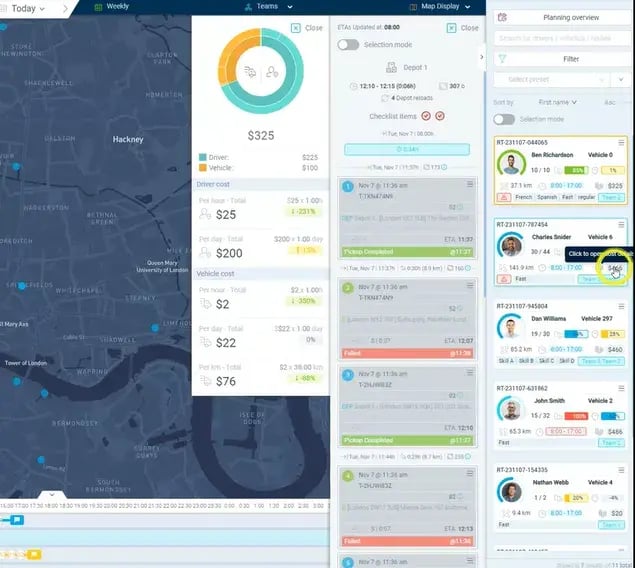
Continuous Re-Optimization: Routes should be recalculated as new information arrives (emergency pest control jobs, cancellations, technician delays, or no-access visits). This is an ongoing execution. The system must dynamically adjust while maintaining route feasibility, avoiding overloading any technician, and preserving SLA commitments.
-
Home-Based Routing Logic: Each technician’s start and end points matter. Pest control route planning that assumes a depot introduces artificial inefficiency from the outset. Optimizing for home-based starts reduces drive time, improves first-visit reliability, and increases overall daily capacity without adding resources.
-
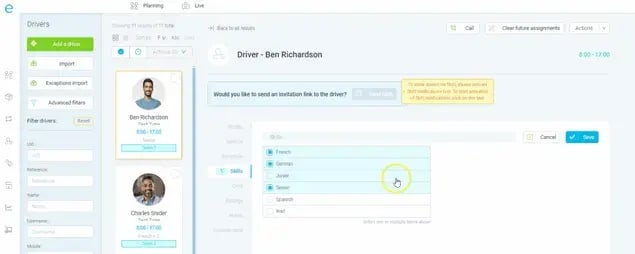
Skill-Based Job Matching: Pest inspection is different from pest extermination or fumigation. The system must understand who can do what, with what equipment, and under what constraints. Assignments must factor in certification, training, and licensing requirements.
-
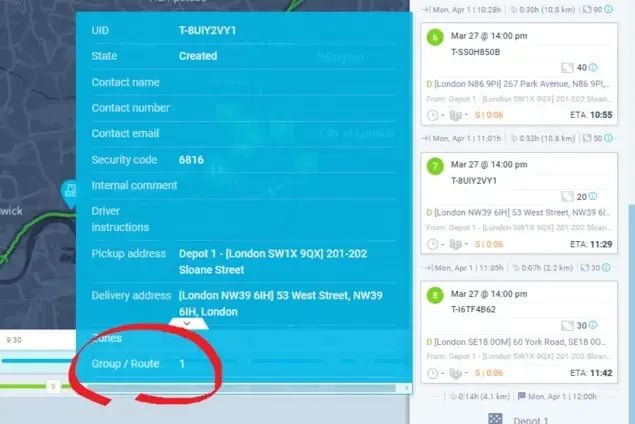
Intelligent Stop Grouping and Route Density: Grouping compatible visits by location, time, and contract reduces drive time without sacrificing service quality. Bundling jobs together also considers repeat visits for PPM schedules along with reactive pest removal jobs. This ensures efficiency across both planned and ad hoc work.
-
SLA Prioritization: This ensures commercial commitments to your clients are protected. Because not all jobs are equally important for your business, route optimization must reflect those priorities. Not just geography. Emergency pest control jobs, high-value contracts, and time-sensitive treatments need to have explicit weight in real-time optimization logic.
All of this sits as a layer alongside field service management software. Not instead of them.
Together, they close the gap between plan and reality. This is what turns your static schedules into responsive, high-capacity daily operations, reducing planner stress and frustration for your field service technicians.
How Pest Control Teams Should Evaluate Route Optimization Software
Evaluating route optimization software for pest control requires a different mindset than buying an FSM.
It isn't about replacing contracts, customers, or billing workflows. It's about turning static schedules into responsive, high-capacity daily operations. High-maturity pest control teams understand this.
Smart buyers ask execution questions:
-
How does the system respond to same-day change?
-
How does it rebalance routes when an emergency job arrives?
-
How does it protect SLAs while reducing drive time?
-
Can it intelligently handle no-access visits without cascading delays?
-
Can it reassign a fumigation job mid-route to a qualified technician?
-
Can it maintain PPM cadence across the service territory?
FSM vendors will often say: “We can do that.”
And in many cases, they can. Up to a point.
But the question isn't whether a software feature exists. It’s whether it operates continuously, at scale, under real operational pressure.
Many FSM-native scheduling features work for small, static workloads. But they start to break under multi-region complexity with hundreds of daily visits, overlapping commercial time windows, and high-density residential stops.
Demos are misleading, if they only show you greenfield planning.
Real evaluations must test operational chaos, such as late cancellations, technician callouts, overlapping time windows, mixed residential pest control and commercial pest management services.
Only by stressing the system with realistic operational volatility can you understand its true capacity to reduce planner intervention and improve technician efficiency.
For existing FieldRoutes users, the goal is augmentation, not replacement.
Route optimization software should reduce planner workload, automate daily execution adjustments, and increase technician output without introducing additional operational friction.
That’s why you should look for evidence that the platform understands pest control technician responsibilities, not just generic field service logic:
-
Does it recognize technician skill sets, equipment constraints, and regulatory requirements?
-
Can it optimize across PPM schedules and reactive pest removal assignments simultaneously?
The closer the execution model aligns with real-world pest control operations, the higher the likelihood of sustained value, lower mileage, and fewer SLA violations for your business.
Where eLogii Fits in the Pest Control Stack
eLogii exists because execution complexity outgrew route planning and field operations optimization.
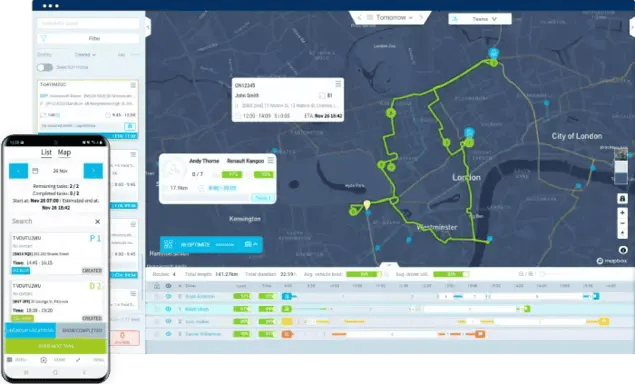
In mature pest control organizations, the operational stack naturally separates into systems of record and systems of execution.
FSM platforms like FieldRoutes and ServiceTitan are in the first category.
These tools are excellent at what they are designed to do: manage customer, contract, service agreements, pricing, invoicing, compliance data, and the commercial backbone of pest control operations.
That foundation is non-negotiable at scale.
Where complexity emerges isn't in planning the week. It's running your day.
eLogii sits in this execution layer.
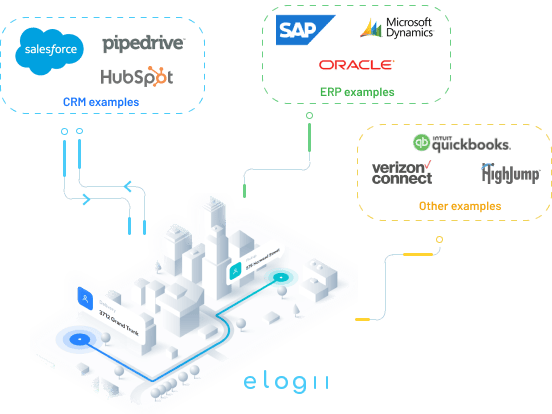
The role of our software isn't to decide what work exists or who the customer is. That is already well handled upstream.
Instead, eLogii focuses on how that work is actually delivered once reality starts interfering with the plan. Weather changes, emergency pest control jobs appear, technicians run late, access issues occur, SLAs tighten, and home-based routing assumptions break. This is where static schedules struggle.
The separation between FSM and execution platforms is intentional.
eLogii doesn't attempt to replace FieldRoutes or ServiceTitan, or their core functionality. It complements them by absorbing operational volatility:
The constant rebalancing of routes, the trade-offs between drive time and service time, and the minute-by-minute decisions that planners and dispatchers currently make under pressure.
For multi-region pest control operations, this distinction matters.
When you are running dozens or hundreds of technicians across multiple branches, routing decisions stop being tactical and start being economic.
Small inefficiencies compound into real cost: excess mileage, lost capacity, SLA exposure, and planner burnout. At that point, route optimization for pest control is no longer a feature, it's a discipline.
Vergo Pest Management from the UK understands this:
eLogii exists because execution requires specialization. Continuous re-optimization, skill-aware routing, SLA prioritization, and home-based technician logic aren't add-ons. They are complex problems that demand systems designed specifically to solve them in real time.
If your team is already operating on FieldRoutes or ServiceTitan, eLogii fits as the layer that ensures the plan survives contact with the day.it from advanced route optimization.
Who This Approach Is (and Is Not) For
Not all pest control operations benefit from advanced route optimization. At this scale, the investment is operational, not tactical.
Multi-region teams with complex mixes of preventive and reactive work experience the largest upside, while small, static operations may see little return.
This table gives you a good idea if pest control execution management is the right fit for you:
| |
Right For
|
Not Right For
|
|
Size
|
Pest control organizations with 50–300+ technicians
|
Small teams with <10 technicians
|
|
Scale
|
Multi-region or multi-branch operations
|
Single-region operations
|
|
Service Offers
|
Organizations providing a mix of residential pest control, commercial contracts, emergency pest control, and specialty treatments (fumigation, wildlife removal, bird control)
|
Teams offering only a narrow set of services or simple residential visits
|
|
Service Coverage
|
Territories requiring coordinated coverage across multiple regions or markets
|
Localized operations with limited geographic reach
|
|
Operational Coverage
|
Operations running complex PPM + reactive scheduling across multiple sites daily
|
Operations with simple, static schedules
|
|
Dedicated Planning Team
|
Teams with at least one full-time planner or dispatcher managing route optimization
|
Teams relying solely on ad hoc scheduling or individual technician planning
|
|
Equipment / Vehicles
|
Fleet-based operations with multiple service vehicles requiring route coordination
|
Single-vehicle teams or minimal equipment footprint
|
|
SLA & Compliance
|
Operations managing commercial SLAs, time windows, and regulatory compliance
|
Teams with minimal SLA obligations or only basic residential service
|
|
Tools
|
FieldRoutes or ServiceTitan users looking to augment execution-layer capabilities
|
Spreadsheets, manual planning, or basic booking software
|
|
Efficiency Goals
|
Teams focused on maximizing technician utilization, reducing drive time, and improving daily productivity
|
Operations with minimal routing complexity or low operational efficiency priorities
|
|
Growth
|
Pest management operations actively expanding into new territories or scaling headcount
|
Local pest control teams not pursuing expansion
|
Bottom Line: It's Time to Add the Missing Piece to Your Pest Control Operations
FSM platforms are necessary. FieldRoutes and ServiceTitan are critical to modern pest control operations. But they aren't sufficient at scale.
Execution is the missing piece of the puzzle.
Route optimization for pest control bridges the gap between static plans and dynamic reality. It protects technician capacity, reduces drive time, and stabilizes daily operations.
For teams feeling constant planner pressure, technician frustration, and SLA risk, the question is no longer whether routing matters. It's whether execution is being treated as a first-class operational problem.
If this reflects your environment, the next step is simple: see how this works with real pest control data, and explore how multi-region teams optimize routes daily.