Field Service
HVAC Dispatching Best Practices
Find out the best HVAC dispatching practices and how they can help you improve the quality of your services and your HVAC business.
Operational complexity can quickly outpace revenue growth. Learn how to take actionable steps to protect your margins as you scale your field service.
Operational complexity doesn't scale in proportion to revenue. It compounds.
Every new region, SLA tier, customer type, or service line multiplies the decision space your planners navigate daily. What worked at 20 field staff breaks at 50. What held at 50 fractures at 100.
This isn't about execution failure or weak teams. It's about system behavior.
Revenue grows additively:
You add customers, you add capacity.
Complexity grows combinatorially:
Each new variable interacts with every existing variable, creating exponential coordination cost.
In this article, we breakdown why operational complexity outpaces revenue growth of your field service.
We'll explain:
(While you keep growing revenue and maintaining strong margins.)

Here's what a quick overview of what's to come:
If you're managing 50-1000+ field staff across multiple regions with SLA commitments and a mix of planned and reactive work, you've probably felt this tension firsthand:
Yet the coordination burden keeps increasing faster than your capacity to handle it.
This isn't an execution failure or a people problem. It's predictable system behavior.
Here's the pattern:
Every new region, SLA tier, customer type, or service line adds more work. But it also multiplies the interactions your planners navigate daily.
The operational complexity compounds in ways revenue never does. What worked smoothly at 20 field staff fractures at 50 or more. Your margins compress even as your top line grows.
The uncomfortable part:
Most traditional scaling tactics don't solve this problem. Adding more managers, more planners, and more approval layers just make it worse.
Let's be precise about what we're talking about, because operational complexity isn't what most people think it is.
It's not the number of jobs you run. It's not your headcount. It's not even how many tasks your planners handle daily.
Operational complexity is the amount of coordination required between people, systems, and decisions to execute your work.
Think of it across four dimensions:
Here's the distinction that matters:
Complexity is interdependence, not workload.
A 100-person field team covering one region with one service type has low complexity. A 100-person team covering five regions with three service types and varying SLA requirements has high complexity. Same headcount. Vastly different coordination burden.
How do you know this?
You know you're experiencing complexity growth when your planners spend more time managing exceptions than creating routes, or when just one more customer requirement consistently breaks your scheduling process.
That's not an execution problem. That's a complexity problem.

Here's the mathematical reality that creates the compounding effect:
Revenue scales additively.
Ten customers paying $10K each gives you $100K. Twenty customers at the same price gives you $200K.
2X Customers = 2X revenue.
It's linear.
Operational complexity doesn't work that way. It scales combinatorially.
When you have one region running one service type, you're coordinating one set of relationships. Add a second region and a second service type, and you're not managing two sets of relationships. You're managing four.
Each new variable multiplies interactions rather than adding them.
This happens because every new region, SLA tier, service type, or customer requirement creates decision points that interact with all existing decision points.
If you're running 3 regions, 4 service types, and 5 SLA tiers, you're not managing 12 variables. You're managing up to 60 potential combinations (3 × 4 × 5).
In field operations, this shows up immediately:
Adding a new region doesn't just mean hiring more field staff. It means coordinating schedules across regions, managing resource sharing when someone calls in sick, handling cross-region SLA commitments when you need to borrow capacity, and absorbing the variability of how different regions actually operate.
Every new variable multiplies the decision space.
This mathematical reality shows up in specific, recognizable ways in field operations. That's where the real damage starts!
The earliest warning sign shows up in your planning team:
You'll notice planners spending 60-80% of their time handling exceptions rather than actually building routes. Manual workarounds become standard operating procedure. Expertise becomes essential just to make daily schedules work.
Leadership time shifts in a telling way:
You're spending more hours on daily execution decisions than strategic planning. Your Slack or Teams channels fill with real-time coordination requests. "Who can cover this?" becomes a question you hear every single day.
SLA commitments that were straightforward at lower scale start becoming unreliable. Buffer time gets consumed by coordination overhead.
The gap between planned completion times and actual delivery keeps widening, and you can't quite pinpoint why.
You'll see duplicated effort everywhere, as well.
Multiple people independently solving the same scheduling problem. Planners manually rebuilding routes that should have been handled systematically. Critical information living in individual inboxes rather than systems where the whole team can access it.
Capacity forecasting becomes harder:
You hedge when asked about delivery reliability. You can't confidently commit to new customer SLAs because you're not certain your current capacity can absorb them.
Here's what makes these symptoms dangerous:
They appear gradually.
Most operators assume they're execution problems that better training or stricter processes can fix.
They're not.
They're signals that coordination cost is outpacing your capacity growth, and adding more process typically makes it worse.

Most businesses mistake operational complexity for inefficiency.
They assume the problem is execution quality:
They're solving for the wrong variable.
The complexity tax shows up in five places where it's quietly compressing your margins whether you see it or not:
Overhead rises faster than you'd expect. Coordination roles (planners, dispatchers, schedulers) grow 2-3x faster than field headcount.
You add management layers to handle the decision volume. Administrative burden increases as a percentage of total cost, even though you're running the same basic business model.
You're losing capacity that you're already paying for. Field teams spend time waiting for coordination decisions rather than executing. Vehicles go out partially filled because optimal routing is too complex to calculate manually.
Your best operators get pulled into coordination roles because they're the only ones who can untangle the exceptions.
Margins compress even when productivity improves. Revenue per field worker stays flat or declines despite everyone working harder.
Overhead costs rise as a percentage of revenue. But you can't take on higher-margin work because your coordination capacity is already maxed out.
Decision-making slows across the board:
The result:
The complexity tax can represent 15-30% of operational overhead. And most finance teams don't have a line item for it.
The instinct is to fight fire with fire:
Every single one of these moves increases operational complexity rather than reducing it.
Adding managers creates more decision points, not fewer. Each new layer requires alignment meetings, status updates, and escalation paths. You've just multiplied the coordination surface area.
Adding planners distributes the coordination work across more people, but it doesn't reduce the total volume.
In fact, it often increases complexity because now planners need to coordinate with each other. Decision-making fragments further.
Adding processes creates more steps that require coordination.
Process documentation grows faster than process compliance because rigid workflows can't handle operational variability. Exceptions multiply, requiring even more coordination to manage.
Adding tools without changing your decision architecture gives you better visibility into the complexity, but it doesn't reduce it.
Your dashboards now show the problem more clearly:
But this is exactly where most businesses get stuck:
Your FSM, CAFM, or ERP systems are designed to record what happened. Not to absorb coordination decisions.
They're necessary infrastructure, but they're not sufficient to cap complexity growth.
If visibility and better processes don't solve the problem, what does?
Most scaled field operations already run on solid systems of record. FSM, CAFM, or ERP platforms help you to:
These platforms are essential infrastructure, and they do what they're designed to do exceptionally well.
But they're not designed to reduce coordination burden.
Systems of record provide visibility. They show you what's happening across your operation in real-time.
You can see which technician is where, which jobs are running late, which SLAs are at risk. The dashboards are comprehensive, the reporting is detailed, and the data integrity is sound.
Here's what they can't do:
Make execution decisions as conditions change.
Field operations are inherently dynamic. Traffic shifts, jobs run long, emergency work appears, technicians call in sick.
Systems of record are built around static workflows.
They assume work happens as planned. When variability enters the picture, the system surfaces the problem but doesn't solve it. A human still needs to decide how to re-route technicians, which job to delay, who covers the emergency.
Visibility doesn't equal control.
Knowing what's happening doesn't reduce the number of decisions your planners need to make. It just gives them better information while making those decisions.
The question isn't whether to use your FSM or CAFM system. You must.
The question is what execution layer sits on top to absorb the variability those systems were never designed to handle.
Operational complexity stops growing when systems start making execution decisions instead of humans.
The distinction matters:
Systems of record = What's happening
Execution systems = Work coordination
This includes:
We've found this requires three core capabilities working together:
Rules-based decisioning handles routine coordination automatically. If a technician finishes early, the system assigns the next job based on location, skills, and priority without anyone opening Slack. If traffic delays a route, schedules adjust across the affected region without planner intervention.
Continuous re-optimization throughout the day enables routes and schedules adapt to changing conditions. This includes job duration changes, priority shifts, and equipment failures. All of this is done without requiring someone to rebuild the entire day's plan.
Systematic variability absorption. Exceptions get handled through predefined logic rather than human judgment calls. Late arrivals, scope changes, and customer requests flow through decision rules instead of escalation chains.
What this means practically:
Your planners shift from making hundreds of individual routing decisions to setting business rules once.
Coordination happens systematically rather than through message threads. Field teams receive instructions that already account for current conditions.
The result:
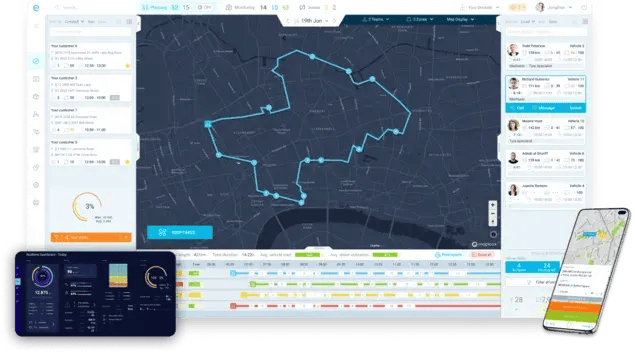
This is where eLogii comes in:
eLogii is the execution layer that sits between your systems of record and your field teams. We've built it to absorb the coordination decisions that create operational complexity in the first place.
Instead of planners manually building routes or making real-time allocation calls, eLogii handles those execution decisions through rules-based optimization, continuous re-routing, and dynamic resource allocation based on the business logic you define.
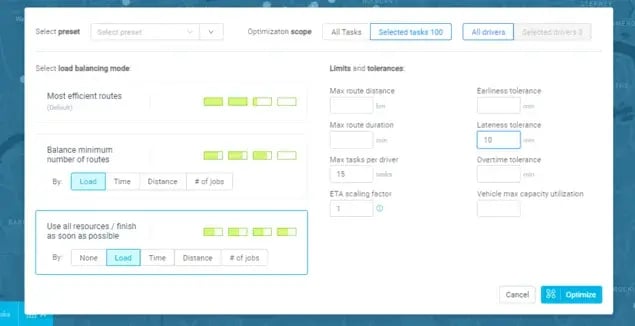
It's designed to be additive, not disruptive.
eLogii integrates with existing FSM, CAFM, or ERP systems through API connections. It pulls work orders and customer data from your system of record, makes the execution decisions, and pushes updates back so your audit trail and billing stay intact.
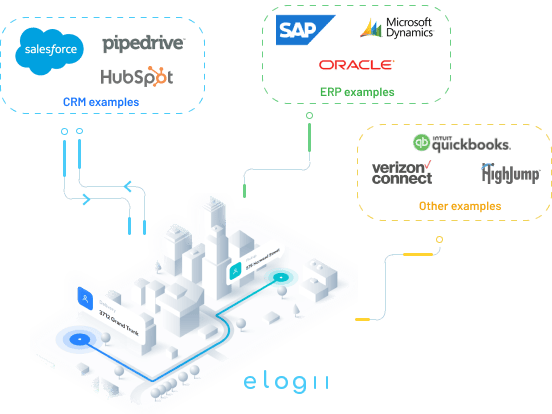
The platform is specifically engineered to cap complexity at scale:
In fact, any kind of field operation that creates coordination burden in the first place.
We work with operators managing 50 to 1,000+ field staff who need to protect margins while growing. It's particularly relevant for PE-backed businesses where operational leverage matters as much as top-line growth.

That said, execution infrastructure makes sense for certain operational profiles. But not for all.
This framework is built for scaled field operations with 50 to 1000+ field staff across multiple regions running SLA-driven work like facilities management, field service, pest control, utilities, enforcement, or waste services:
This doesn't apply to predictable, low-variance operations where work follows the same pattern with minimal exceptions.
It's not relevant for early-stage teams under 50 field staff where manual coordination still works, or single-location operations where geography naturally caps coordination burden.
FILTER: If you're experiencing planner overload despite having strong systems and teams, this framework explains why.
Operational complexity grows faster than revenue because each new variable multiplies the decision space rather than adding to it, creating a predictable complexity tax that traditional scaling tactics can't solve.
Here's what to do next:
For PE-backed businesses, capping operational complexity directly improves EBITDA and exit multiple.
For growth-stage businesses, it determines whether you can scale profitably or hit a ceiling.
And if you want to take the first step today, we've got you covered:

Operational complexity is the coordination burden between people, systems, and decisions required to execute your work. A 100-person team covering one region with one service type has low complexity. That same team covering five regions with three service types and varying SLA requirements has high complexity. You measure it by decision points and exception handling, not job volume. When your planners spend more time managing exceptions than creating routes, that's complexity.
Revenue grows additively - double the customers, double the revenue. Complexity grows combinatorially because each variable interacts with every other variable. Running three regions, four service types, and five SLA tiers means managing 60 potential combinations (3 × 4 × 5), not 12. Every new variable multiplies the decision space your planners navigate daily.
Planners spend most of their time handling exceptions instead of building routes. Leadership gets pulled into daily execution decisions rather than strategic planning. SLA commitments slip, buffer time disappears, and people duplicate work solving the same scheduling problems. These symptoms appear gradually and look like execution issues, but they're signals that coordination cost is outpacing capacity growth.
FSM and CAFM systems track what happened and provide visibility, but they don't make execution decisions. Your planners still manually navigate the decision space, handle exceptions, and coordinate resources. These systems are necessary infrastructure, but they don't handle the complex decisioning between planning and execution.
You cap complexity through execution abstraction. Rules-based decisioning handles exceptions, and continuous re-optimization adjusts to real-time changes without human coordination. You need execution infrastructure that sits on top of your systems of record and handles the decision-making layer planners currently manage manually. This applies if you're managing 50-1000+ field staff across multiple regions with SLA commitments and mixed planned and reactive work.
Find out the best HVAC dispatching practices and how they can help you improve the quality of your services and your HVAC business.
We’ve put together a list of the top 4 field service mobile apps, including: eLogii, Jobber, ServiceTitan and Dynamics 365. So you can choose the...
In this article, we’ll walk you through 7 challenges field service teams are facing in 2026 and proven solutions you can use to overcome them.
Be the first to know when new articles are released. eLogii has a market-leading blog and resources centre designed specifically to help business across countless distribution and field-services sub sectors worldwide to succeed with actionable content and tips.
