Pest control route optimization is a challenge every large-scale pest control operator faces daily. What most fail to recognize is that complexity comes from systems that struggle to handle how work actually behaves.
So in this guide, you’ll learn why traditional routing models and standard field service scheduling software fail under the operational realities of pest control.
You will also see how reactive maintenance jobs, emergency callouts, multi-region coverage, and home-based technicians create cascading disruptions that static plans can’t absorb.
Most importantly, you will discover what effective route optimization truly looks like, why an execution-layer delivers results.
In the end, you’ll know how enterprise teams can regain control over productivity, drive time, and service reliability without overloading planners or increasing headcount unnecessarily.
Here’s everything you can expect to find in this guide:
Key Takeaways
- Enterprise pest control operations struggle with routing because the system must balance PPM and reactive maintenance jobs across multiple regions. This guide explains how continuous optimization handles disruptions and preserves operational stability.
- Reactive maintenance callouts and emergency jobs disrupt planned routes. Execution-layer systems absorb these events while reducing manual intervention.
- Standard field service scheduling software works well for predictable, stable conditions. This guide identifies limitations that emerge as operational complexity grows.
- Drive-time increases reduce capacity, extend work hours, and erode margins. Optimizing execution restores efficiency and protects profitability.
- Effective routing dynamically matches technicians to tasks, respects skills and SLAs, and bundles work efficiently. The guide explains how enterprises implement these practices in real time.
Why Is Pest Control Route Planning and Optimization Difficult
Pest control operations involve dense visit schedules.
Technicians handle multiple service types, including scheduled preventive maintenance (PPM) and reactive maintenance jobs triggered by urgent issues. And each technician starts from a home location, making it challenging to coordinate schedules across regions.
Reactive maintenance jobs disrupt planned routes.
A single callout displaces multiple scheduled visits, creating cascading effects. Home-based technicians increase complexity because start points vary, preventing uniform schedules without continuous adjustment.
Commercial SLAs require strict windows, mandatory response times, and occasionally multiple technicians. Municipal or large-scale facilities management demands coordination with different departments and compliance with access protocols. Emergency pest control calls further alter schedules, making plans outdated quickly.
High visit density amplifies inefficiencies. Drive time, client no-shows, and last-minute rescheduling multiply planning errors. Multi-region operations with mixed PPM and reactive work exceed the capacity of traditional scheduling systems. Planners spend most of the day reacting instead of optimizing.
What Makes Route Optimization Even Harder for Complex Pest Control Operations
Operational complexity in enterprise pest control goes far beyond simply adding more jobs to a schedule.
Pest Control Service Complexity
Preventive maintenance (PPM) cadence requires coverage across monthly, quarterly, and annual cycles while maintaining buffer capacity for reactive maintenance jobs.
Each technician juggles repeat visits, emergency requests, and specialty treatments in a single day. A delay in one assignment often ripples through multiple territories. This is not a planning error. It is the natural result of operational reality.
Emergency callouts demand immediate attention. A single reactive maintenance job displaces multiple planned visits, and large-scale disruptions cascade across regions.
That's why planners frequently respond by reallocating staff manually, but these adjustments rarely propagate optimally. This leads to increased drive time, lost capacity, and frustrated clients.
Service Coverage
Multi-region coverage amplifies the impact of even a single disruption. When one territory is affected, nearby routes require recalibration to maintain coverage and SLA compliance.
Specialist skills further constrain routing, because not every technician can treat every pest type or handle complex commercial environments.
Assigning the wrong technician results in repeat visits, wasted travel, and client dissatisfaction.
Client Considerations
Some technicians specialize in commercial clients, others in residential neighborhoods. Skill-aware assignment isn't optional anymore, because it helps to maintain operational efficiency.
No-access visits create hidden inefficiencies that multiply disruptions. Locked properties, gated communities, and restricted commercial sites require rescheduling.
Some sites have time-specific entry restrictions. When these no-access events occur alongside reactive maintenance jobs, cascading delays become unavoidable.
These disruptions are unpredictable and vary daily, creating challenges static planning systems cannot absorb.
Multi-Region Pest Control
Multi-region operations increase coordination complexity exponentially.
Technicians frequently cross regional boundaries to balance workloads or cover emergencies.
Travel between regions introduces additional variability in drive times. Overlapping territories require constant rebalancing to prevent idle capacity or missed visits.
Shared technician pools mean that a disruption in one area often reduces coverage elsewhere. Without continuous optimization, planners spend hours manually rerouting, yet inefficiencies persist.
Residential vs Commercial Pest Control Jobs
Residential and commercial work require distinct optimization strategies. Residential routes prioritize density, minimizing drive time and grouping nearby jobs efficiently.
Commercial routes emphasize SLA adherence, strict time windows, and multi-tech visits.
Municipal contracts add another layer, demanding compliance with safety protocols and regulatory reporting.
Balancing these objectives simultaneously is a daily operational challenge that static schedules cannot accommodate.
Reactive Maintenance Jobs
Reactive maintenance jobs interact with all these factors.
Each unscheduled callout may require a specialist, trigger no-access issues, and cascade across multiple regions.
The combined effect of reactive maintenance and emergency callouts can turn a balanced plan into chaos within hours.
Planned Schedules vs Service Execution
Planners are forced into reactive mode, constantly reprioritizing visits and reallocating resources. This is a systemic problem, not a reflection of effort or discipline.
Enterprise operators witness daily the friction between planned schedules and real-world execution.
Traffic variability, client cancellations, unexpected emergencies, and technician skill constraints constantly disrupt the plan.
Standard route optimization fails because it assumes stability, ignores cascading effects, and lacks continuous rebalancing logic.
Operations teams need systems that execute dynamically, adjusting routes in real time to match reality.
High Job Density
High visit density intensifies all of these issues. With dozens of technicians and hundreds of daily jobs, even minor delays compound.
Static schedules quickly degrade, SLA violations increase, and travel inefficiency drives up costs.
Why Is Route Optimization Difficult for Pest Control Operations
The combination of PPM cadence, reactive maintenance jobs, emergency callouts, specialist skills, no-access visits, multi-region coverage, and mixed residential-commercial work makes enterprise pest control unique among field services.
Few industries face such overlapping constraints that change daily. And you can't simply add more planners, because real-world complexity demands real-time, execution-focused route optimization.
Why Planned and Optimized Pest Control Routes Fail
Even the best-planned routes break down under real-world conditions.
Static schedules assume everything proceeds as planned, but they can't account for same-day cancellations, no-access visits, or reactive maintenance jobs.
Each of these disruptions triggers a ripple that affects multiple technicians and territories.
Technicians reroute repeatedly, drive times inflate, and planners spend the day reacting instead of executing.
Reactive maintenance jobs amplify disruption, because a single emergency callout might require a specialist technician to leave their planned route.
This leaves other appointments unassigned or delayed. Nearby technicians may be reassigned, creating further disruption.
Without continuous re-optimization, these cascading effects compound quickly, reducing overall coverage and increasing overtime.
No-access visits create hidden inefficiencies. Locked residential properties, gated communities, or restricted commercial sites force unplanned rescheduling.
On the other hand, some clients require precise time windows, and municipal contracts may demand compliance with access protocols.
Your planners can attempt manual adjustments, but updates often fail to propagate correctly across the route network. The result is lost capacity, late appointments, and frustrated clients.
What's worse, these disruptions rarely remain isolated.
Multi-region operations make a single event ripple across territories. Emergency calls, skill requirements, and PPM schedules interact in unpredictable ways.
Manual adjustments cannot fully anticipate how a change in one region affects neighboring routes. This leads to bottlenecks and idle technician time that accumulate over the course of the day.
Planner firefighting mode dominates operations in complex environments. Your teams can spend hours manually reassigning jobs instead of proactively optimizing schedules.
This reactive workflow decreases productivity and increases stress on both planners and field technicians.
Overtime rises as technicians stretch their day to meet obligations, and client satisfaction declines as appointments run late or repeat visits become necessary.
Drive-time inflation further reduces operational efficiency because standard routing assumes:
Each reassignment adds extra miles and labor cost.
Over time, these small inefficiencies compound, eroding margins and reducing the number of jobs that technicians can complete per day.
Traditional route optimization tools fail because they focus on static planning.
They don't allow you to continuously adjust to real-time disruptions. They can't reconcile multiple constraints simultaneously. This includes:
When disruption exceeds the tolerance of the schedule, system performance degrades immediately.
The interplay of residential and commercial routes adds another layer of complexity.
Residential clusters aim to maximize density and reduce drive time. Commercial visits enforce strict SLA windows and multi-technician coordination.
Planners struggle to balance both objectives when emergencies arise. Without dynamic execution support, schedules consistently underperform against targets.
Repeatedly, disruptions cascade across multiple layers:
-
Emergency calls force reassignments
-
Rescheduled no-access visits further destabilize routes
-
Multi-region interdependencies propagate delays
-
Drive-time inflation reduces job completion
Planners intervene continuously, but manual intervention cannot restore system-wide efficiency. This outcome is systemic, not a reflection of human error or lack of discipline.
The result of these compounding effects is clear: planned and optimized routes rarely match reality.
Productivity drops, overtime costs rise, and client satisfaction declines. Reactive maintenance jobs and same-day emergencies dominate the workflow.
And your enterprise team can't rely solely on traditional scheduling or additional headcount to maintain operational control.
Why FSM Scheduling Software (Like FieldRoutes and ServiceTitan) Breaks at Scale
Field service management (FSM) software works effectively within its intended design parameters.
Platforms like FieldRoutes and ServiceTitan excel at single-region operations, predictable PPM schedules, and standard service windows.
They provide route visibility, basic sequence creation, and reporting for small-to-mid-size teams.
In environments where daily operations remain stable, these systems perform efficiently and reduce manual planning effort.
Scaling operations introduces instability that these platforms cannot absorb because FSM software assumes schedules remain largely unchanged throughout the day.
Reactive maintenance jobs, emergency callouts, and multi-region deployments disrupt even the most carefully constructed schedules.
When a technician is reassigned for an urgent reactive maintenance job, the resulting adjustments cascade across multiple planned routes. So routes that appeared efficient on paper quickly become infeasible in practice.
Same-day adjustments require manual intervention. This leads planners spending hours reassigning jobs and recalculating travel sequences.
FSM platforms don't automatically rebalance jobs and schedules across territories.
If a residential technician is delayed due to a no-access visit or a reactive maintenance job, nearby routes may be underutilized while some regions face coverage gaps.
These gaps can remain until a planner intervenes, reducing overall productivity and increasing overtime.
Reactive maintenance jobs create further disruption, because Unlike PPM visits, these jobs arrive unpredictably and often require specialist skills.
One of your technicians may be the only resource qualified for a commercial pest treatment or a specific emergency intervention. But your FSM software doesn't dynamically prioritize these assignments in real time.
In the end, your planners have to manually override schedules, which consumes time and introduces human error to how you manage your field service.
Multi-region operations magnify these challenges.
Travel between territories, overlapping coverage areas, and shared technician pools make it impossible for static schedules to remain accurate.
A single disruption in one region can ripple across other territories. FSM systems don't automatically make adjustments across these interdependencies. While each manual correction risks creating new inefficiencies in a different region.
Drive-time estimation is another significant limitation because FSM software calculates travel time based on nominal distances or historical averages.
It often fails to account for traffic, residential density, or the cumulative effect of multiple reactive maintenance jobs.
Technicians may spend more time driving than working, yet reports show routes as “complete” or “on schedule.” Over weeks, these hidden inefficiencies lower capacity, inflate labor costs, and reduce profit margins.
SLA obligations further expose FSM limitations since commercial clients often require strict appointment windows or coordinated multi-technician visits.
FSM platforms schedule these appointments assuming a stable day. When emergencies arise, these systems cannot reprioritize dynamically without planner intervention.
Missed SLAs create client dissatisfaction and risk contract penalties because the system doesn't enforce real-time SLA compliance.
Operators often perceive route failures as a planner problem. They hire additional planners, believing that increased manpower will resolve delays.
In reality, the limitations originate from the system design. Static scheduling tools don't re-optimize continuously, can't absorb disruptions, and don't adjust for dynamic multi-region assignments. That's why additional headcount increases cost without improving outcomes.
FSM platforms struggle with skill-aware assignment, which is something enterprise pest control operations requires:
"You need to be able to assign technicians based on specific qualifications for certain pest types or commercial sites."
Standard scheduling systems treat technicians as interchangeable resources, failing to consider skill constraints in real-time adjustments.
When a specialist is delayed, the ripple effects affect multiple jobs that require the same skill, further disrupting the network.
Complex residential-commercial mixes highlight the problem. Residential routes prioritize density and travel efficiency. Commercial and municipal visits demand SLA adherence, regulatory compliance, and sometimes multi-technician coordination.
FSM software can't balance these competing objectives dynamically. Manual intervention becomes the norm, and system performance deteriorates as visit density and reactive maintenance frequency increase.
High-volume operations highlight system scaling boundaries. With 50+ technicians across multiple regions, FSM tools reach their operational limits.
Even minor disruptions create large inefficiencies. Reactive maintenance jobs arrive continuously, PPM schedules fluctuate, and no-access visits require immediate rescheduling.
Traditional FSM software doesn't execute continuous re-optimization. That's why your planners intervene frequently, while system-wide performance continues to degrade.
The structural takeaway is clear:
FSM platforms excel when operations are stable, volumes are moderate, and reactive work is minimal. When complexity increases, these systems cannot maintain efficiency autonomously.
Enterprise leaders must recognize these limitations as design boundaries. Understanding these constraints allows you to evaluate solutions objectively.
And while FSM software remains valuable, its capabilities are limited to predictable, stable conditions. But if you're running large-scale, complex pest control operations, additional layers of automation and continuous optimization are essential to meet operational and financial objectives.
Drive-Time vs Work-Time Problem in Pest Control
Drive-time is one of the silent killers of enterprise pest control efficiency. Each extra mile that your technician drives reduces the hours available for billable work.
On paper, schedules may look achievable, but real-world conditions such as traffic, dense residential areas, emergency callouts inflate drive times daily. If you're running a multi-region operations, these small increments accumulate quickly, reducing capacity across your enterprise.
Reactive maintenance jobs worsen the situation, because emergencies can appear anywhere, at any time, and often require a specific technician with the right skills.
Reassigning a single technician disrupts neighboring routes, while other technicians may be left idle or forced to take inefficient detours.
In these situations, drive-time increases, productivity drops, and planned PPM coverage is delayed. Without real-time adjustments, these inefficiencies cascade through the day.
No-access visits also amplify travel inefficiency, because they increase duplicate pest control visits.
Technicians arriving at locked properties or gated communities must reschedule or travel back later.
Multi-location commercial sites compound this challenge, particularly when strict SLA windows are involved.
The combination of reactive maintenance jobs and no-access visits creates ripple effects across multiple routes and regions. Each ripple increases both travel time and unproductive work hours.
Overtime is a predictable outcome of all these dynamics, since technicians often finish their day late. This isn't due to lack of skill or effort, but because your static routes can't absorb the volatility of real-world operations.
Overtime costs rise while margins erode. The longer the chain of disruptions, the greater the financial impact for your company. And if you're managing an pest control enterprise, then you know that this is measurable in labor costs, lost capacity, and delayed preventive maintenance coverage.
From a financal perspective, drive-time represents hidden operational leakage:
-
Revenue per technician drops as travel consumes productive hours.
-
Margins shrink even as service volume increases.
-
Efficiency is lost to untracked drive-time inflation
Traditional scheduling reports rarely capture this hidden cost, which is why CFOs must view routing in terms of work-time versus travel-time, not simply total jobs completed.
The cumulative effect of ignoring drive-time is significant.
Over weeks, unoptimized travel can consume tens of hours per technician per month, translating into lost revenue, higher labor costs, and reduced operational agility.
In dense urban areas or multi-region coverage models, the problem scales geometrically. Simple adjustments to schedules or hiring more planners fail to restore efficiency because the underlying execution gap remains.
For enterprise pest control teams, drive-time vs work-time is a financial lens that reframes productivity in terms of capacity protection, margin stability, and service reliability.
|
Problem
|
Cause
|
Operational Impact
|
Financial Impact
|
|
Excessive drive-time
|
Static schedules, dense routes, multi-region travel
|
Less time for billable work; technicians travel inefficiently
|
Lost revenue per technician; reduced capacity; margin erosion
|
|
Reactive jobs
|
Emergency calls requiring specific skills
|
Cascading route delays; idle technicians
|
Increased overtime; delayed PPM coverage; SLA risks
|
|
No-access visits
|
Locked properties, gated communities, restricted commercial sites
|
Rescheduling; extended travel; coverage gaps
|
Missed appointments; client dissatisfaction; labor cost increase
|
|
Overtime creep
|
Compounding disruptions and inflated travel time
|
Technicians finish late; operational fatigue
|
Increased labor costs; reduced efficiency
|
|
Multi-region operations
|
Overlapping territories; shared technician pools
|
Disruption in one region cascades to others
|
Reduced total completed jobs; inefficiency across regions
|
|
Capacity loss
|
Drive-time vs work-time not tracked in FSM reports
|
Inefficiency masked in metrics
|
Lost revenue; reduced utilization of technicians
|

Planner Headcount Trap: Why Hiring More Route Planners Fails to Improve Pest Operations
Enterprise pest control teams frequently respond to route failures by hiring additional planners.
At first glance, this seems logical:
More planners should allow faster reassignments, quicker adjustments, and smoother operations.
However, in practice:
Hiring more planners often increases costs without delivering meaningful improvements, because adding headcount can't overcome systemic limitations in static scheduling and route planning.
Each new planner coordinates multiple regions, dozens of technicians, and hundreds of daily jobs. PPM schedules, reactive maintenance jobs, emergency callouts, and SLA commitments interact in complex ways.
Each disruption multiplies coordination overhead. Complexity grows faster than additional planners can manage. Despite more manpower, drive-time remains elevated and capacity losses persist.
Reactive maintenance jobs illustrate the problem:
When a planner reassigns a technician to handle an emergency, nearby routes must adjust. Each reassignment triggers a ripple that affects multiple territories.
Extra planners may alleviate part of the workload, but they cannot prevent cascading delays or inefficiencies. The more reactive jobs and multi-region constraints exist, the faster coordination becomes overwhelming.
Planners also must reschedule visits for locked properties or restricted commercial sites.
Some adjustments require specialist skill assignments or SLA prioritization. Static scheduling tools don't make these changes automatically, so planners manually intervene repeatedly again.
Which means that headcount can only cover symptoms, not resolve root structural issues.
When it comes to multi-region operations, a single disruption in one region can cascade into neighboring territories.
Teams often hire more planners to monitor each region individually. This increases cost and management overhead without restoring true operational control.
On the other hand, complexity grows non-linearly as operational scale increases. So adding more planners doesn't scale proportionally.
Each new planner interacts with the others, creating coordination overhead. This includes delays in communication, duplicated efforts, and inconsistent prioritization.
The consequences include planner fatigue, overload and workflow bottlenecks. Which causes teams tp spend their day firefighting instead of optimizing routes proactively.
Even with more staff, daily operations remain reactive. Over time, morale declines, and operational performance stagnates. Additional headcount masks systemic failure rather than solving it.
The structural limits of static planning are the underlying cause.
Tools designed for stable, predictable schedules cannot absorb high-density PPM cycles, frequent reactive maintenance jobs, multi-region coverage, or emergency callouts. Hiring planners doesn't change the system’s capabilities.
The result is higher labor expense without corresponding gains in capacity, productivity, or service quality. Systemic limitations, not planner skill, dictate performance.
What Effective Route Optimization Actually Looks Like for Pest Control Operations
Effective route optimization in enterprise pest control begins with the recognition that execution, not planning, drives outcomes.
Static schedules can't absorb real-world disruptions. Reactive maintenance jobs, emergency callouts, and no-access visits occur unpredictably. Each event can cascade across multiple regions.
Home-based routing logic is fundamental. Technicians start from actual home locations, not assumed depots. Routes account for real start points, travel time, and geographic constraints.
When reactive maintenance jobs appear mid-day, the system recalculates routes to assign the closest qualified technician. This reduces unnecessary drive-time, prevents idle gaps, and maintains coverage density.
Multi-region enterprises benefit because the system can balance technicians across territories automatically, without constant planner intervention.
Skill-aware assignment ensures the right technician handles the right job because not all technicians are qualified for every pest type, commercial environment, or specialized equipment.
That's why successful enterprises use execution-layer systems that integrate skill constraints directly into routing decisions.
When a specialist is needed for a commercial treatment or emergency callout, the system identifies the nearest qualified technician, recalculates affected routes, and communicates updates instantly.
Dynamic bundling consolidates work efficiently. Nearby PPM visits or reactive maintenance jobs are grouped to minimize travel while respecting SLAs.
Planned routes become efficient as well as resilient. If a single visit is canceled or rescheduled, the system adjusts remaining visits without propagating inefficiency across the territory.
Job bundling also accounts for drive-time, visit duration, skill requirements, and SLA windows, creating dense yet flexible schedules that maintain operational rhythm even under high disruption.
SLA-aware prioritization is essential for commercial and municipal clients. Multi-technician visits, strict time windows, and compliance obligations are built into the optimization engine.
Emergency calls are assessed in real time to determine their priority relative to existing commitments. The system reorders routes dynamically to honor contractual requirements while minimizing impact on other visits.
Operations teams maintain high reliability, and client satisfaction remains consistent even when reactive maintenance jobs occur unpredictably.
Continuous adjustments are a hallmark of execution-layer optimization because every disruption is absorbed without planner intervention. This includes cancellation, no-access visit, traffic delay, or emergency.
Execution-layer systems continuously monitor technician locations, job status, and SLA constraints. They recalculate sequences, update assignments, and communicate changes to technicians immediately, ensuring the plan adapts to reality rather than forcing reality to adapt to the plan.
Execution-layer systems create separation between planning and execution.
Planners focus on setting priorities, defining constraints, and assigning strategic objectives. The system handles operational adjustments automatically.
This separation allows enterprises to scale efficiently. High-density, multi-region operations with dozens of technicians and hundreds of daily jobs operate without planners constantly firefighting. Capacity is preserved, margins improve, and service quality is maintained.
Integration with FSM platforms is critical for enterprise continuity because execution-layer systems complement existing tools like FieldRoutes, ServiceTitan, or PestPac.
Data flows seamlessly between platforms, ensuring accurate reporting, client visibility, and PPM tracking. Planners retain oversight of the network while the execution layer manages daily adjustments.
There is no need to rip-and-replace core scheduling systems. Instead, the execution layer fills the gap between plan and reality.
The system also supports reactive maintenance schedules naturally, while taking into account unplanned callouts without destabilizing routes.
Technicians receive real-time updates on new assignments, and nearby visits are rescheduled intelligently. Drive-time is minimized, and work-time is maximized.
The operational rhythm remains consistent even in high-volume, high-density scenarios. Teams no longer experience cascading delays, lost capacity, or SLA violations caused by unplanned events.
Execution-layer optimization also provides actionable insight by monitoring technician movement, visit completion, and reactive maintenance patterns. This gives your managers visibility into true technician productivity.
Overtime, drive-time inflation, and route efficiency are tracked continuously. This allows leadership to make informed decisions on staffing, territory design, and operational strategy, rather than relying on incomplete reports or anecdotal feedback.
High-density PPM schedules, emergency response requirements, and multi-region coverage all integrate seamlessly.
Residential clusters are optimized for travel efficiency. Commercial sites are scheduled with SLA awareness. Reactive maintenance jobs appear in real time and are assigned dynamically. The system balances all constraints simultaneously, maintaining both efficiency and service quality.
Enterprise operations achieve scale without increasing planner headcount or overloading technicians.
Ultimately, effective route optimization for pest control operations looks nothing like static planning.
It is continuous, dynamic, and execution-focused.
The system accounts for real-world variability, protects capacity, enforces skill constraints, bundles work efficiently, and prioritizes SLA obligations.
It transforms daily chaos into predictable, manageable operations.
Planners gain the ability to focus on strategy and improvement rather than firefighting, and enterprise teams maintain margins, service reliability, and operational control at scale.
Why PestPac Route Optimization Struggles with Complex Operations
PestPac is highly effective for its intended use. The platform excels in single-region operations with predictable schedules and limited reactive work.
Preventive maintenance visits, client tracking, and reporting run smoothly. Planners can manage a moderate number of technicians without frequent intervention.
In these environments, PestPac delivers value and reduces planning workload.
Challenges arise when operations scale.
Enterprise pest control teams often manage 50 or more technicians across multiple regions. They handle dense PPM schedules, frequent reactive maintenance jobs, and complex commercial SLAs.
In these environments, static optimization, as implemented in PestPac, can't adapt continuously to the volume and variability of real-world operations.
Routes that appear efficient in the system break when reactive jobs or emergency callouts occur.
High volumes of reactive maintenance jobs amplify disruption. Each emergency call displaces scheduled visits and can cascade across regions.
Multi-region coverage complicates routing. as well. Shared technician pools mean that a disruption in one area affects coverage elsewhere.
Drive-time inflates rapidly, and planners spend the day manually reassigning visits. Static PestPac routes are not designed to recalibrate dynamically, leaving inefficiencies unaddressed.
Skill constraints add another layer of complexity. When a reactive maintenance job requires a specialist, the nearest available technician may be far from the scheduled route.
Manual reassignment introduces delays, additional travel, and missed SLA windows. PestPac can't automatically integrate skill-based assignments into real-time adjustments.
The system optimizes within predefined assumptions rather than continuously adapting to operational reality.
No-access visits and client restrictions further expose limitations. Locked residential properties, gated communities, or restricted commercial sites require rescheduling.
Because the system isn't designed around dynamic routing or changing constraints, it can't anticipate or absorb these events.
This also means that you can't dynamically reprioritize multi-technician visits, strict time windows, and compliance requirements using PestPac. So, planners must constantly monitor schedules, and efficiency declines.
These limitations illustrate a structural boundary of PestPac. The platform performs well for local pest control companies or predictable operations. But enterprise-scale, multi-region pest control operations experience complexity that exceeds its capabilities.
Simply put:
Static systems like PestPac, FieldRoutes, and ServiceTitan provide planning visibility, but they can't manage operational reality at scale.
Recognizing this boundary helps enterprise leaders make informed decisions.
PestPac remains a strong platform for reporting, client management, and standard scheduling. But to achieve more you need an execution-layer system.
Execution vs Scheduling: The Missing Layer in Pest Control
Planning, scheduling, and execution are distinct stages in field operations, yet they are often conflated.
Planning defines objectives, visit frequencies, and resource allocation. It sets the strategic framework: which clients receive monthly PPM, which require quarterly or annual visits, and how technicians are distributed across regions.
Scheduling translates these plans into specific assignments and sequences, typically in the form of routes or calendars.
Execution is the stage where reality intervenes—traffic delays, reactive maintenance jobs, emergency callouts, no-access visits, and multi-region constraints disrupt even the most carefully scheduled plans.
Enterprise pest control operations are particularly vulnerable because complexity compounds at each stage.
A monthly PPM schedule may appear efficient on paper, but once technicians encounter a locked gate or an emergency rodent call, the sequence collapses. A single disruption cascades across multiple routes, inflating drive-time and leaving other appointments unattended.
Planners often react manually, but static scheduling systems are not designed to propagate adjustments automatically. The gap between scheduling and execution widens as volume, geographic spread, and skill constraints increase.
Optimization is the bridge between scheduling and execution.
Traditional route optimization focuses on sequencing, clustering visits, or minimizing drive-time under assumed stability. But it can't adapt dynamically to real-time events.
Enterprise pest control requires a system that continuously recalculates assignments, reallocates technicians, and absorbs disruptions without human intervention.
Execution-layer systems fill this gap, adjusting routes in real time for reactive maintenance jobs, emergency callouts, multi-region coverage, no-access events, and technician skill constraints.
Reactive maintenance jobs are a prime example of where scheduling fails.
Static schedules can't anticipate when and where these jobs will occur. When an emergency arises, the nearest technician may already be committed to a planned route. While reassigning all resources manually is slow, prone to error, and often creates cascading inefficiencies.
Execution-layer systems dynamically identify the best available resource, recalibrate affected routes, and communicate updates instantly to technicians. This preserves coverage, minimizes drive-time, and maintains SLA compliance without overloading planners.
No-access visits and client restrictions further illustrate the missing layer.
Planners cannot preemptively schedule around locked doors, gated communities, or restricted commercial hours because these events are unpredictable.
Without execution-layer support, rescheduling becomes a daily firefight. Each manual adjustment affects other routes, reduces technician utilization, and increases overtime.
Execution-layer systems detect these disruptions in real time, reschedule efficiently, and communicate updates automatically, ensuring technicians spend maximum time on productive work.
Skill-aware assignments highlight another limitation of scheduling-focused systems.
Enterprise pest control operations require technicians with specific qualifications. Commercial sites, municipal contracts, and specialized treatments demand expertise.
Scheduling systems often treat technicians as interchangeable, leaving planners to manually reconcile mismatches when reactive jobs arise.
Execution-layer systems integrate skill constraints automatically. Assignments are recalculated instantly to match the right technician with the right job, maintaining efficiency across regions and client types.
SLA compliance is also protected by execution-layer optimization. Scheduling alone assumes that appointments will occur as planned. Emergency jobs, travel delays, or cascading disruptions frequently break this assumption.
Execution-layer systems dynamically prioritize visits based on SLA criticality. Multi-technician assignments, time-sensitive commercial work, and municipal obligations are respected automatically. Planners retain visibility and control but are freed from constant firefighting.
Execution-layer systems also maintain operational rhythm and resource balance. They minimize drive-time, optimize work-time, and continuously rebalance multi-region routes.
Planners focus on strategic improvements, territory design, and performance monitoring rather than micro-managing daily chaos.
Technicians receive real-time updates, reducing idle time and unnecessary travel.
Reactive maintenance and emergency jobs no longer destabilize the network, preserving coverage, efficiency, and profitability.
The missing layer isn't a software feature, it's a structural necessity for complex pest control.
Static scheduling systems, whether part of FSM platforms or legacy route planners, cannot scale to absorb enterprise-level complexity.
Execution-layer optimization is the operational bridge that converts strategic planning and scheduling into predictable, reliable, and profitable execution.
And if you're managing a pest control enterprise operation, here's how you can evaluate the software based on scheduling vs. execution:
Enterprise Route Optimisation Evaluation Checklist for Pest Control
Operational Capabilities
-
Can the system absorb reactive maintenance jobs in real time?
-
Does it dynamically handle emergency callouts during the day?
-
Are home-based technician start points integrated into route calculations?
-
Does it rebalance multi-region coverage automatically?
-
Are technician skill constraints respected during assignments?
-
Can the system maintain SLA adherence for commercial and municipal clients?
-
Are no-access visits automatically rescheduled and communicated?
-
Does continuous re-optimization minimize drive-time and protect work-time?
Integration and Scalability
-
Can it integrate seamlessly with existing FSM platforms like FieldRoutes, ServiceTitan, or PestPac?
-
Does it support data flow for PPM tracking, reporting, and operational visibility?
-
Can it scale as regions, technician count, or service volume increases?
Planner and Technician Experience
-
Do planners receive actionable visibility without constant manual intervention?
-
Can planners focus on strategic improvements rather than firefighting?
-
Is the system intuitive and easy for field technicians to follow updates?
-
Are route adjustments communicated in real time without confusion or delay?
Evaluation Metrics
-
Are technician utilization rates measured and optimized?
-
Is the travel-to-work ratio tracked and minimized?
-
Are SLA compliance rates continuously monitored?
-
Are reactive maintenance response times measurable and improved?
-
Does the system provide actionable insights for operational improvement?
Demo and PoC Considerations
-
Are demos conducted under high-volume, real-world conditions?
-
Do test scenarios include dense PPM schedules, emergency callouts, and multi-region complexity
-
Are limitations under real-world disruptions visible during evaluation?
-
Is software performance assessed for both operational outcomes and user experience?
Where eLogii Fits for Enterprise Pest Control Teams
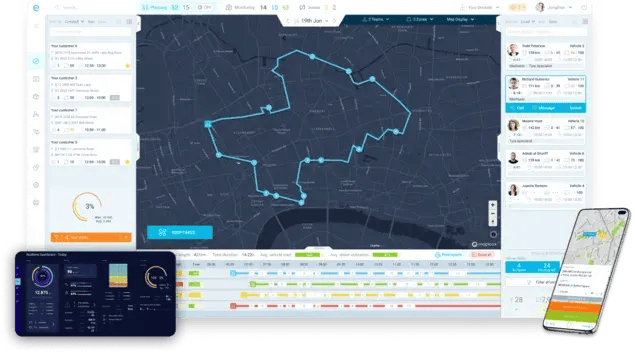
eLogii operates as the execution layer inside enterprise pest control operations. Our platform connects planning and scheduling systems to what actually happens in the field each day.
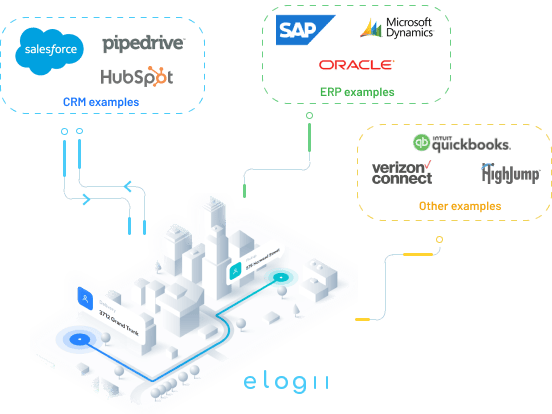
eLogii also integrates directly with platforms like FieldRoutes and ServiceTitan. Core scheduling, customer records, and PPM tracking remain in place while eLogii manages real-time routing and execution:
-
Reactive maintenance jobs enter the system and are assigned automatically based on proximity, availability, and priority. Routes are recalculated instantly so emergency callouts fit into the day without collapsing surrounding appointments.
-
No-access visits trigger immediate reallocation of capacity. The system reshuffles remaining jobs to protect technician utilization and preserve daily coverage.
-
Multi-region operations stay balanced throughout the day. When volume spikes in one territory, the platform reallocates work intelligently across the network.
-
Home-based technician routing is built into the optimization logic. Each day begins and ends at the technician’s home while minimizing drive-time and maximizing productive work-time.
-
Skill-aware assignment ensures the right technician handles each job. Commercial accounts, municipal contracts, and specialized treatments are matched to certified and properly equipped technicians automatically.
-
SLA commitments are actively prioritized during execution. Time-sensitive visits, multi-technician jobs, and contractual windows receive dynamic weighting as conditions change.
-
Drive-time is continuously compressed as the system reorders stops based on traffic, new jobs, and cancellations. This protects margin and releases hidden capacity inside existing headcount.
-
Planners shift from constant manual adjustments to performance oversight. They manage exceptions and territory strategy while the system handles day-to-day operational volatility.
The result is stable, predictable field execution across high-density PPM schedules and heavy reactive maintenance workloads. eLogii turns complex, multi-region pest control operations into coordinated, continuously optimized networks that scale efficiently without increasing planner burden.
Who This Perspective Is (and Isn't) For
For smaller operations or local pest control companies, an execution layer isn’t necessary. With 5-10 technicians and low job volumes, you can plan and manage operations easily with FSM tools like PestPac, FieldRoutes, or ServiceTitan.
The execution-layer is intended for pest control operations that want to scale beyond static planning and scheduling. This includes:
-
Multi-region enterprises managing 50 or more technicians
-
Teams seeking execution-layer solutions for daily operational challenges
-
Operations with PPM and reactive jobs, commercial SLAs, and home-based technicians
If this describes your operation, then here's what integrating eLogii can help you with:
| |
Enterprise Focus
|
|
Multi-region coverage
|
Yes
|
|
Reactive maintenance jobs
|
Yes
|
|
Emergency callouts
|
Yes
|
|
PPM cadence complexity
|
Yes
|
|
Home-based technician routing
|
Yes
|
|
SLA-driven commercial work
|
Yes
|
|
No-access and reschedule handling
|
Yes
|
|
Specialist skill assignment
|
Yes
|
|
Planner headcount efficiency
|
Yes
|
|
Dynamic route execution
|
Yes
|
If you’re looking for most of these, then the next step is obvious.
Bottom Line: It's Time to Add an Execution Layer to Your Route Optimization
When it comes to enterprise pest control management, route optimization is an execution challenge.
Static planning and conventional FSM software can only get you so far as you scale. But they can't handle reactive maintenance jobs, emergencies, or multi-region coordination effectively.
Continuous, real-time resiliance and flexibility requires an execution-layer.
eLogii provides a plug-and-play execution layer that integrates with existing FSM platforms and handles complexity automatically.
And if you're looking to transition from fragile static schedules to resilient, optimized execution, the next step is quite simple.
All you have to do is book a demo to see how an execution layer actually works within your system.