Real-time Data Sync
Keep jobs, routes, and technician data continuously aligned across systems
Purpose-built software for municipal and commercial waste operators managing complex collection routes across cities, zones, and service types. Optimize daily collection routes, adapt to missed pickups and disruptions in real time, and maintain consistent, auditable service delivery at scale.




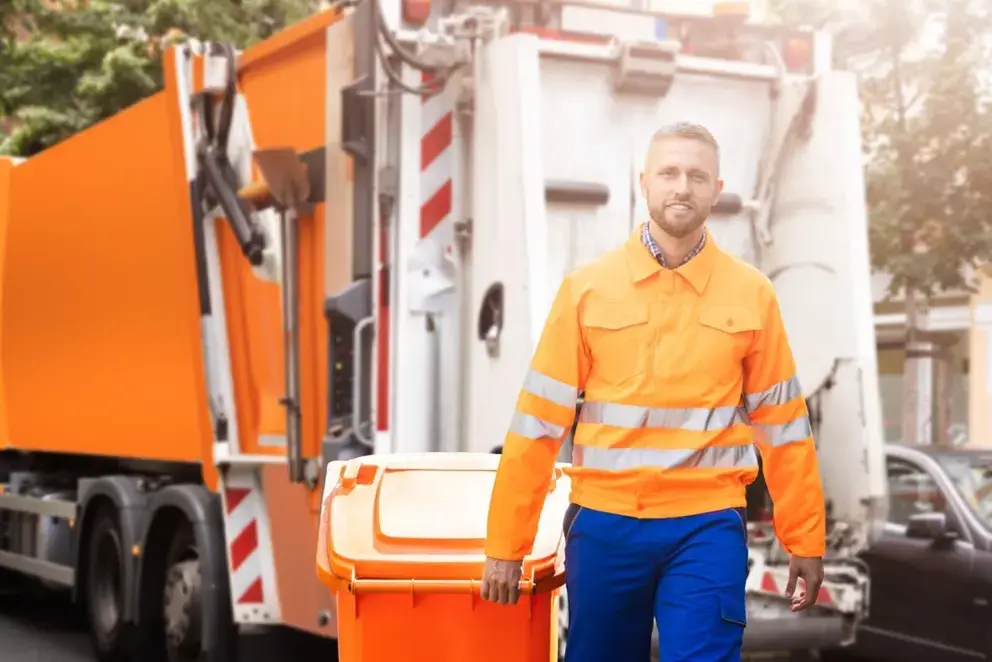
As waste collection operations scale across routes, zones, and service types, daily routing becomes a public accountability problem, not just an operational one. Missed collections, inconsistent routes, and lack of proof of service quickly turn into resident complaints, council escalations, and reputational risk.
At scale, waste collection performance is determined by how routes are monitored, adjusted, and verified throughout the day, not just how they are planned in advance. Modern waste operations require live visibility, dynamic route control, and clear proof of service across every zone and collection type.
Traditional waste routing systems were designed for static planning. eLogii is designed for real-world execution
Dynamic Route Execution Instead of Static Daily Plans
Legacy waste routing tools, including traditional Routeware-style systems, focus on building routes ahead of time and assume execution will closely follow the plan. In reality, daily waste collection is disrupted by traffic, blocked streets, vehicle issues, contamination checks, weather, and missed stops.
With eLogii, routes are not fixed once dispatched. Route progress is monitored continuously, and schedules can be adjusted during the day to reflect what is actually happening in the field. This allows supervisors to respond to issues as they occur, rather than discovering problems after the route has failed
Routes Built Around Real Zones, Vehicles, and Crews
Waste collection routes are structured around zones, vehicle types, crew configurations, and service rules, not individual jobs. eLogii builds routes using real operational constraints such as zone boundaries, vehicle capacity, crew availability, and collection types.
Unlike legacy systems that rely on depot-centric assumptions and static sequencing, routes are optimized around how vehicles actually move through the city and how crews operate on the ground. This improves route balance, reduces unnecessary mileage, and increases predictability across large collection areas
Real-Time Visibility and Proof of Service by Default
In modern waste operations, proof of service is as important as route efficiency. eLogii combines GPS location data, timestamps, telematics, and optional camera inputs to create a clear, auditable record of what happened at each stop.
This contrasts with legacy routing platforms where proof of service often relies on manual confirmation or post-route reconciliation. With eLogii, supervisors can quickly verify missed pickup claims, resolve disputes, and reduce unnecessary return visits without reconstructing routes after the fact
Handling Missed Pickups and Exceptions as They Happen
Missed collections, blocked access, and route overruns are inevitable at scale. The difference between stable and fragile waste operations is how these exceptions are handled.
Instead of pushing unresolved issues into the next day or relying on manual follow-up, eLogii allows exceptions to be identified and addressed during the same operating window where possible. Routes are adjusted locally, spare capacity is identified, and recovery actions are coordinated centrally, reducing complaint volume and operational overhead
RA Modern Alternative to Legacy Waste Routing Software
Many waste organizations still rely on routing software designed decades ago, where optimization stops once the route is printed or dispatched. These systems struggle to support real-time visibility, dynamic re-routing, and integrated proof of service.
eLogii acts as a modern execution layer for waste collection operations. It complements or replaces static route planning tools by focusing on what happens after vehicles leave the depot: live tracking, dynamic adjustment, exception handling, and transparent service reporting. This is why organizations evaluating Routeware alternatives increasingly adopt eLogii for city-scale, high-accountability waste operations
Large municipal and commercial waste collection operations see measurable improvements when routing, execution, and proof of service are managed as a single operational system rather than disconnected planning tools and manual processes.
By combining dynamic routing with real-time visibility and verification, waste teams gain control over daily execution across entire cities and service areas
Real-time route monitoring, exception handling, and proof of service reduce the number of missed pickups that escalate into repeat visits. Crews recover issues earlier in the day, lowering resident complaints and operational rework
Clear visibility into what happened on each route allows supervisors and call centers to resolve disputes faster and avoid unnecessary dispatches. Accurate proof of service reduces repeat complaints and shortens resolution cycles
Real-time route monitoring, exception handling, and proof of service reduce the number of missed pickups that escalate into repeat visits. Crews recover issues earlier in the day, lowering resident complaints and operational rework
When service execution is verifiable, call center teams spend less time reconstructing routes and handling repeat inquiries. This frees staff to focus on true service issues rather than routine disputes
Dynamic adjustments and better route balance reduce late finishes, unnecessary overtime, and uneven workloads across crews. Vehicles and crews are utilized more consistently across zones and collection types
Because impact comes from improved daily control rather than large process overhauls, waste organizations typically see measurable benefits within months. Improvements are realized during normal operations without requiring major route redesign projects
 Supports city-scale residential and commercial collection routes across multiple zones
20–40% reduction in missed collections through real-time route visibility and in-day recovery
25–35% fewer repeat visits and unnecessary returns driven by verified proof of service
30%+ reduction in complaint-driven follow-ups by resolving disputes with GPS, timestamps, and vehicle data
Reduced load on call centers and supervisors, with fewer manual investigations per day
“Before, we were reacting to complaints after the fact. Now we can see what’s happening on routes as the day unfolds, verify service quickly, and intervene before issues escalate. Missed pickups dropped materially, and the operational noise around disputes reduced almost immediately.”
Waste collection route optimization becomes complex once operations move beyond static route planning and into daily execution across live city environments.
Most waste routing software, including traditional Routeware-style platforms, focuses heavily on route design and pre-planning. These systems assume that once routes are optimized and dispatched, execution will broadly follow the plan.
In reality, waste operations are disrupted continuously by traffic, blocked access, vehicle issues, contamination checks, weather, and resident behavior. At scale, performance is determined less by how routes are designed and more by how they are monitored, adjusted, and verified during the day.
This is where legacy waste routing tools struggle
Most municipal and large commercial waste operations use routing software in a similar way:
• Routes are designed in advance using historical data
• Daily routes are dispatched to crews
• Supervisors monitor progress indirectly
• Issues are investigated after the route completes
In Routeware and similar systems, optimization largely stops once routes are published. When execution diverges from the plan, recovery relies on manual supervisor intervention, radio communication, spreadsheets, or next day corrective routes.As complaint volumes increase and accountability expectations rise, this approach becomes increasingly fragile
Waste routes are not job-based. They are zone-based and capacity-constrained.Effective waste route optimization must account for:
• Residential, commercial, recycling, bulk, and specialty collection types
• Zone boundaries and service day rules
• Vehicle capacity and compaction limits
• Tipping and disposal cycles
• Crew configurations and shift limits
Legacy routing platforms often optimize sequence but struggle to adapt routes dynamically when vehicles reach capacity early, disposal trips take longer than expected, or zones fall behind schedule.Modern waste operations require routing systems that understand capacity, zones, and disposal behavior as live variables, not static assumptions
Missed pickups are one of the most expensive and visible failures in waste collection.In many Routeware-driven environments:
• Missed stops are discovered through resident complaints
• Supervisors reconstruct routes after completion
• Crews are redeployed reactively
• Repeat visits are scheduled days later.
This reactive model increases call center volume, repeat mileage, and political pressure. High-performing waste organizations instead:
• Identify missed pickups as they occur
• Verify whether service was attempted or completed
• Recover service within the same operating window where possible
• Document outcomes immediately for audit and reporting. This shift from post-route investigation to in-day recovery materially reduces complaints and repeat collections.
Proof of service has become a critical requirement for municipal waste operations, particularly where Routeware-style reporting relies on inferred completion rather than verified execution.Modern waste organizations require:
• GPS validated stop completion
• Timestamped service records
• Vehicle and route execution data
• Optional camera or photo verification
• Clear audit trails for dispute resolution
When proof of service is integrated directly into routing and execution, supervisors resolve resident complaints faster, reduce unnecessary return visits, and increase confidence in service reporting presented to councils and city leadership.
Static routing systems assume that if a route finishes, service was successful. In reality:
• Stops may be skipped unintentionally
• Vehicles may return early due to capacity or delays
• Crews may run out of time before completing zones
Without real-time visibility and dynamic adjustment, these issues turn into:
• Repeat collections•Overtime costs
• Supervisor firefighting
• Next day recovery routes
Dynamic execution systems reduce these costs by adjusting routes while crews are still active and capacity is still available
Many municipal and commercial waste organizations are reassessing traditional waste routing software as service expectations increase. Common reasons include:
• Inability to adjust routes dynamically during the day
• Limited real-time visibility into execution
• Manual investigation of missed pickups•Weak proof of service capabilities
• High operational overhead when issues occur
As a result, organizations evaluating Routeware alternatives increasingly look for systems that extend beyond route planning into live execution, verification, and recovery.This is where modern execution-focused routing platforms are adopted to complement or replace static waste routing solution

Real-Time Fleet, Telematics, and Proof of Service for Waste Collection
eLogii integrates directly with Samsara to connect live vehicle location, mileage, telematics, and camera data into waste collection routing and execution workflows.
Enterprise-grade API for custom integrations and workflows
eLogii provides a RESTful API with comprehensive documentation, webhooks, and secure authentication. This allows teams to integrate with ERP, CRM, FSM, billing, telematics, and data platforms across the enterprise
Keep jobs, routes, and technician data continuously aligned across systems
Changes flow both ways to maintain operational visibility and data integrity
Map data structures to match your existing schemas and workflows
Clean, enrich, and standardise data as it moves between systems
Trigger downstream actions based on real operational events
Enterprise-grade encryption and authentication by default
eLogii acts as a routing, scheduling, and execution layer that sits on top of the fleet, telematics, and enterprise systems large field service and waste operations already run. Rather than replacing systems of record, eLogii extends them with advanced route optimization, in-day execution control, and real-time operational visibility.
This architecture allows organizations to scale daily execution and accountability without forcing existing platforms to handle routing and dispatch complexity they were not designed for.
eLogii integrates directly with Samsara to connect live vehicle location, mileage, telematics, and camera data into routing and execution workflows. By combining Samsara’s real-time fleet visibility with eLogii’s dynamic routing and in-day scheduling engine, operations teams can move beyond static route plans and manage execution as it actually happens in the field.Key capabilities include:
• Building and adjusting routes based on live vehicle position and real drive time
• Monitoring route progress and identifying delays or missed stops as they occur
• Improving ETA accuracy and supporting in-day recovery of missed work
• Verifying service using GPS data, timestamps, and vehicle context
• Aligning planned routes with actual execution for reporting and auditFor organizations already using Samsara for fleet management, safety, and compliance, this integration turns telematics data into a real operational control layer rather than a passive reporting tool.
eLogii provides a secure, enterprise-grade REST API with comprehensive documentation, webhooks, and authentication, allowing organizations to integrate routing, execution, and proof of service directly into their existing technology stack.The API is designed to work alongside the systems large municipal and commercial operations already use, including ERP, CRM, fleet, GIS, and service management platforms, without replacing systems of record.Common API integrations and use cases include:
• Synchronizing jobs, routes, zones, and service schedules with ERP and operational platforms such as SAP, Oracle, NetSuite, and Microsoft Dynamics
• Integrating with CRM, customer service, and resident request platforms including Salesforce, Microsoft Dynamics 365, ServiceNow, HubSpot, Zendesk, and 311 systems
• Feeding execution data into reporting, BI, and compliance tools such as Power BI, Tableau, Looker, Snowflake, BigQuery, and municipal data warehouses
• Connecting custom portals, mobile applications, and resident-facing tools used by cities and public works departments
• Exchanging data with Samsara, vehicle telematics platforms, route sensors, contamination monitoring systems, and smart city platforms for real-time operational insight
• Integrating with GIS and mapping systems such as Esri ArcGIS to align routing, zones, and service boundariesExecution outcomes, timestamps, route progress, vehicle data, and completion records flow back into core systems in real time, creating a single, consistent operational record across routing, execution, customer service, and reporting functions.
Independently audited information security management covering data protection, risk management, and operational controls
Centralized authentication using your existing identity provider to enforce access and security policies
Enterprise-grade encryption for data in transit and at rest across the platform and integrations
Ongoing security testing and assessments to identify and address any vulnerabilities